Safety Officer Responsibilities: Roles, Daily Duties and Saudi Rules

Safety officer responsibilities come down to one goal: everyone goes home safe. A safety officer finds dangers, trains workers, checks the site and finds out why accidents happen.
This guide explains those duties in plain words. It also gives a daily routine, a free job description and the Saudi rules behind the job. It is written by Future Institute for Advanced Professional Training, which trains safety officers across Saudi Arabia.
What Is the Main Responsibility of a Safety Officer?
The main responsibility of a safety officer is to stop people getting hurt or sick at work. Every other item on the list of safety officer responsibilities serves that goal.
Safety officers work on building sites, oil and gas plants, factories, warehouses, hospitals and offices. Some companies call the same job HSE officer, OSH officer or site safety officer.

What Are the Responsibilities of a Safety Officer?
What are the responsibilities of a safety officer on a normal site? The list below covers the safety officer responsibilities in most Saudi job ads.
The exact mix depends on the company and the type of work. A refinery safety officer spends more time on permits. An office safety officer spends more time on training and fire drills.
1. Find Hazards and Assess Risks :
A hazard is anything that can cause harm, like a gas leak, an open edge or a loose wire. The safety officer finds hazards, judges how bad the harm could be and suggests controls. This is called a risk assessment.
2. Write and Update Safety Rules :
Safety officers help write safe work steps, emergency plans and site rules. They update them when the work, the tools or the law change.
3. Train Workers :
They run inductions for new workers and short toolbox talks before risky jobs. On Saudi sites, this often means explaining dangers to crews who speak several languages.
4. Inspect the Site and Equipment :
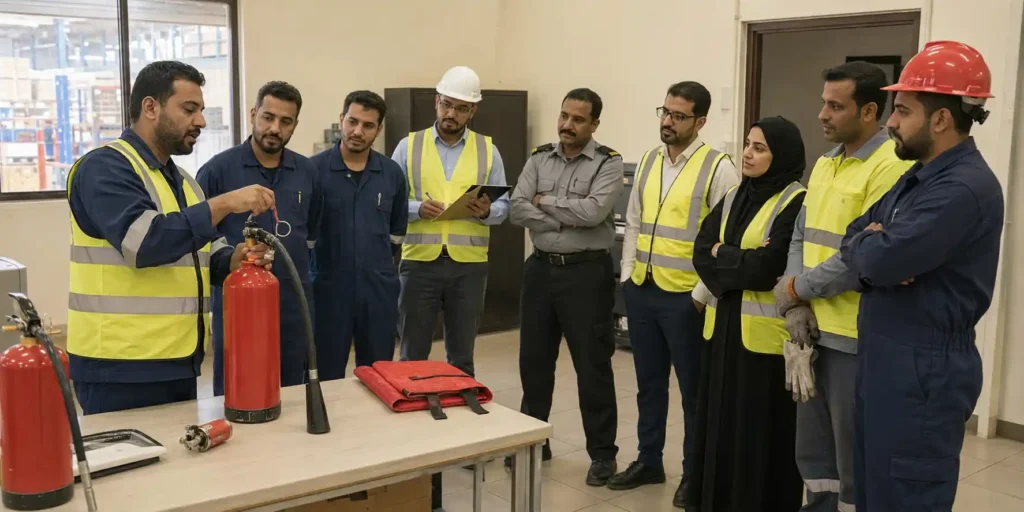
Safety officers walk the site to spot unsafe acts and unsafe conditions. They check scaffolds, tools, fire extinguishers, protective gear and first aid kits.
5. Check Work Permits :
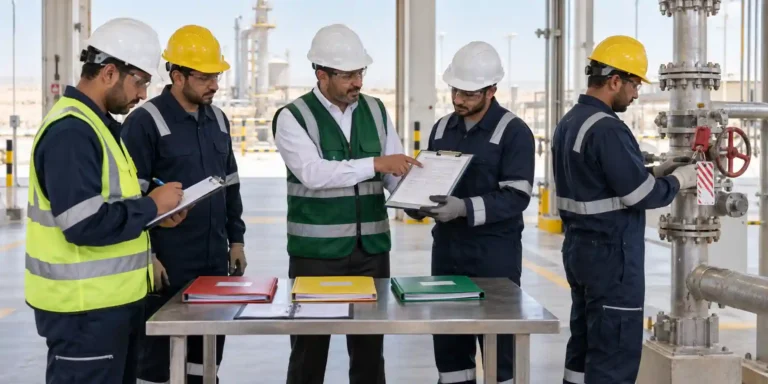
Risky jobs, like hot work or entering a tank, need a permit before they start. The safety officer checks that the permit is correct and the area is safe.
6. Manage Contractor Safety :
Many Saudi sites use several contractors. The safety officer checks their safety documents, gives them site inductions and makes sure they follow the same rules.
7. Investigate Accidents and Near Misses :
When something goes wrong, the safety officer finds out what happened and why. They then suggest changes, so the same accident does not happen again.
8. Keep Records and Report :
Safety officers keep records of training, inspections, incidents and permits. They send reports to managers, and they track every corrective action until it is closed.
What Are the Responsibilities of a Safety Officer?
The roles and responsibilities of a safety officer are easier to remember as five roles. There is no official list, but most duties fit into these groups.New safety officers can use these roles to plan their week. Employers can use them to check that all safety officer responsibilities are in the job description.
Role | What it means | Example tasks |
|---|---|---|
Adviser | Guides managers and workers on how to work safely | Answering safety questions, reviewing new jobs |
Planner | Plans how risky work will be done safely | Risk assessments, safe work steps, emergency plans |
Trainer | Teaches people about dangers and safe habits | Inductions, toolbox talks, drills |
Inspector | Checks that rules are followed and equipment is safe | Site walks, equipment checks, permit checks |
Investigator | Finds the cause of accidents and fixes it | Accident reports, near-miss reviews, action plans |
Safety Officer Duties and Responsibilities: A Typical Day
Safety officer duties and responsibilities change from day to day. Still, most days on a busy site follow the same pattern.
On quieter sites, some of these tasks happen weekly instead of daily. Use it as a guide to daily safety officer responsibilities, not a fixed timetable.
Safety Officer Roles and Responsibilities in Saudi Arabia
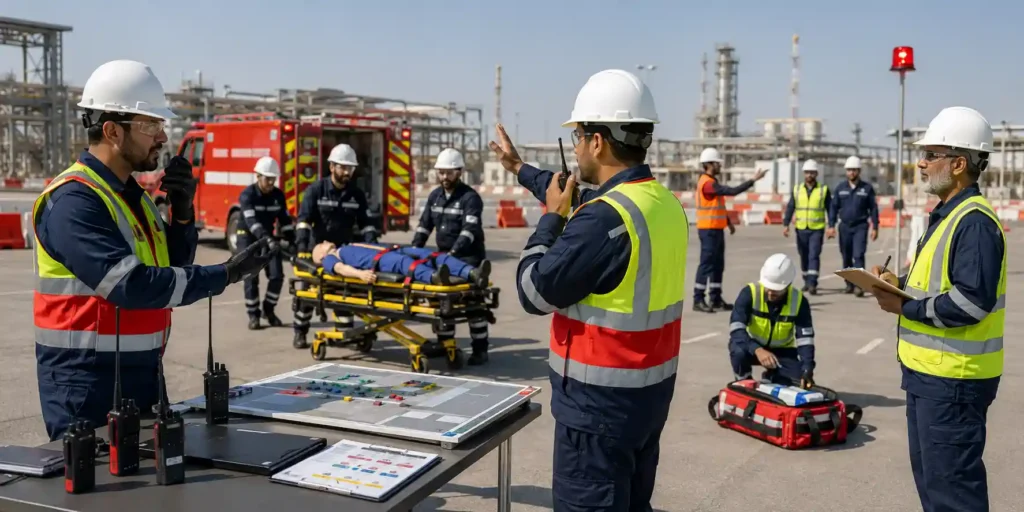
In Saudi Arabia, safety officer roles and responsibilities come from rules set by the Ministry of Human Resources and Social Development (HRSD). The employer carries the legal duty. The safety officer helps the employer meet it.
Article 121 of the Labor Law says employers must follow the safety rules the minister sets. Two HRSD decisions shape the safety officer’s job most.
So a Practitioner’s safety officer responsibilities match most of this article. They are inspections, permits, training and reports. A Professional adds planning, audits and managing the safety team.
Train to Take On Safety Officer Responsibilities
Ready to take on safety officer responsibilities yourself? Future Institute for Advanced Professional Training is a safety training center in Saudi Arabia. We train new and working safety officers.
Our TVTC-approved safety officer course covers every duty in this guide. Individuals can book a seat. Companies can train their staff in class, online or at their own site.
Enrol: call, WhatsApp or email us with your dates.
Train: join the course in class, online or at your site.
Pass: complete the knowledge test and practical assessment.
Get certified: receive a certificate employers can verify online.
Contact us: +966 59 742 3196 (call or WhatsApp) · admin@advancedtraining.co