
H2S Training in Saudi Arabia, Online and On Site
H2S is invisible, deadly, and common on Saudi worksites. We turn your crew into people who can recognise it, respond fast, and walk away safe.

Ask any oilfield veteran what scares them, and hydrogen sulfide is near the top of the list. It is invisible, it robs you of your sense of smell in minutes, and at high concentrations it drops a person before they can call for help. On sour gas sites across Saudi Arabia, that makes H2S training less of a formality and more of a survival skill.
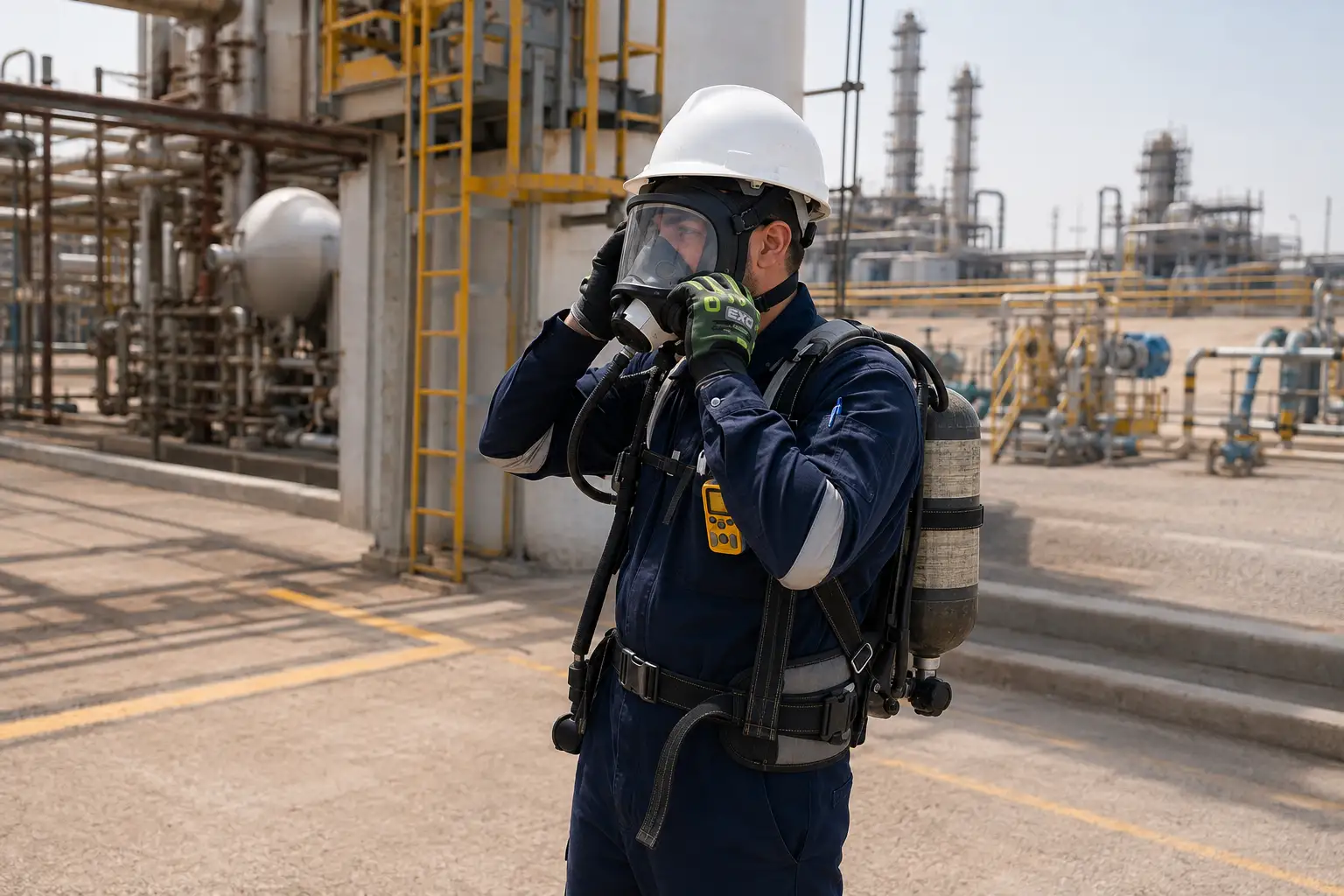
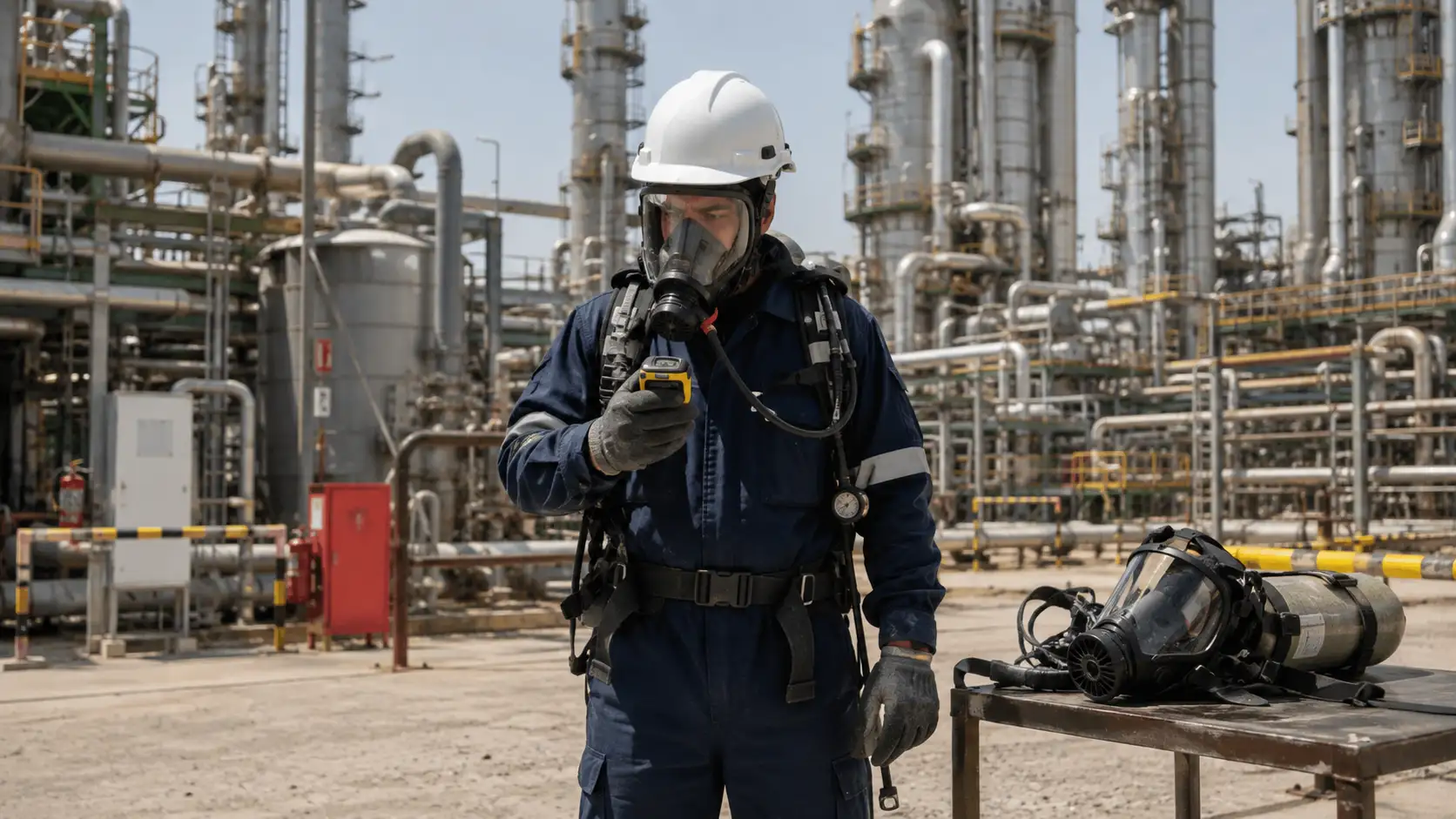
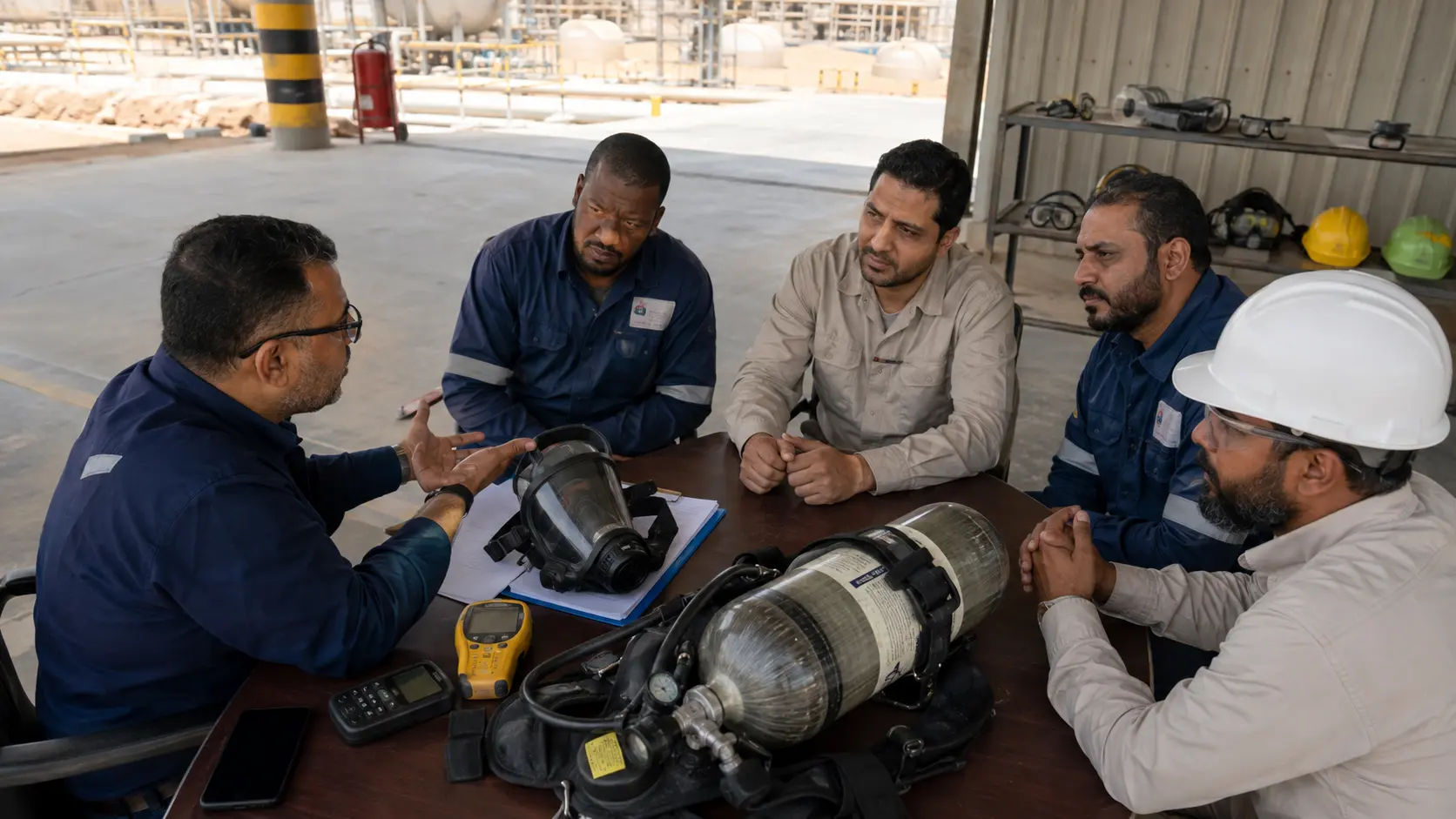
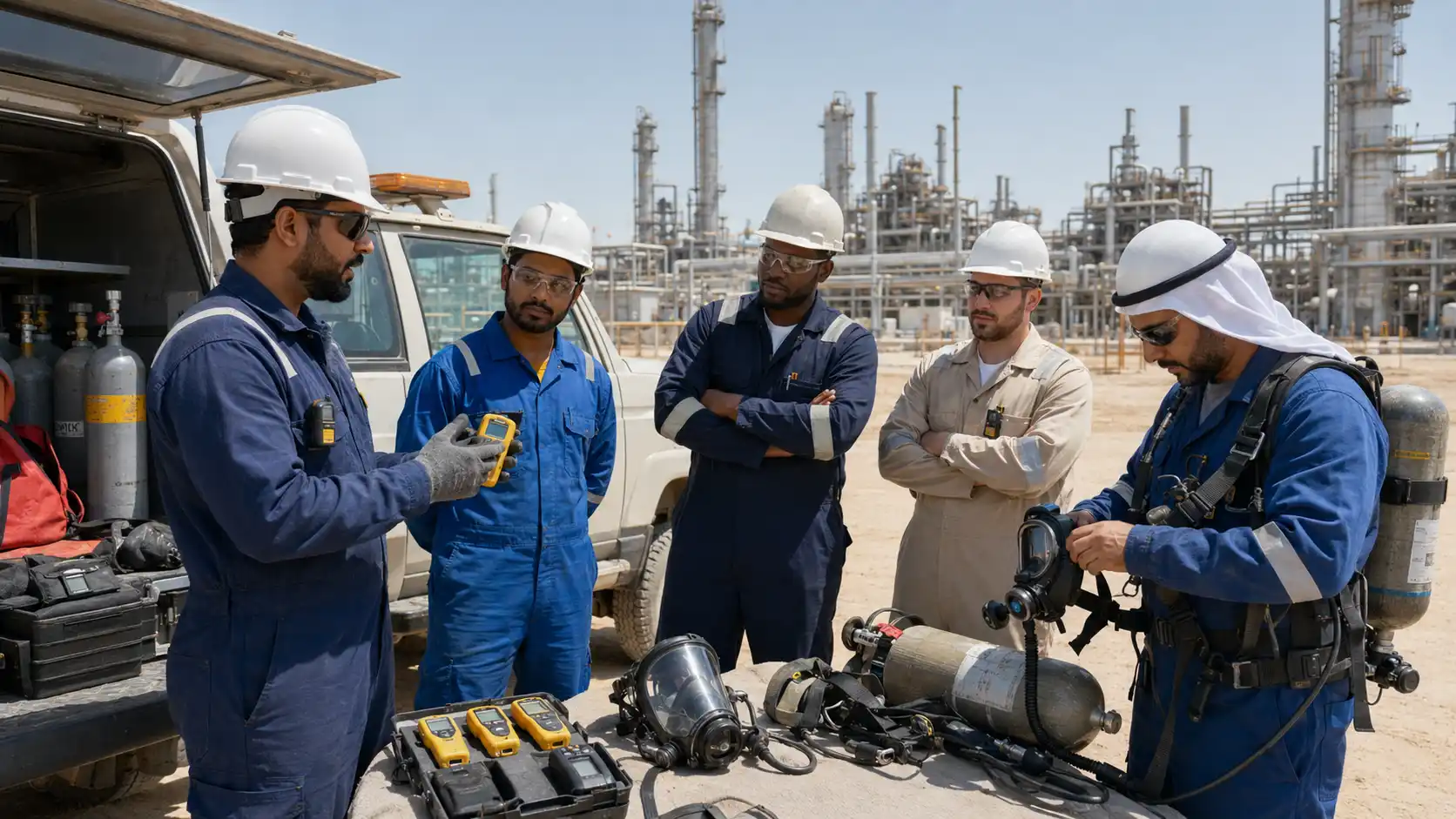
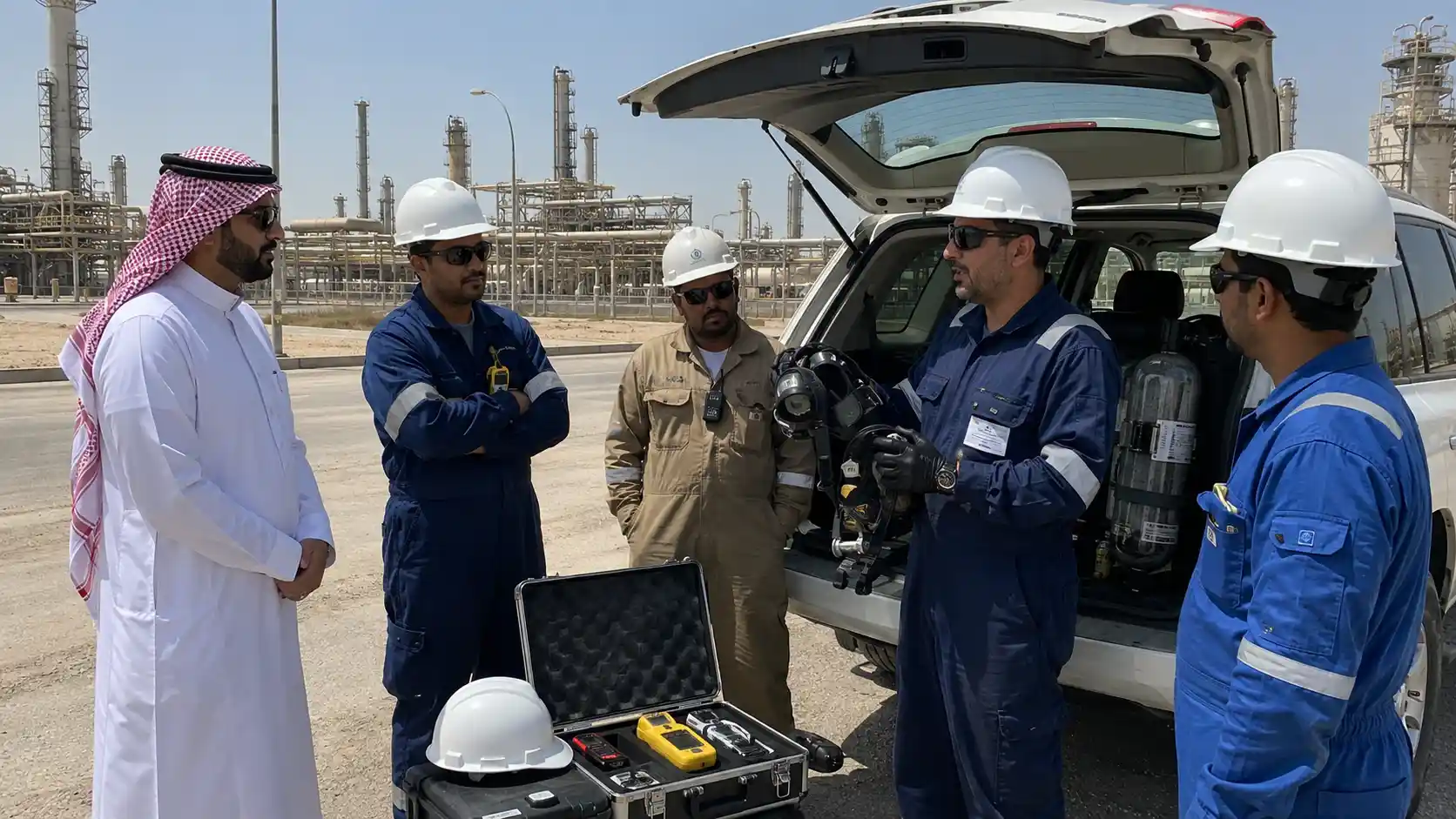
This is hands on, not a lecture. Your crew handles real gas detectors until reading one is second nature, rehearses the alarm response until it is automatic, and puts on breathing apparatus and escapes under pressure, the way a real release demands. Drilling teams, refinery and maintenance staff, and anyone stepping into a sour area walk out genuinely ready, holding a certificate our IADC H2S Safe accreditation makes contractors trust.
What sets Future Institute apart is where our trainers have been: on the rigs, plants, and Aramco projects where this gas is a daily reality. That experience shapes every drill and every story they tell in the room. And for firms that want to run H2S training themselves, we can map out the path to instructor level, so the knowledge stays in your company long after we leave.
What Is H2S and Why Every Worker Needs Training
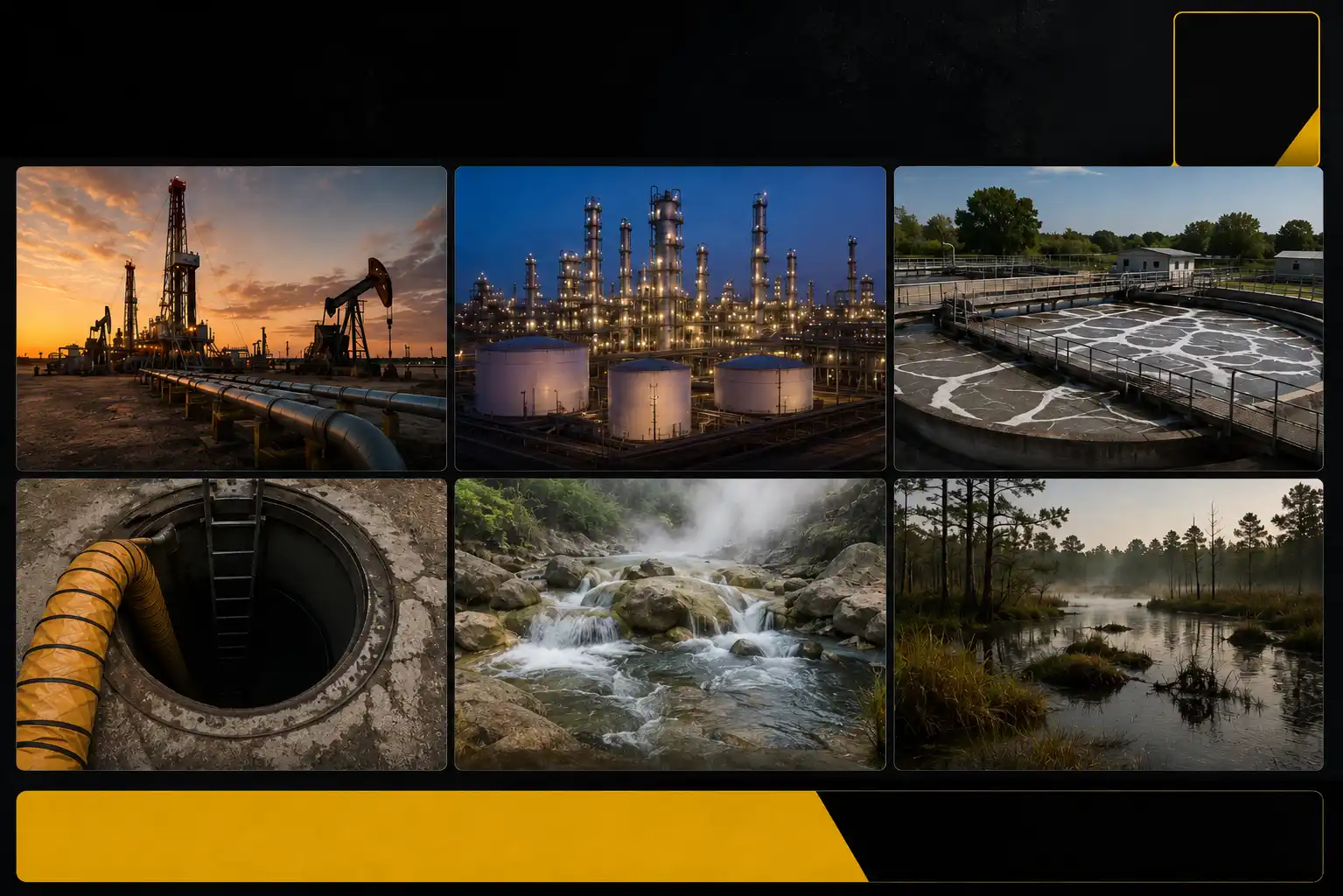
Hydrogen sulfide (H2S) is a colourless, highly toxic, and flammable gas. At low levels it smells like rotten eggs, but at higher levels it quickly deadens your sense of smell, so your nose gives you no warning before it is too late. It is common in oil and gas, refineries, sewage, and confined spaces across Saudi Arabia.
This is why every worker in these areas needs proper training, not just the safety team. H2S can knock a person out in seconds and turn deadly within minutes, so there is no time to learn on the spot. Hydrogen sulfide safety training makes sure your crew can recognise the gas early, react without panic, and escape safely, long before a small leak becomes a fatal one.
H2S Danger Levels and Their Effects
Knowing how H2S affects the body at each level is the heart of this course. These are the typical effects by concentration: before a small leak becomes a fatal one.
| H2S level | Effect on the body |
|---|---|
| 0.13 ppm | Rotten egg smell first noticed |
| 10 ppm | Eye and throat irritation begins |
| 100 ppm | Sense of smell lost; dangerous to life |
| 500 ppm | Rapid unconsciousness, breathing may stop |
| 700 ppm and above | Collapse and death within minutes |
For reference, 1% H2S equals 10,000 ppm, which is far above the deadly level. This is why detection and fast escape matter so much.
Where H2S Comes From on Worksites
Hydrogen sulfide forms/occurs both naturally and industrially. Common hydrogen sulfide sources include:
Hydrogen Sulfide Detection & Testing
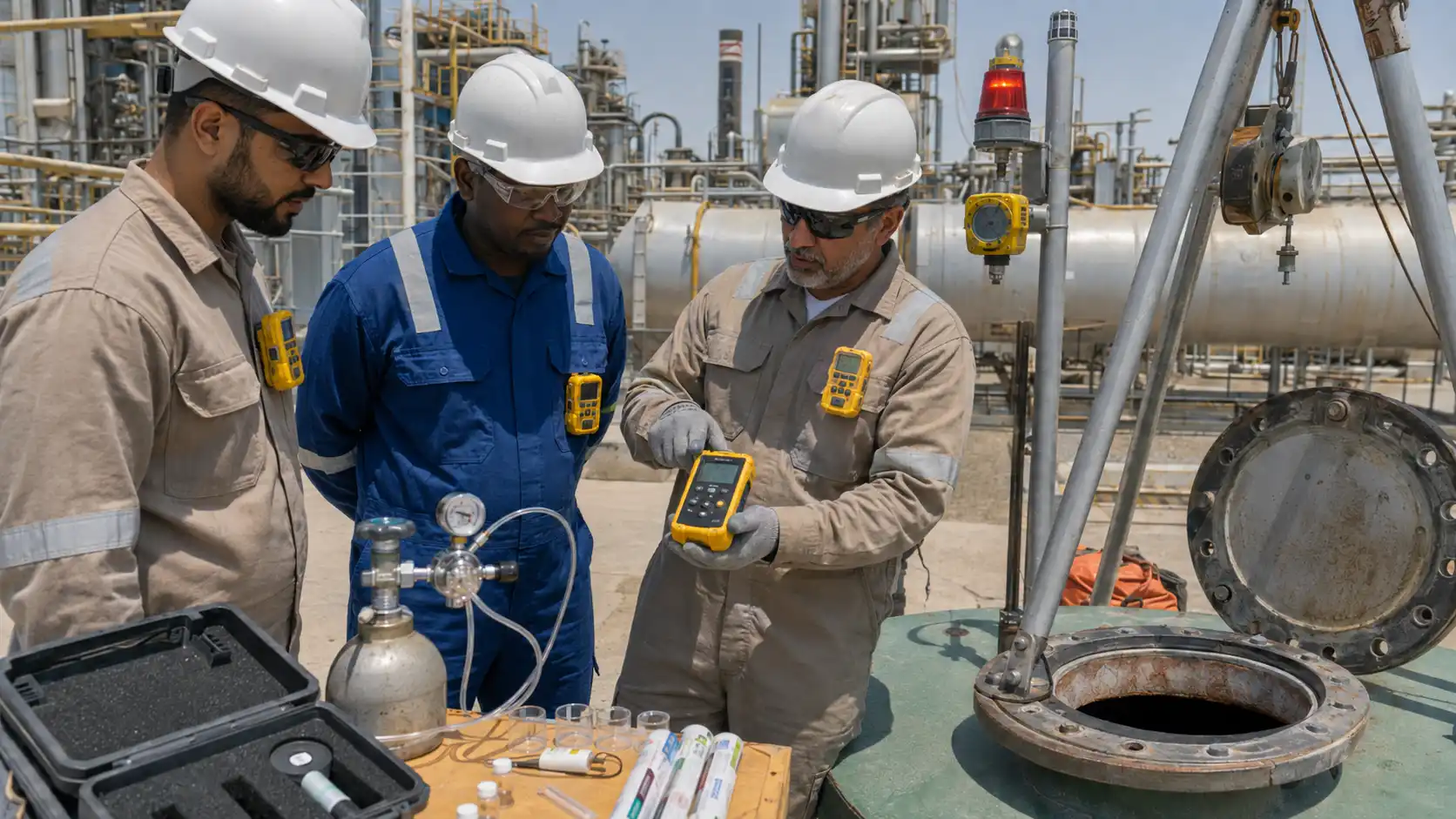
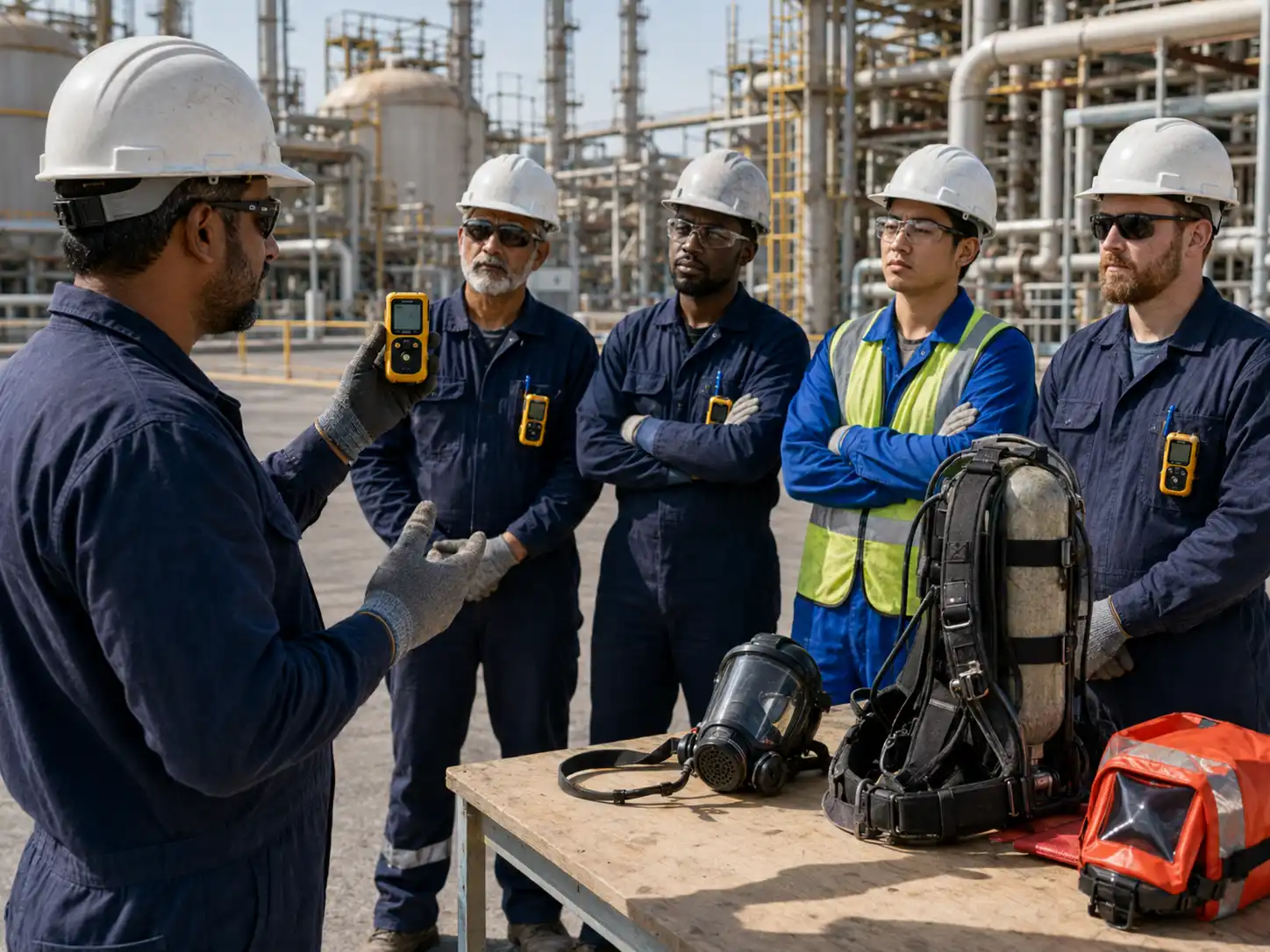
Because you cannot rely on smell, every H2S area needs instruments to warn workers early. During this h2s safety training, your team practises real hydrogen sulfide testing using:
Workers also learn where H2S builds up, such as sewers, lift stations, and digesters where bacteria break down organic matter, and low, still spots where the heavy gas settles. The course includes hands on practice with detectors, alarm response, and pre entry atmospheric testing, so your team trusts the reading and acts on it fast.
H2S Training Course Content
This H2S safety training mixes classroom theory with practical, hands on drills. The course covers:
The properties, sources, and dangers of hydrogen sulfide
How H2S affects the body at different concentrations
Using personal gas detectors and reading alarms
Correct use of breathing apparatus and escape sets (SCBA)
Safe work practices, permits, and atmospheric testing
Emergency response, rescue, and evacuation
Wind direction, muster points, and buddy system
Who Should Attend
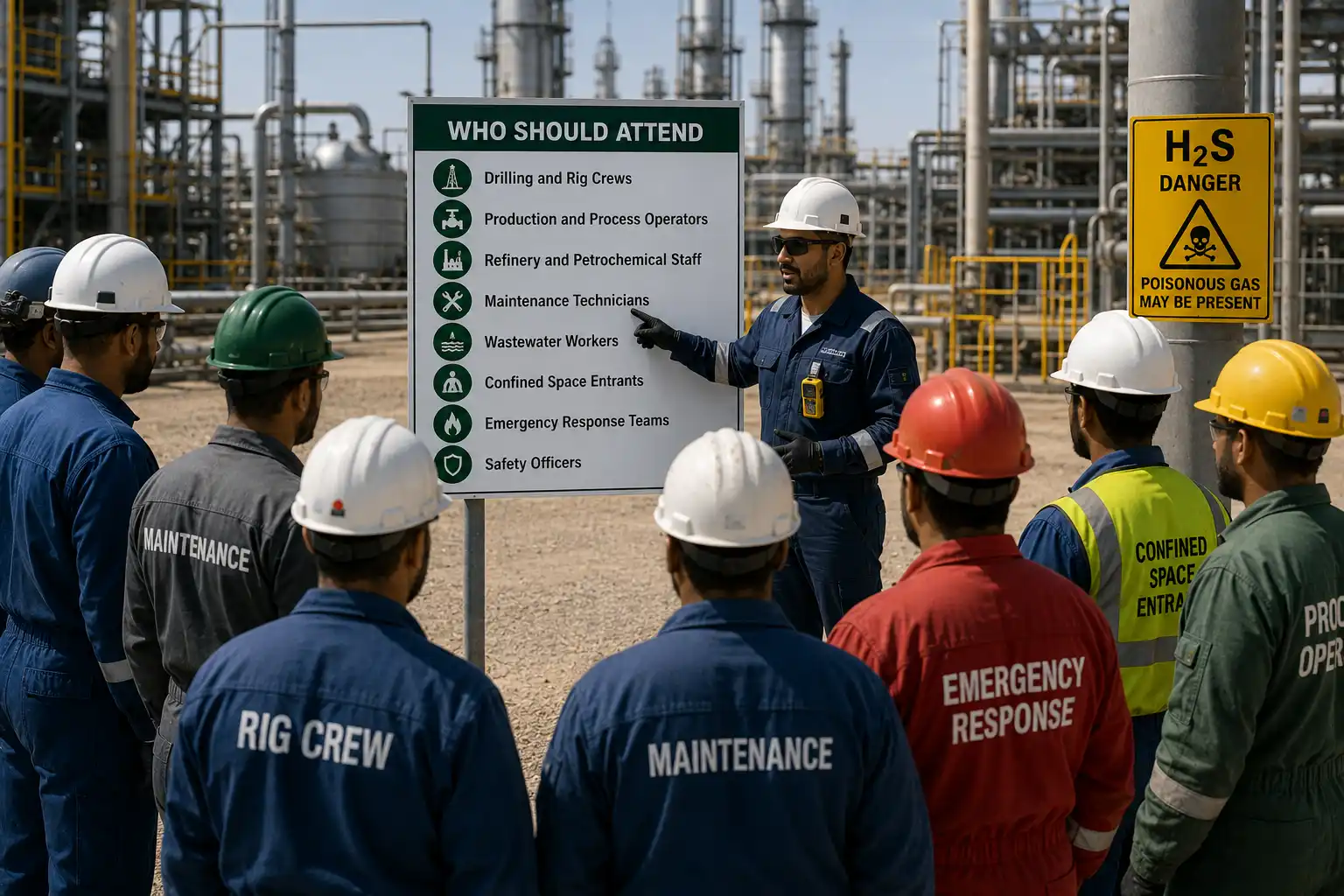
This course is built for anyone who works where H2S may be present, including oil and gas crews, drilling and rig teams, refinery and petrochemical staff, maintenance workers, and emergency responders. It is essential h2s training oilfield workers need before they set foot in a sour service area, and it also suits confined space and shutdown teams across the Kingdom.
H2S Certification, Online Training & Train-the-Trainer
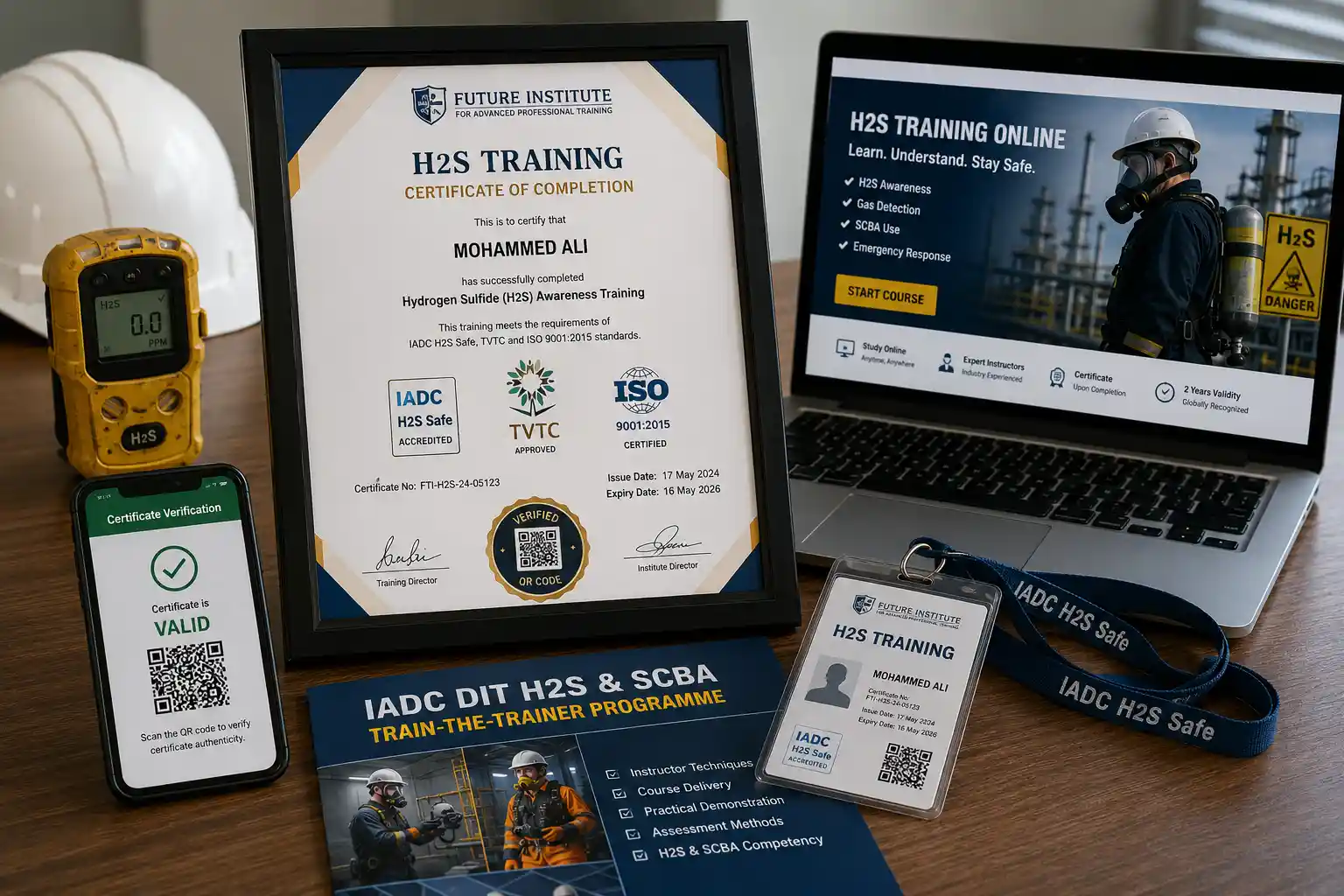
On successful completion you receive an H2S certificate from Future Institute , IADC H2S Safe accredited, TVTC-approved and ISO 9001:2015-certified training provider. Certificates are valid for two years and every certificate and ID card is QR-code verifiable, so employers and Aramco contractors can confirm authenticity instantly. We also deliver H2S training online for theory and refresher requirements, and an IADC DIT H2S & SCBA Train-the-Trainer programme for companies that want to certify their own in-house instructors.
Aramco Contractor H2S Training
If your company works on Saudi Aramco sites, your crew must hold valid H2S certification before entering sour gas areas. Our Aramco contractor H2S training prepares your team to meet these site rules, with the detection, escape, and rescue skills required on Aramco and GCC worksites. We can train your whole crew at our center or at your site, so your project stays on schedule and audit ready.
H2S Awareness Training and Who Needs It
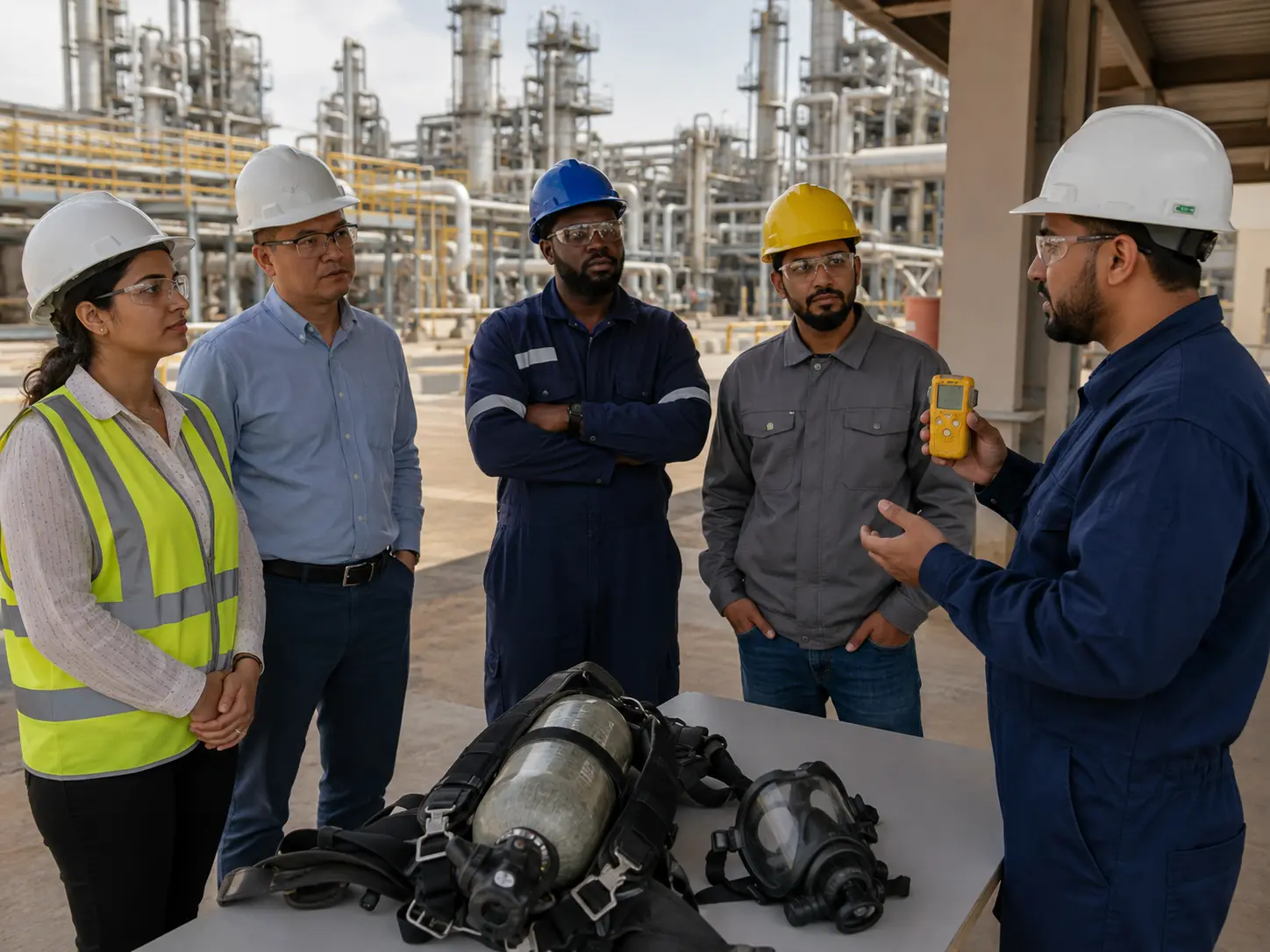
Not every worker needs full competency. For visitors, admin staff, and short term contractors, we offer hydrogen sulfide awareness training that explains the basic dangers, the alarm sounds, and what to do if the gas is released. This shorter option keeps everyone on site safe, even those who do not handle the gas directly.
How Much Does H2S Training Cost in Saudi Arabia?
The fee depends on group size, whether you train at our center or your site, and the number of participants. Group training at your site costs less per person as the numbers grow. Because the course includes real gas detector and breathing apparatus practice, your team leaves site ready the same week. For a current price, call or message us on 0597423196
How Often Is H2S Training Required?
An H2S certificate is usually valid for two years. Before it runs out, a short refresher course renews the certificate
and keeps your team sharp on detection and escape. Many Aramco and oilfield sites ask for current H2S certification
before every new project, so it is worth checking your client’s rule before you mobilise.
Why Train With Future Institute for Advanced Professional Training
Future Institute is a safety training center based in Al Khobar, serving learners and companies across Saudi Arabia. Our H2S training gives you:
We Deliver H2S Courses Across Saudi Arabia
Our base is in Al Khobar, close to the Corniche and King Fahd Road. From here, our trainers cover the Eastern Province and the wider Kingdom. We deliver at our center, at your site, or online, in Al Khobar, Dammam, Dhahran, Jubail, Abqaiq, Ras Tanura, Riyadh, Jeddah, and other cities on request. Whether your crew works on a rig near Jubail, a plant in the Eastern Province, or needs to train remotely, we bring the training to your door or screen.
Related Safety Courses
Building a fully certified crew? Pair this course with our Confined Space Entry training, Dangerous Goods training,
Basic First Aid training, and Fire Watch training. Together they cover the main hazards on Saudi oil and gas sites.
Frequently Asked Questions
Book Your H2S Training in Saudi Arabia
Reserve your place with Future Institute, Al Khobar’s IADC H2S Safe accredited training center. Our advisors will confirm the next available batch and can deliver the course at your site.