
Safety Officer Course in Saudi Arabia | Online & Onsite
Safety officers are among the most in demand professionals on Saudi worksites, and every oil, gas, and construction
project needs them. If you want a stable, well respected career in safety, this is where it starts.
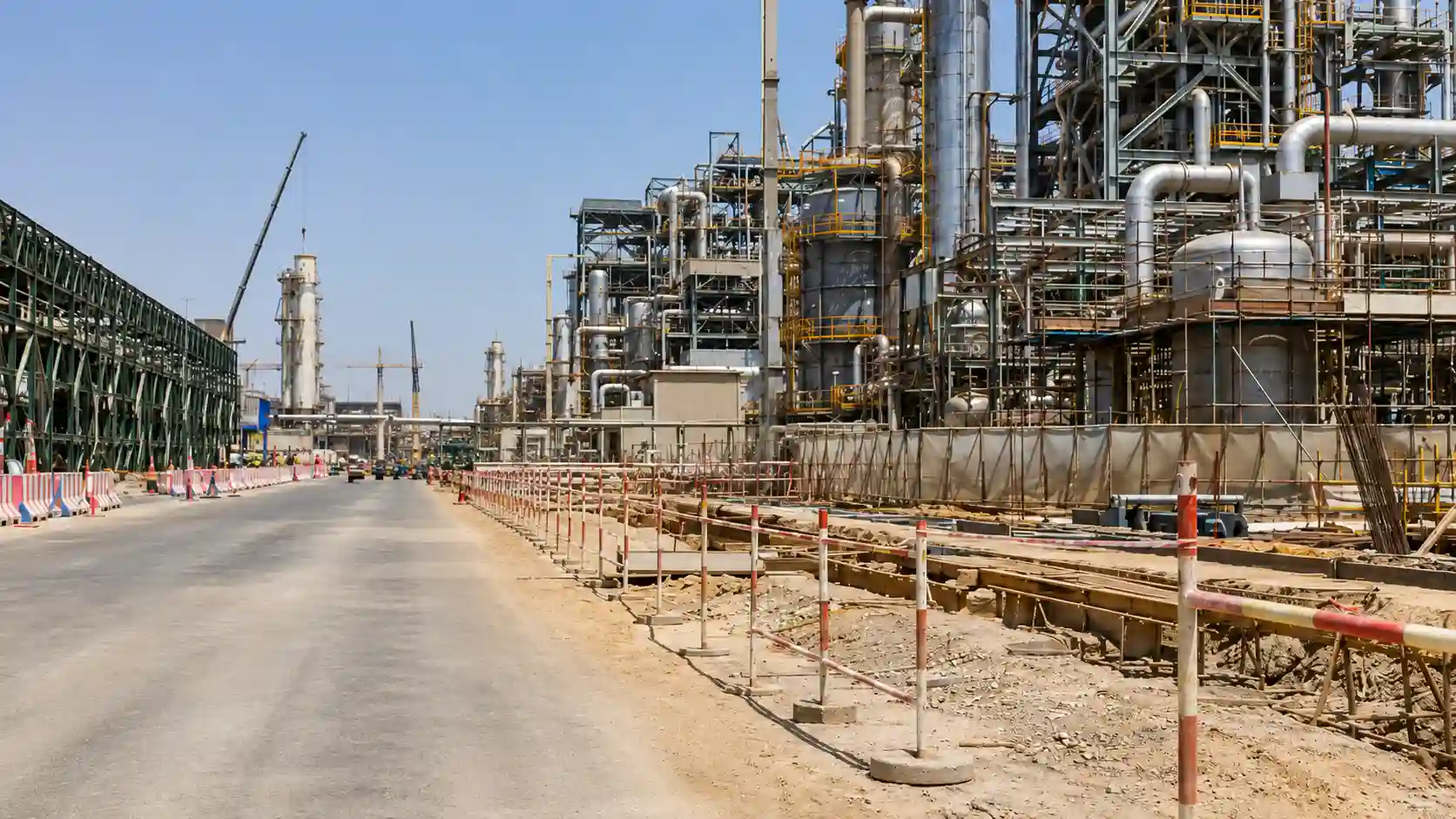
Every worksite needs someone whose job is to keep people safe, and in Saudi Arabia’s fast growing construction and oil and gas sectors, that need has never been greater. Without a trained officer watching for hazards, small oversights turn into serious accidents, lost time, and heavy penalties. A skilled safety officer prevents all of that, and the safety officer course is where that skill is built, turning motivated workers into qualified professionals employers actively look for.
On this course, you learn to identify hazards, carry out risk assessments, run site inspections and safety audits, investigate incidents and find their root cause, lead toolbox talks, and keep the records that Saudi compliance demands. Delivered by our TVTC approved center, it suits newcomers starting a safety career, supervisors who have taken on safety duties, site engineers, and workers ready to step up from the tools into an HSE role.
As a trusted training provider serving companies across the Kingdom, Future Institute has prepared safety teams for construction firms, plants, and Saudi Aramco contractors alike. Beyond the core course, we offer specialist tickets and refresher training to help officers grow into senior HSE roles. Every session runs with experienced HSE instructors and practical inspection and investigation exercises, so you leave able to do the job, not just pass a test.
What Is a Safety Officer and Why Every Site Needs One
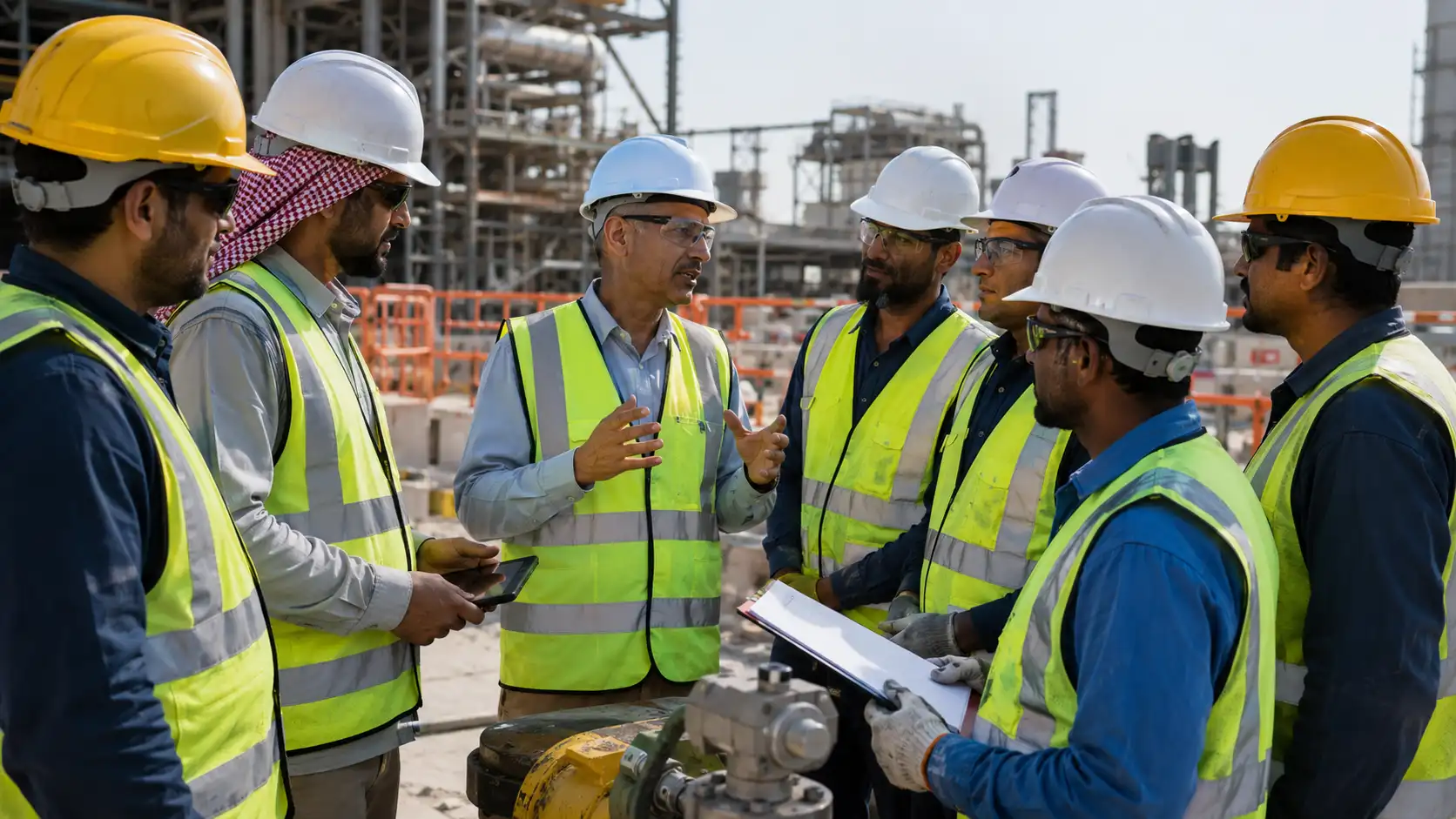
The simple safety officer meaning is a trained professional who protects people at work by preventing accidents before they happen. They are the eyes on the ground for safety, checking the site, stopping unsafe acts, and making sure the workplace follows Saudi safety law.
Every site needs one because hazards do not wait. On a busy construction or oil and gas site, a single missed risk can cost a life, halt the project, and bring heavy penalties. A safety officer is the person who catches that risk first, which is why no serious employer in the Kingdom runs a site without one.
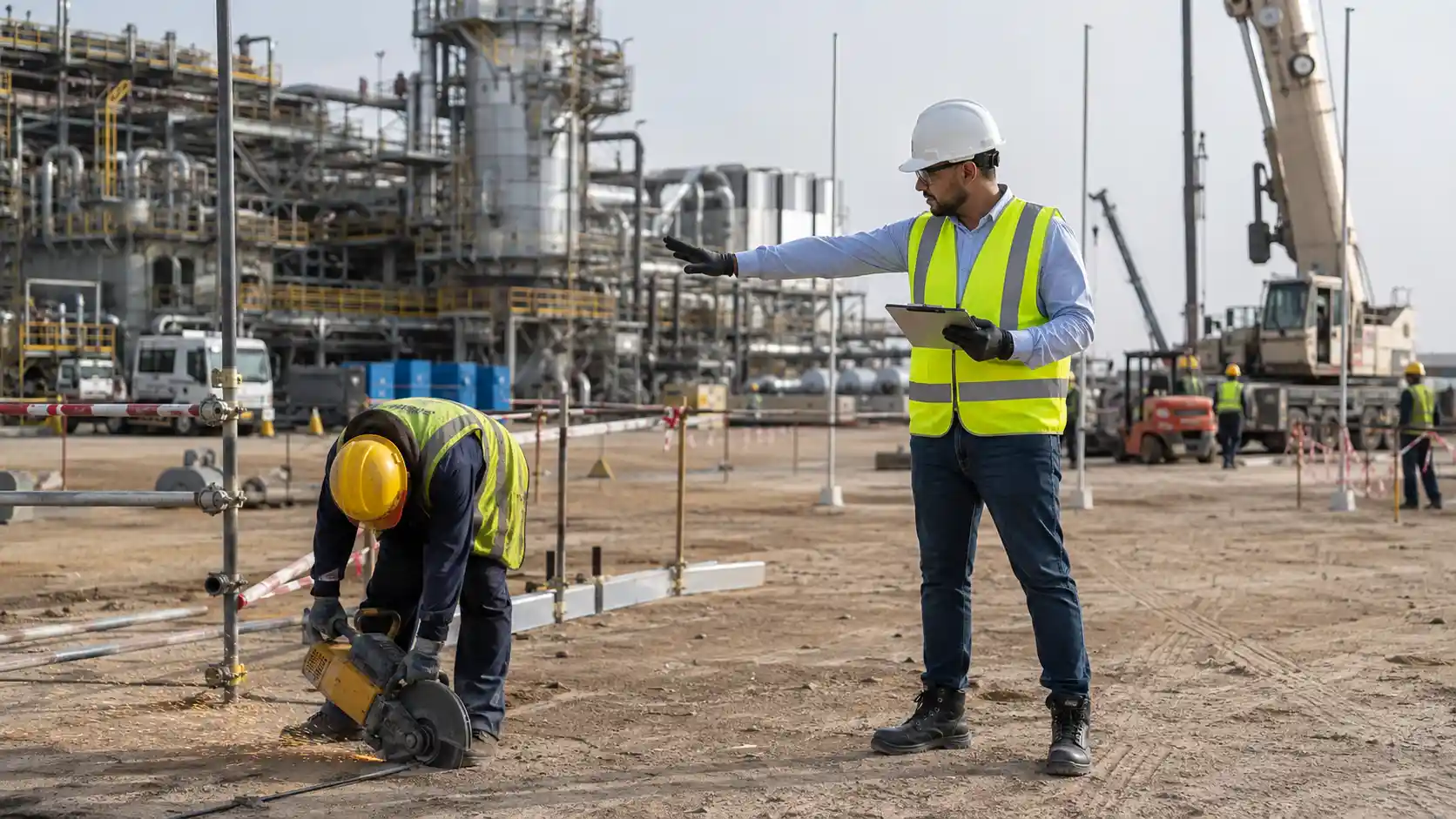

Safety Officer Roles and Responsibilities
The day to day duties of a safety officer cover five main areas, from prevention to reporting:
| Area | What the safety officer does |
|---|---|
| Prevention | Inspects the site, spots hazards, and enforces PPE use |
| Compliance | Keeps the workplace in line with Saudi law and client rules |
| Training | Runs toolbox talks, inductions, and safety briefings |
| Investigation | Investigates incidents and finds the root cause |
| Reporting | Keeps records and reports to management and the authorities |
These duties make the safety officer a key link between the workforce, management, and bodies like the Saudi Civil Defence and MHRSD.
How to Become a Safety Officer
Becoming a safety officer is a clear path, and you do not need a university degree to start. The usual safety officer requirements are simple: you should be at least 18, able to read and write in English or Arabic, and physically fit for site work. From there, the steps are:
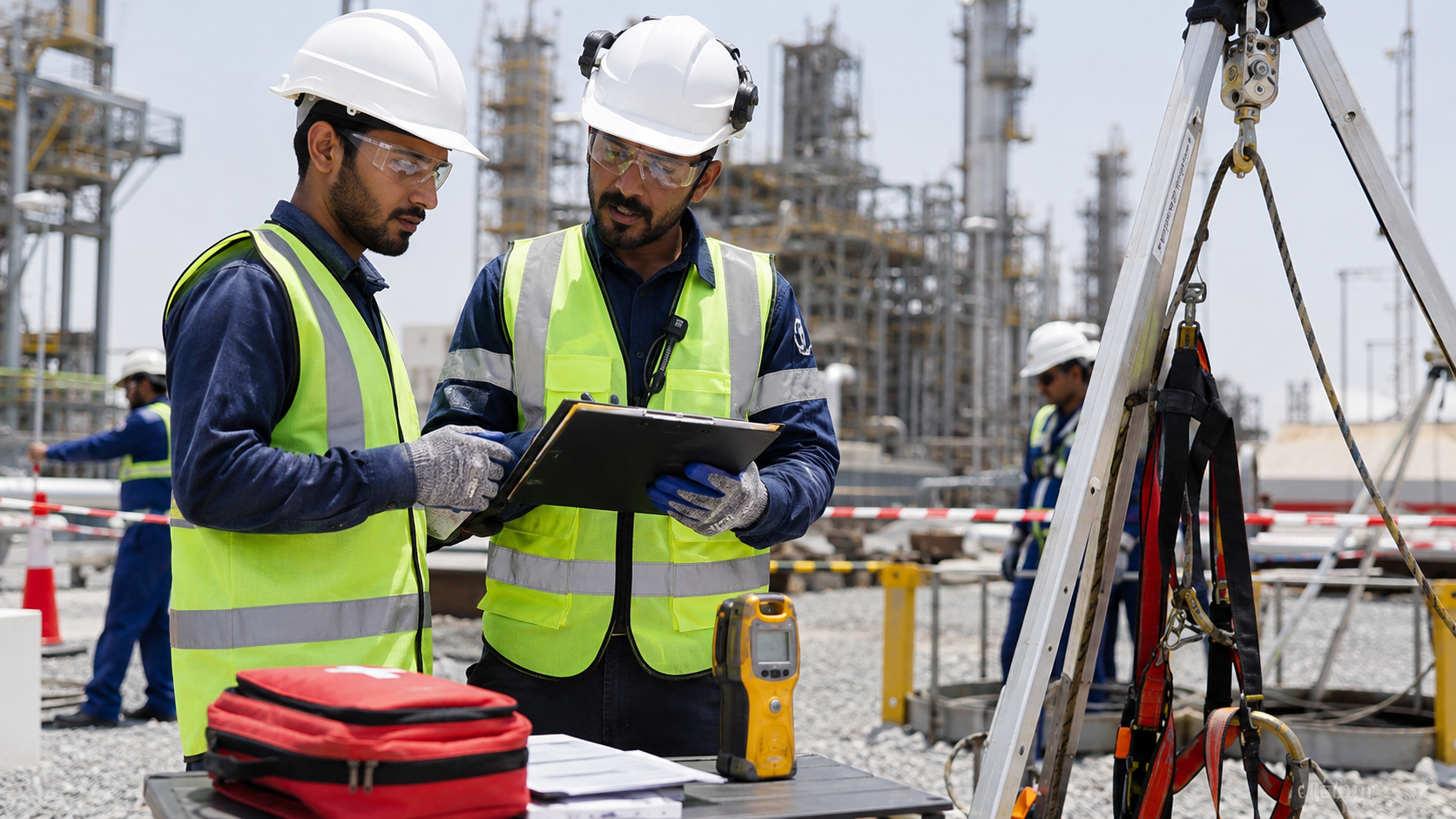
Safety Officer Course Content
This safety officer training course mixes classroom theory with practical, real world exercises. You learn to:
Identify hazards and carry out a risk assessment
Run site inspections and safety audits
Investigate incidents and find the root cause
Lead toolbox talks and safety inductions
Keep records and meet Saudi compliance rules
Plan and coordinate an emergency response
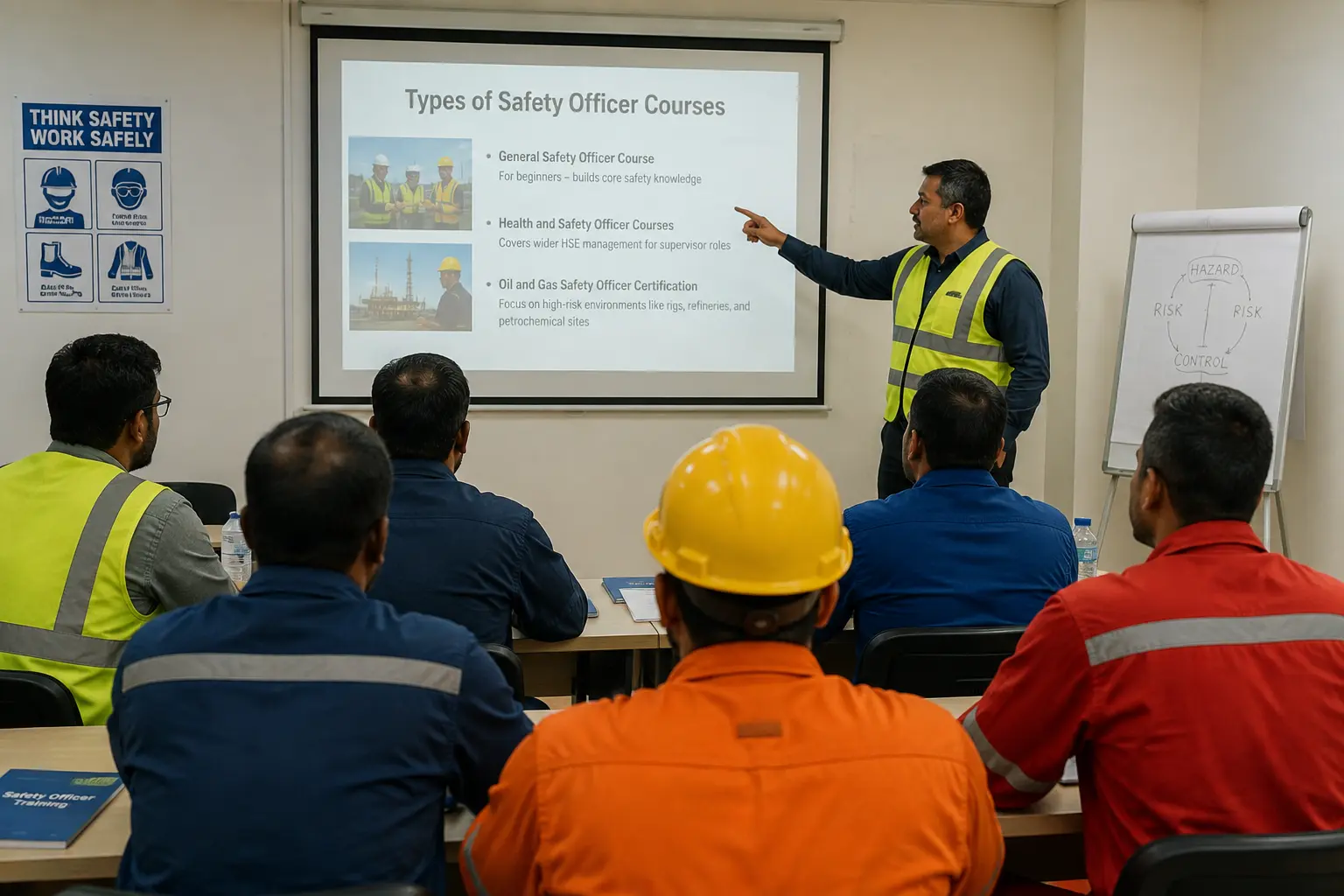
Types of Safety Officer Courses
There is no single path, so we offer different types of safety officer course to match your goal. A general safety officer course suits newcomers building core skills. Broader health safety officer training courses cover wider HSE management for those moving into supervisor roles. And for the Kingdom’s biggest employers, our oil and gas safety officer certification courses focus on the high risk hazards found on rigs, refineries, and petrochemical sites.
Who Should Attend
This course suits anyone starting a safety career, plus supervisors and team leaders who have taken on safety duties, site engineers, and workers ready to move up from the tools into an HSE role. It is also a strong refresher for current officers who want an up to date, recognised certificate.
Certification & Verification
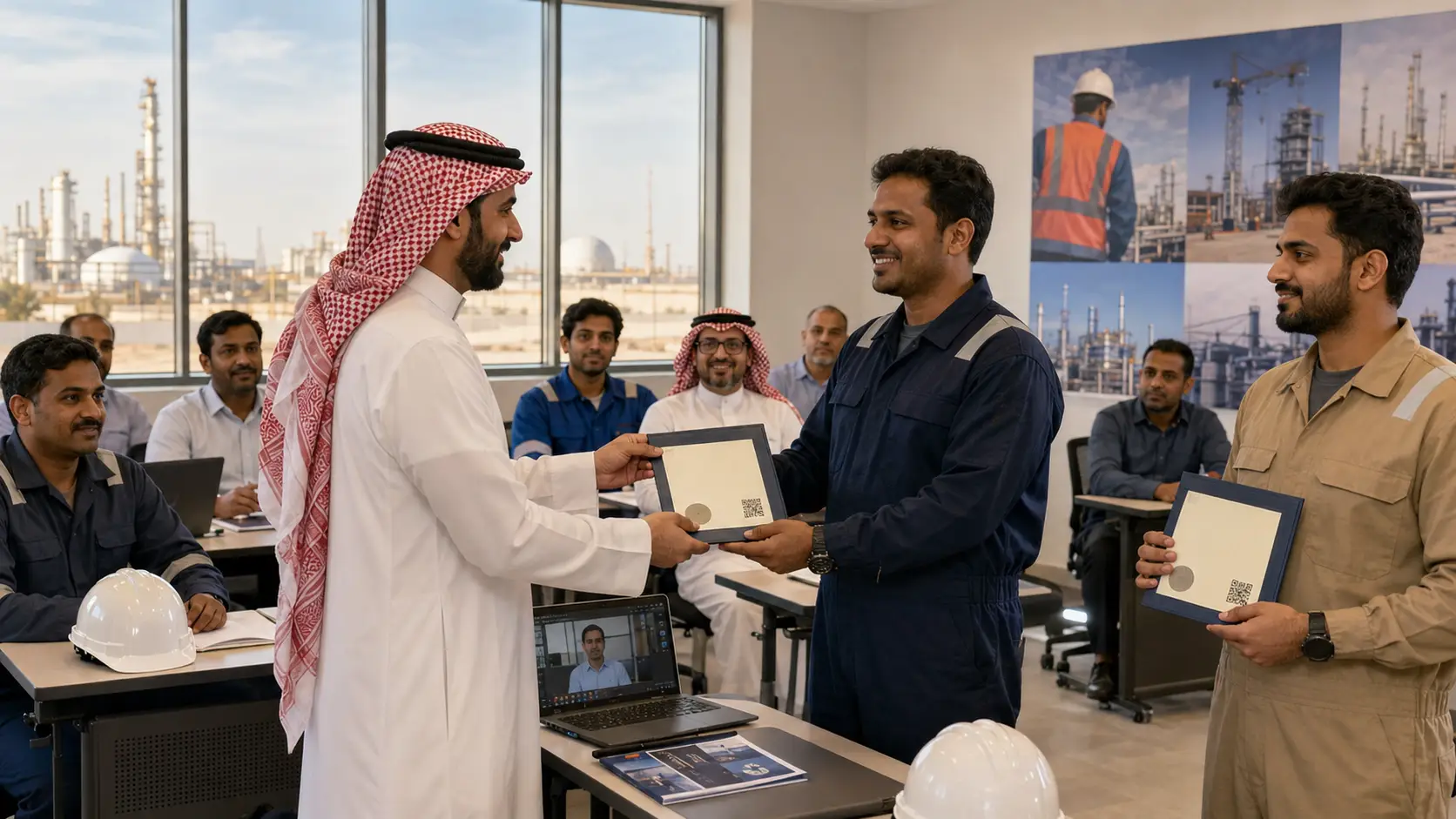
On completion, you earn an accredited safety officer certificate, valid for two years, after passing both a knowledge test and a practical assessment. Every certificate comes with a QR verifiable wallet card, so an employer can confirm it is genuine in seconds, no phone calls, no waiting. This makes our online safety officer training in Saudi Arabia a flexible route for working people who want a certificate that stands up to any check.
Why Train With Future Institute for Advanced Professional Training
As a trusted provider of health and safety training courses across the Kingdom, we do more than hand out a certificate; we build officers who can walk onto a site and lead. Our trainers bring real HSE field experience, our sessions use practical inspection and investigation exercises instead of slides alone, and we teach in Arabic, English, Hindi, and Urdu. We have trained safety teams for construction firms, plants, and Saudi Aramco contractors, and we can deliver at your site on short notice.
Related Safety Courses
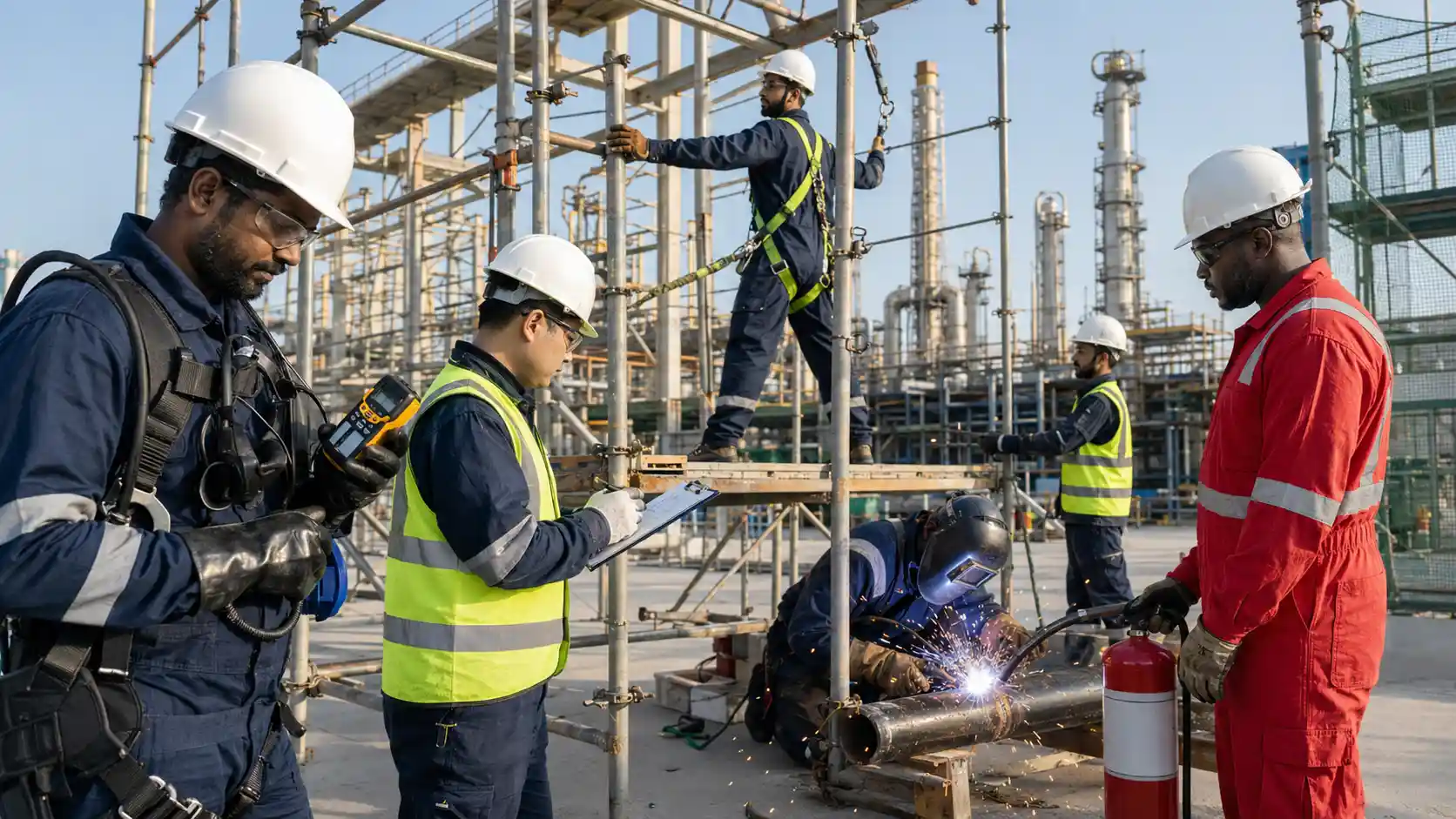
A strong safety officer holds more than one ticket. Pair your safety officer training with our H2S training, Confined Space Entry training, Basic First Aid training, and Working at Heights training to become the all round professional employers want.
Frequently Asked Questions
Book Your Safety Officer Course
Reserve your place with Future Institute, Al Khobar’s safety training center. Our advisors will confirm the next available batch and can deliver the course at your site in Arabic, English, Hindi, or Urdu.