
Online Fire Watch Training in Saudi Arabia
Most industrial fires do not start with the welder. They start after the welder walks away, when a hidden spark
is left smouldering. A certified fire watcher is the person who stays, spots it, and stops a small
ember becoming a shutdown.
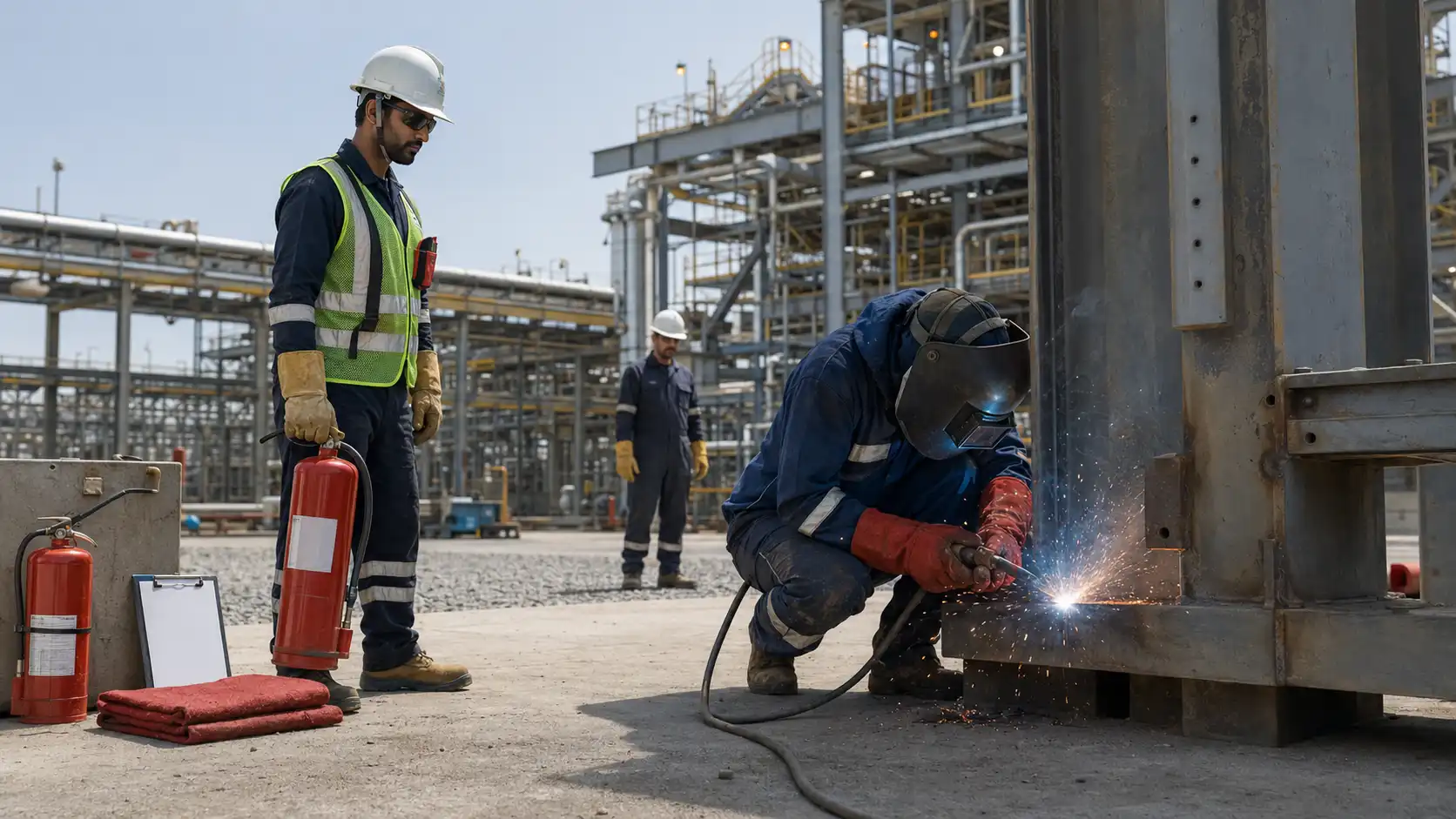
A hot work permit gets signed, the welding starts, and everyone focuses on the weld. But the real danger is the shower of sparks landing where no one is looking, quietly smouldering long after the tools go quiet. This is the exact gap a fire watcher fills, and building that skill is what fire watch training is for. It turns “someone standing nearby” into a trained set of eyes that can tell a harmless spark from the start of a serious fire.
Your team walks away able to survey a hot work area before it begins, map where sparks and slag will actually land, grab and fire the correct extinguisher without hesitation, and hold the post work watch until every hot spot is cold. Because the certificate is TVTC approved, it carries weight on the sites that ask for it, from welders and grinders to maintenance crews, contractors, and the safety officers who sign them off.
Future Institute has stood behind hot work teams on plants, builds, and Saudi Aramco projects across the Kingdom for years, and that experience shapes every session. Where a crew needs more, we add refresher rounds and companion tickets such as first aid certification for site teams and confined space entry training. Every candidate discharges a live extinguisher under instruction before a card is issued, so your watchers leave having done the thing, not having watched a slide about it.
What Is Fire Watch Training?
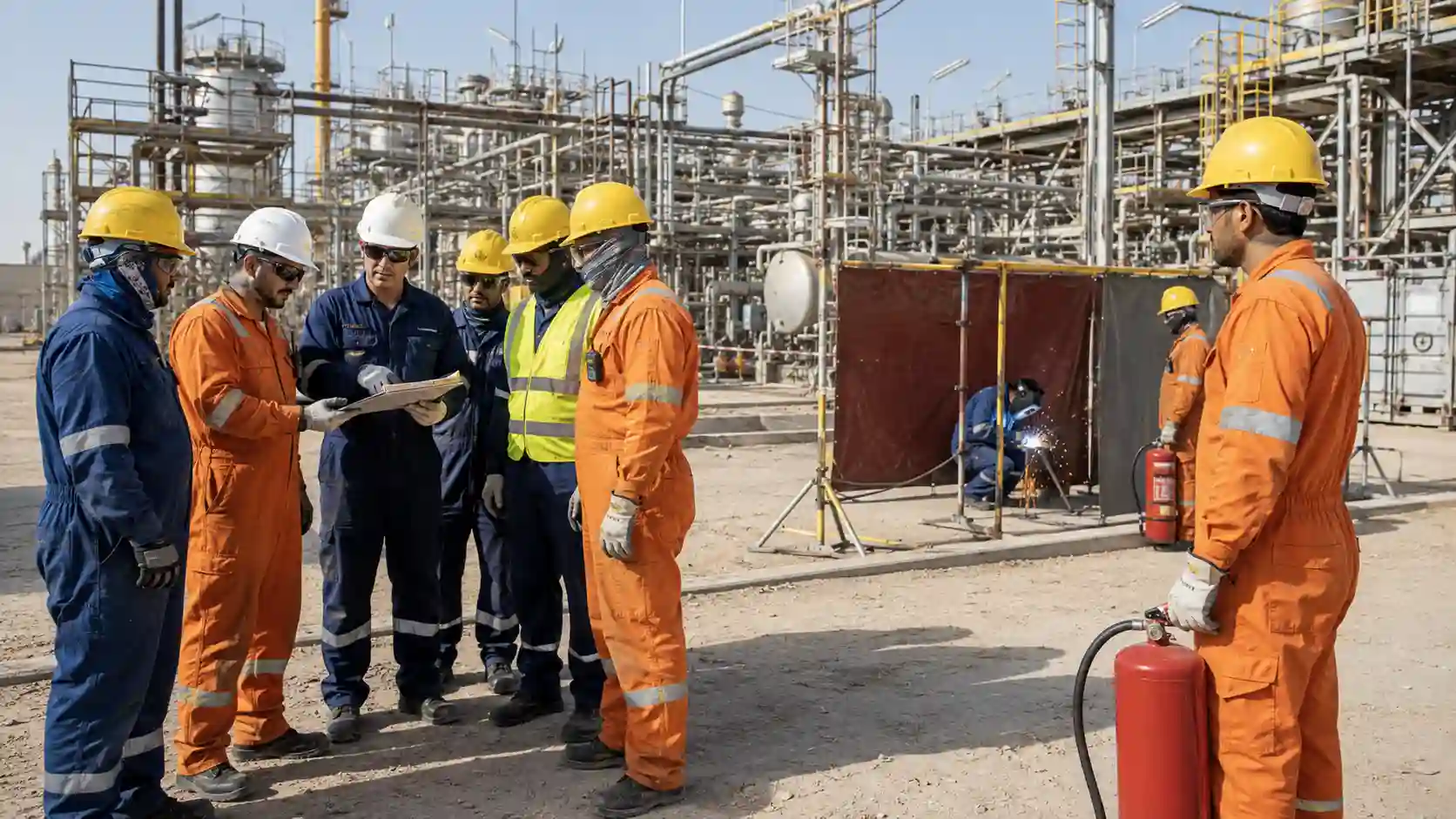
Fire Watch Training course qualifies a worker to serve as a dedicated fire watcher during and after hot work such as welding, cutting and grinding. Most Saudi worksites will not issue a hot work permit without a trained watcher on station.
Hot work throws slag that travels further than most crews expect and can sit hidden long after the tools go quiet. That is the window the training covers. It turns someone standing nearby into a trained set of eyes who can tell a harmless spark from the start of a serious fire, and who knows exactly what to do in the seconds that matter.
Who Is a Fire Watcher?
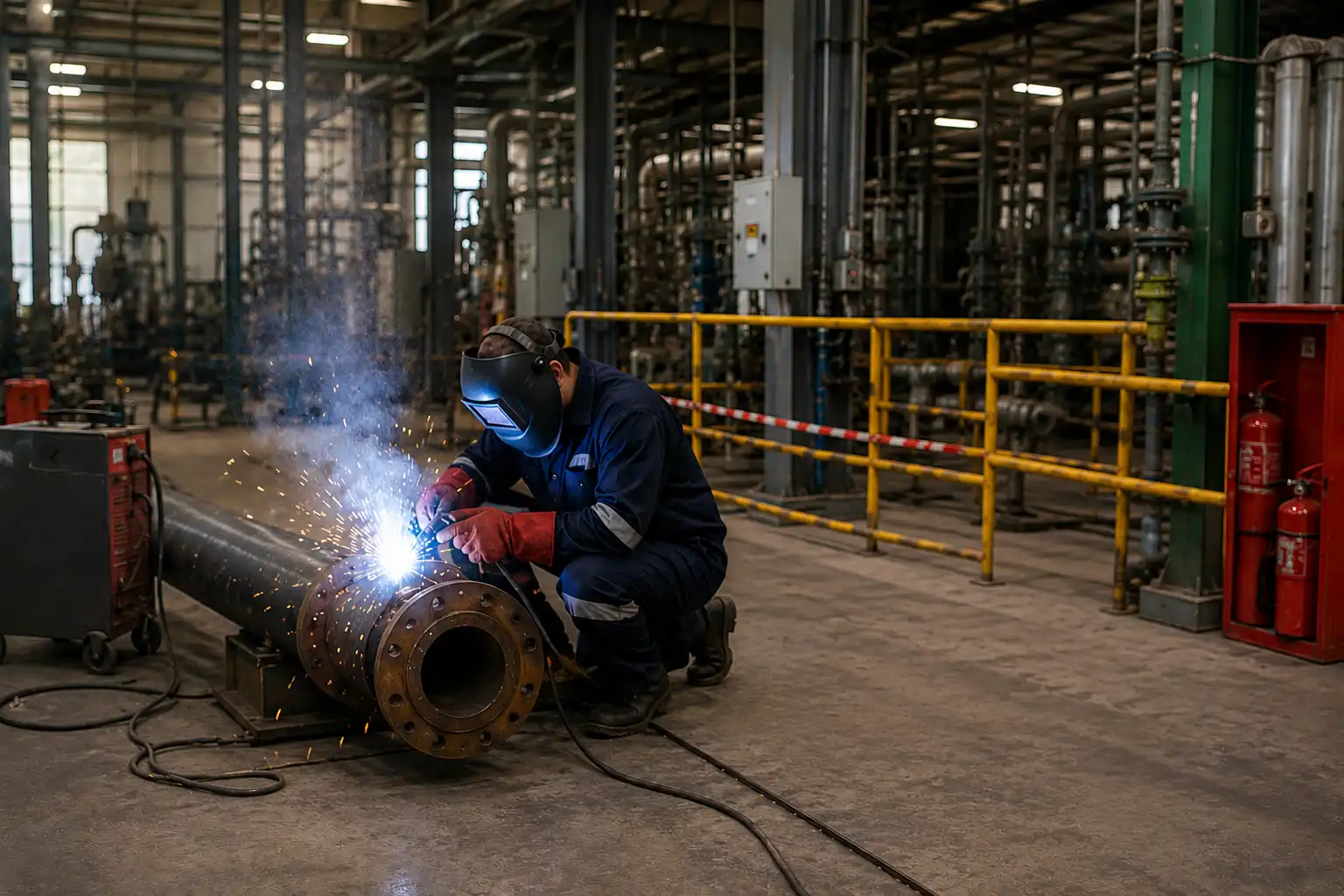
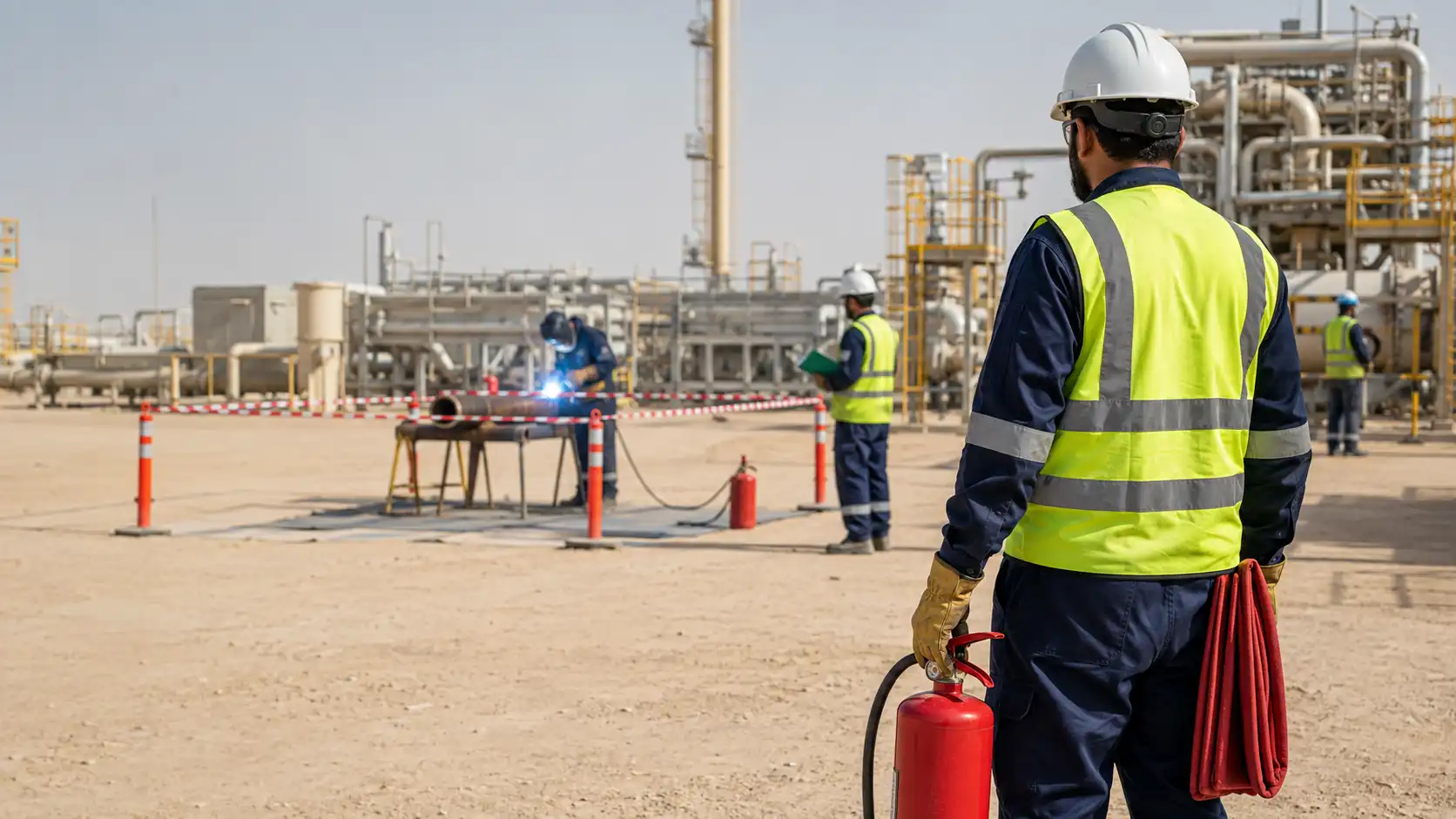
A fire watcher, also called a fire watchman or stand by man, is the person posted to one specific hot work task. The role is dedicated, so no other duty may be carried while the watch is live. On Saudi sites all three names are used for the same job, and SBM is common on contractor paperwork. Whatever the permit calls it, the requirement is the same.
Dedicated is the key word. A fire watcher who is also passing tools or fetching material is not on watch, and a permit officer who sees it can stop the job. Fire watcher training makes that distinction automatic, so the watch holds even when the site is busy. A certified fire watch is what a permit officer looks for before signing.
Course Duration and Assessment
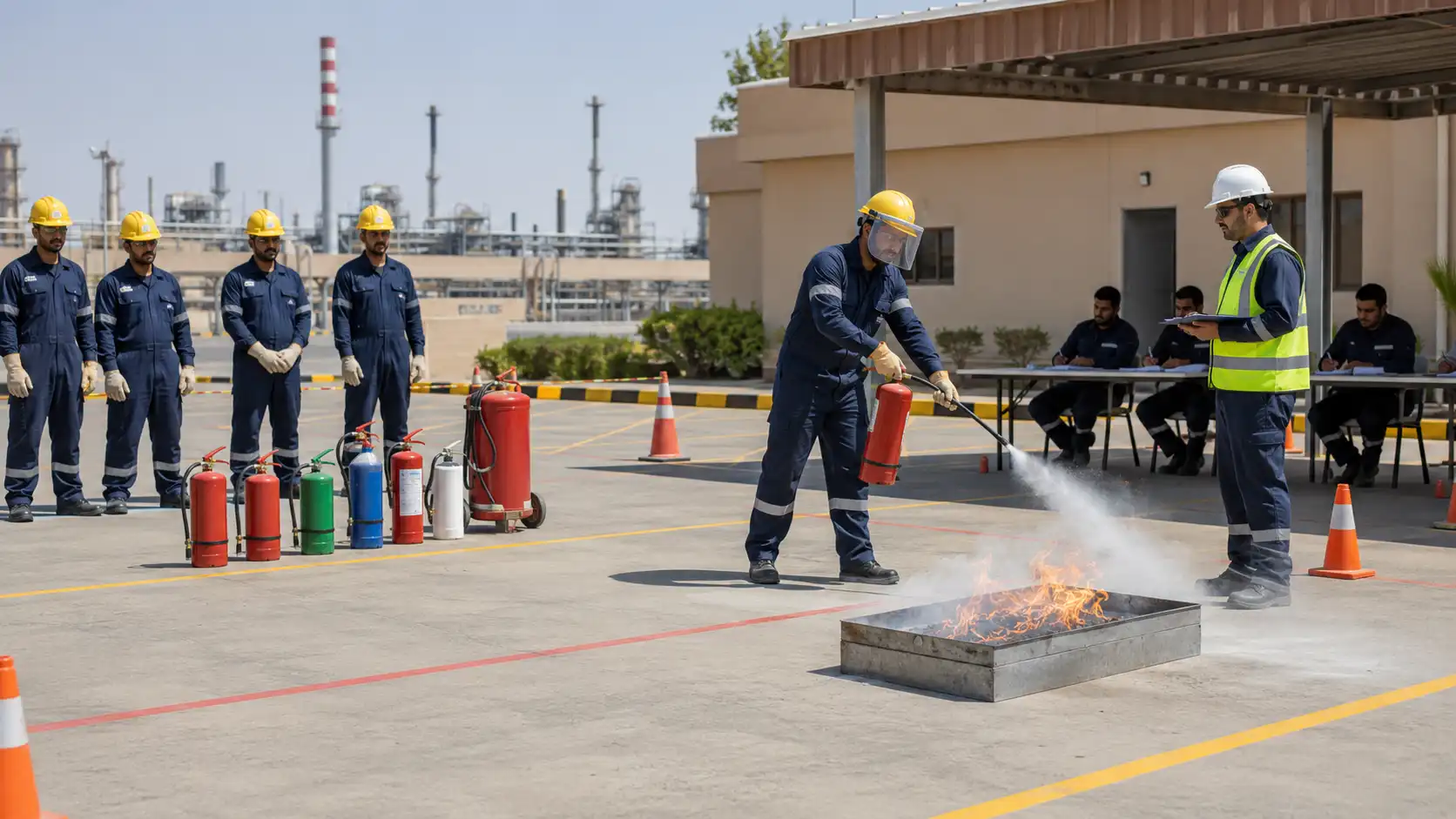
The course is a one day programme delivered in a focused three to four hour session that mixes classroom theory with live extinguisher practice. Candidates pass a short written exam and a practical assessment before certification.
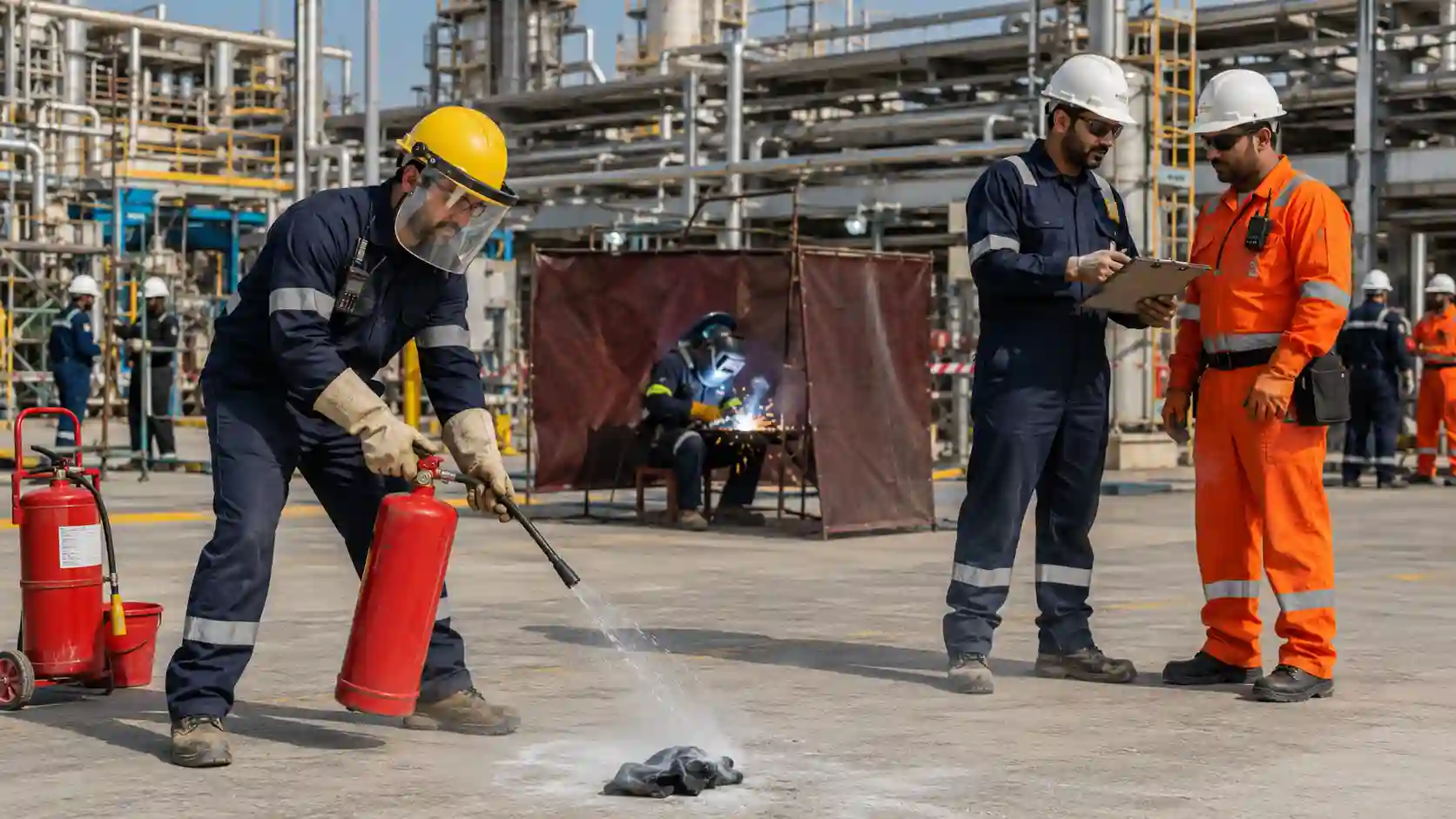
The written paper checks understanding of hot work hazards, watch duties and equipment selection. The practical is done on the extinguisher line, where the candidate identifies the correct class, applies it properly and demonstrates a safe approach and retreat. A candidate who does not pass the practical repeats it the same day with the instructor rather than being sent away.
Fire Watch Training Certification and Verification
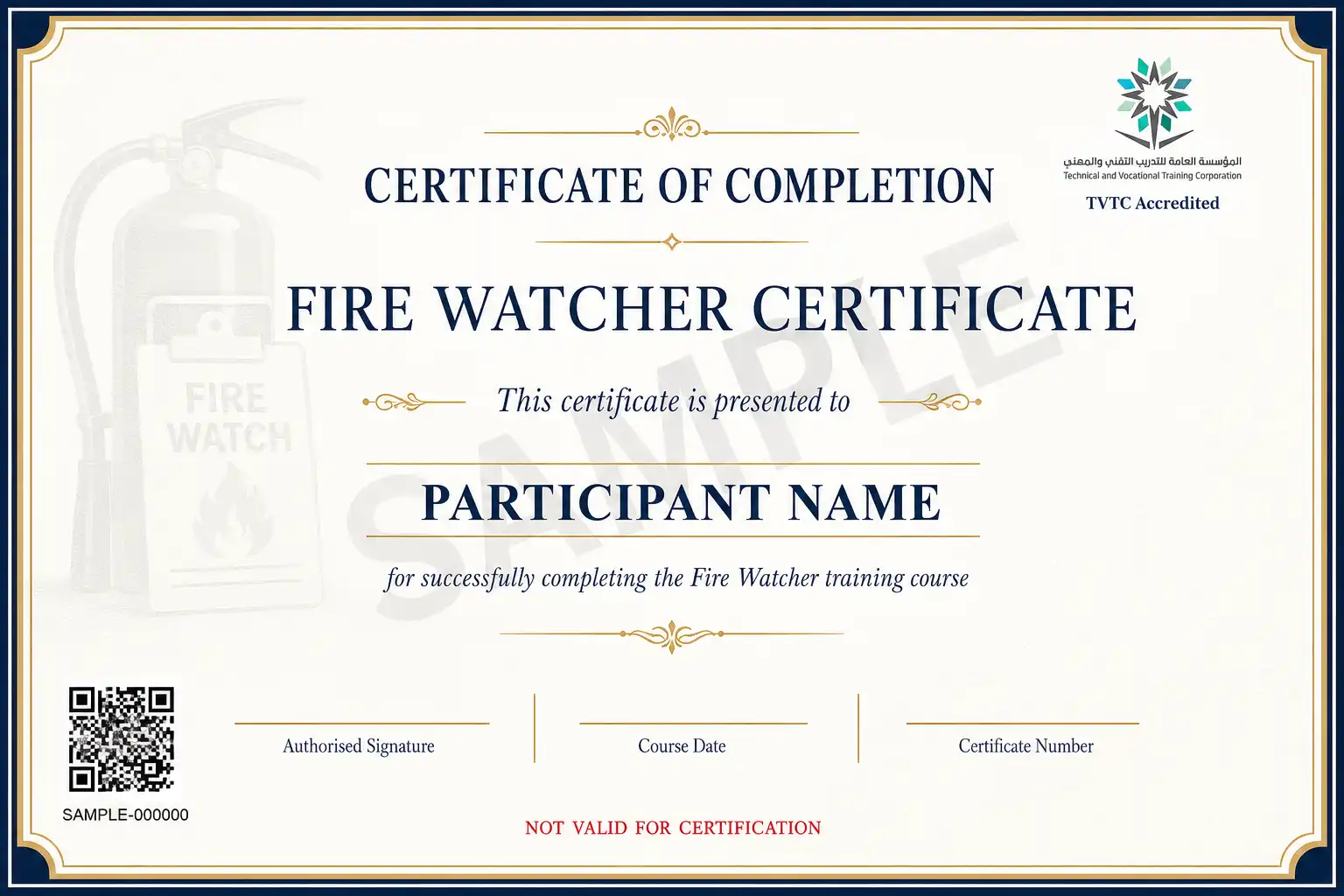
Every successful candidate receives a fire watch training certification valid for two years. Each certificate carries a unique number, so an employer or permit officer can confirm it online before hot work begins.
The certificate carries the holder name, the course completed, the issue date, the expiry date and a unique certificate number in the format FVCAT-26-149967. Enter that number on our verify a certificate page and the record returns the holder name, the course and the validity dates.
Validity runs two years from the issue date. Renewal is a short refresher rather than the full course.
Fire Watch Training Cost in Saudi Arabia
Cost depends on group size, whether the course runs at our centre or on your site, and the delivery mode. Group bookings attract the lowest rate per candidate, and quotes are returned within one working day.
How Fire Watch Training Is Delivered
You can train at our center, at your own site, or through Fire watch training saudi arabia online. The online route lets your team study the theory first, then finish the practical extinguisher work with an instructor. This online fire watch course in Saudi Arabia suits large crews that need many watchers certified quickly, without pulling everyone off site on the same day.
Where We Deliver Fire Watch Training Across Saudi Arabia
Training runs at our Al Khobar centre and on client sites across the Kingdom, including Dammam, Dhahran, Jubail, Ras Tanura and Abqaiq, with mobilisation to Yanbu, Riyadh and Jeddah on request.
Most of our fire watch work sits in the Eastern Province industrial belt, where hot work demand concentrates around refineries, fabrication yards and plant maintenance. Crews there can usually be covered within a few days of enquiry.
For sites further out, including the western corridor and remote projects, we mobilise a trainer with the extinguisher equipment to your location. Shutdown and turnaround teams that need a large batch of watchers certified in a single week should book early, because that is when the Kingdom wide demand peaks.
Who Needs Fire Watch Training?
This course suits designated fire watchers, welders and hot work operators, maintenance crews, contractors, and safety officers on oil, gas, construction, and industrial sites. Anyone who may be posted to watch during hot work should hold a valid ticket before they take the role.
Shutdown and turnaround crews are the heaviest users. A single turnaround can need dozens of watchers certified inside one week, and the crews that plan for it early are the ones whose permits issue on day one instead of day three.
Benefits of Fire Watch Training in Saudi Arabia
Certified fire watchers keep hot work permits moving, reduce the risk of a job being stopped mid shift, and satisfy the competency evidence contractors are asked for during audits.
The obvious return is that permits issue without argument. The less obvious one is what does not happen. A trained watcher who catches a smouldering rag saves a shutdown, an investigation and the days of lost production that follow it. Training a crew costs less than one stopped shift.
Fire watcher training pays back in two directions. For the employer it keeps hot work permits moving and satisfies the competency evidence contractors are asked for during audits. For the individual it is a recognised entry point into site safety work.
Why Train With Our Safety Training Center
Our watchers train with live extinguishers and instructors who have held hot work permits themselves, in Arabic, English, Hindi and Urdu, at our centre or on your site at short notice.
Our lead fire safety trainer, has spent years on hot work permits across refineries, construction sites and shutdown projects in the Eastern Province. Every candidate discharges a live extinguisher under his supervision before a card is issued. We have delivered fire safety programmes for construction firms, plants and Saudi Aramco contractors, and we can come to your site on short notice.
Fire Watch Responsibilities
NFPA 51B fixes the duties of a fire watcher from the moment the arc strikes until the area is proven cold. Six responsibilities apply on every hot work task, and skipping any one turns a controlled job into an incident.
Miss any one of these, and a controlled job can turn into an emergency. The course drills each duty until it becomes second nature.
NFPA 51B Requirements for Hot Work
NFPA 51B requires a fire watcher whenever hot work happens within 10.7 metres of combustible material that cannot be moved or shielded. The watch must continue after the tools stop, not end when the welder finishes. NFPA 51B is the standard for fire prevention during welding, cutting and other hot work, and it is the framework most Saudi industrial operators build their permit systems around. It sets out what has to happen before the arc strikes as well as during the job. Combustibles inside the radius are removed where possible and covered or screened where they cannot be. Openings, floor gaps and wall penetrations near the work are closed, because slag travels through them.
OSHA 29 CFR 1910.252 covers the same ground for welding, cutting and brazing, and AWS F4.1 adds the preparation rules for work on containers and piping. Candidates on this course are taught what each one requires of the watcher on the ground rather than asked to memorise clause numbers.
Fire Watch Equipment Checklist
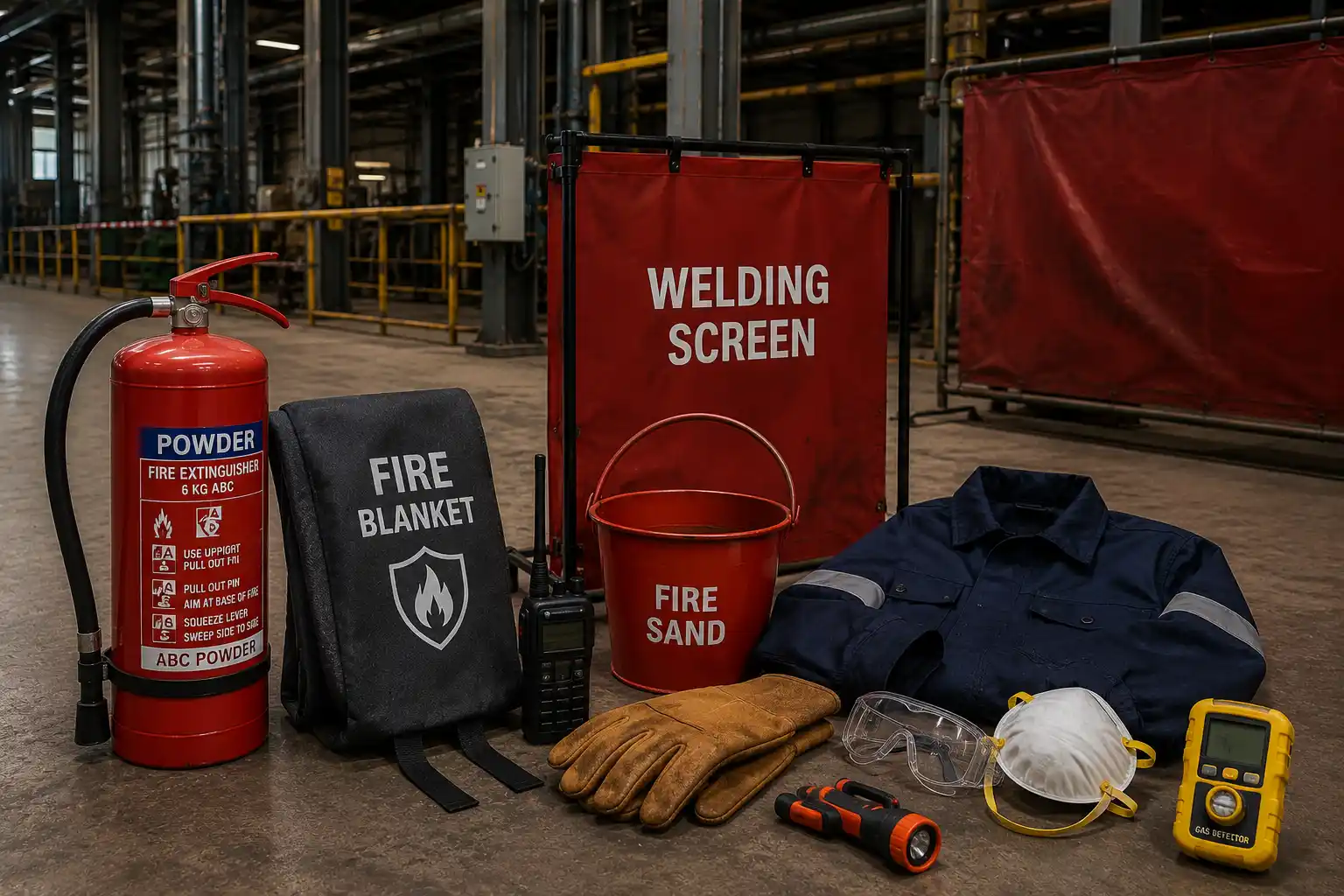
Fire watch safety depends on the right equipment being staged before the first spark. Extinguisher class, reach and readiness are checked as part of the permit, not improvised once hot work has started.
| Equipment | Purpose |
|---|---|
| Fire extinguisher (correct class) | Put out a small fire fast |
| Fire blanket | Smother sparks and small flames |
| Water hose or bucket | Cool hot spots and slag |
| Radio or phone | Raise the alarm and call for help |
| Flame resistant PPE | Protect the watcher from heat and sparks |
Selecting the correct class matters more than most crews expect, because the wrong agent on the wrong fire can spread it. Extinguisher handling is covered in more depth on our basic fire fighting course.
Frequently Asked Questions
Book Your Fire Watch Training
Book a batch with Future Institute. Our advisors will confirm the next available date and can deliver the course at your site in Arabic, English, Hindi or Urdu anywhere in the Kingdom.