
Online Dangerous Goods Training in Saudi Arabia
We train your team to classify, pack, label, and move hazardous items safely by air, sea, and road.
You learn the nine UN classes, the right paperwork, and how to respond in an emergency, built
for real Saudi worksites.
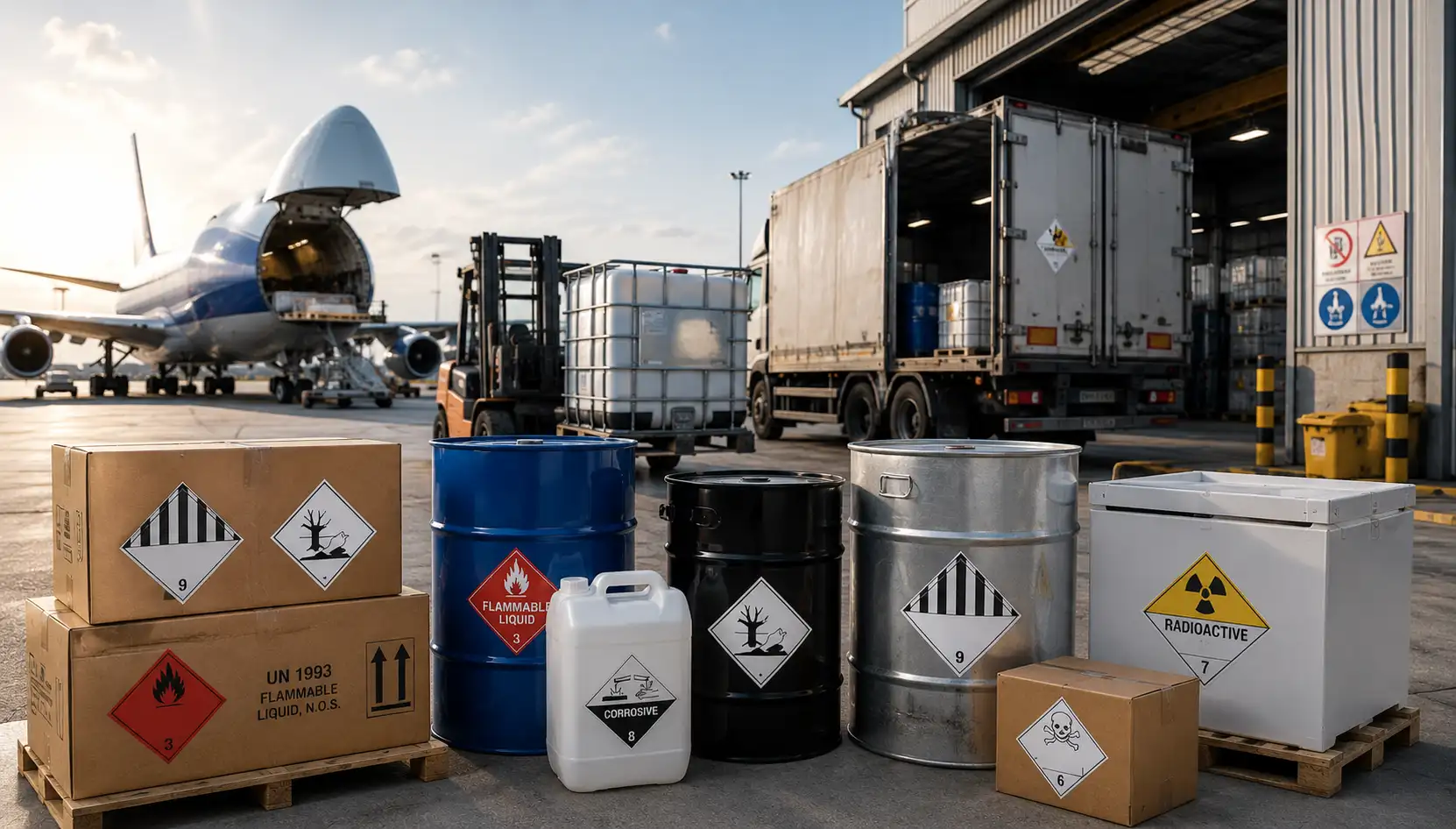
We help Saudi companies keep their people, cargo, and licence safe when hazardous items are on the move. Our dangerous goods training turns everyday workers into a confident, compliant team. You get practical skills, not just theory: your staff leave able to classify, pack, label, and move hazardous materials the right way, by air, sea, or road. Training runs at our Al Khobar center, on your site, or online, in a language your team understands. The result is simple: safer shipments, fewer incidents, and paperwork that passes every check.
What Is Dangerous Goods Training & Why Is It Important?
This training teaches workers how to classify, pack, mark, label, and transport hazardous materials without putting people or the environment at risk. The course follows the international rules used in Saudi Arabia: the UN classification system, the IATA Dangerous Goods Regulations for air, the IMDG Code for sea, and the ADR rules for road.
This training is needed by anyone who ships, handles, loads, or moves hazardous items, including shippers, warehouse and logistics staff, drivers, freight forwarders, and safety officers. Employers in oil and gas, petrochemical, aviation, and shipping also need trained staff to meet Saudi and client rules. If your job touches a hazardous package, this course keeps you safe and compliant.
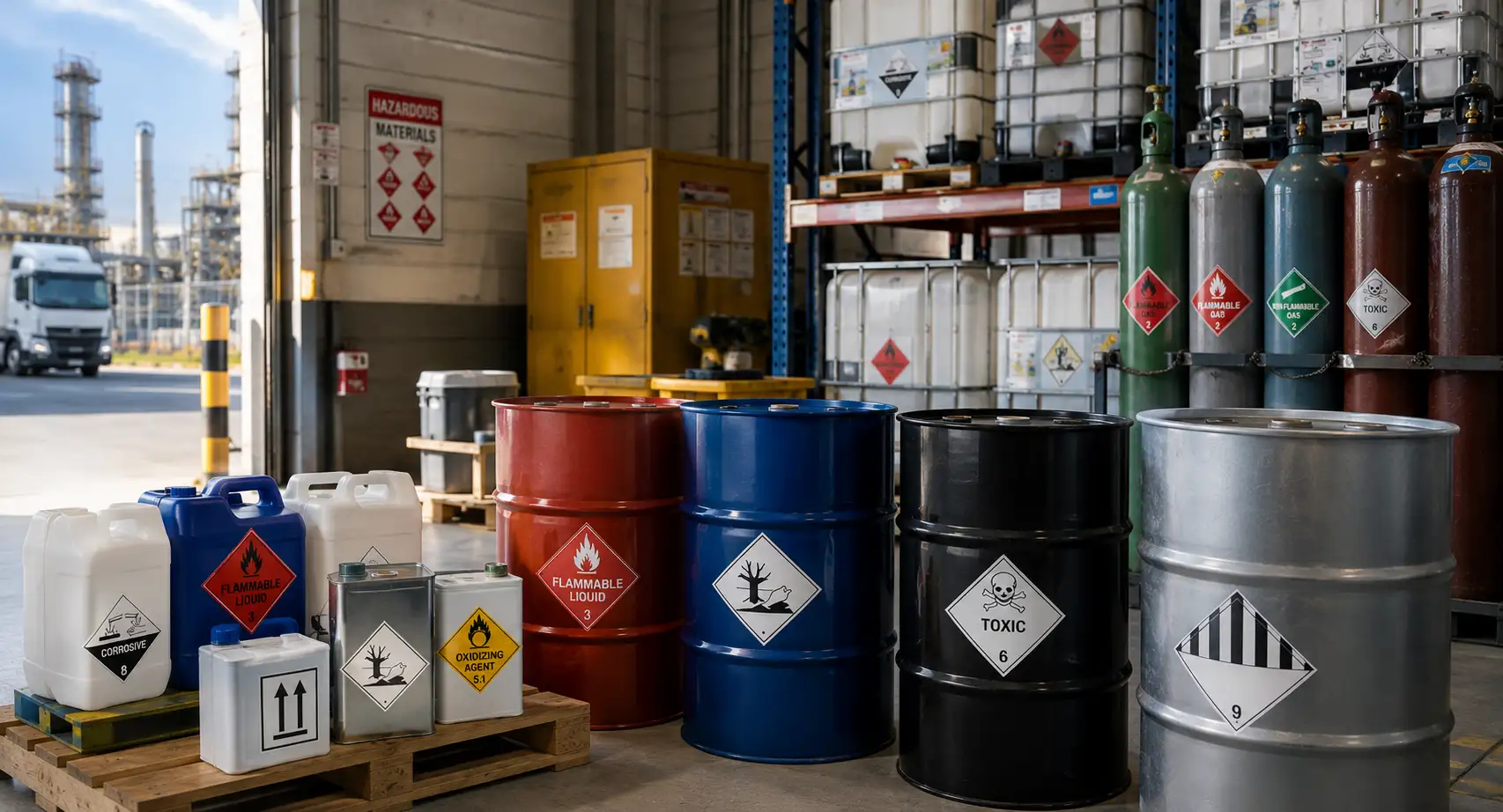
The 9 Classes of Dangerous Goods, With Examples
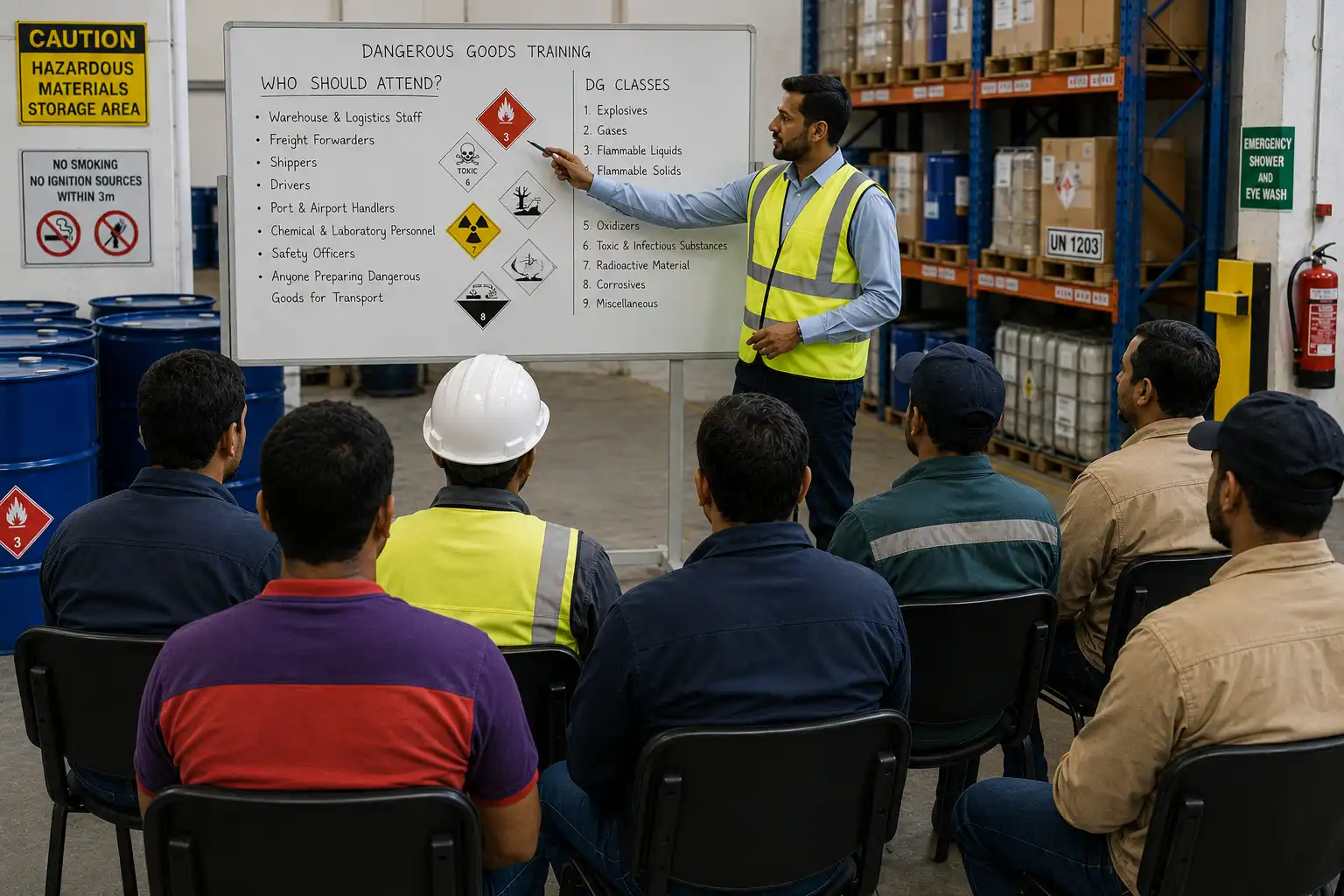
Every hazardous item fits into one of nine UN classes. Knowing the class is the first step to safe packing,
labelling, and transport. These are the nine dangerous goods classes with common examples:
| Class | Hazard Type | Common Examples |
|---|---|---|
| Class 1 | Explosives | Ammunition, blasting agents, fireworks |
| Class 2 | Gases | LPG, oxygen, acetylene, aerosols |
| Class 3 | Flammable liquids | Petrol, diesel, solvents, paints |
| Class 4 | Flammable solids | Matches, sulphur, metal powders |
| Class 5 | Oxidisers and organic peroxides | Ammonium nitrate, peroxides |
| Class 6.1 | Toxic substances | Pesticides, cyanides, arsenic compounds |
| Class 6.2 | Infectious substances | Medical and biological samples |
| Class 7 | Radioactive material | Isotopes, industrial radiography sources |
| Class 8 | Corrosives | Sulphuric acid, caustic soda, batteries |
| Class 9 | Miscellaneous | Lithium batteries, dry ice, magnetised material |
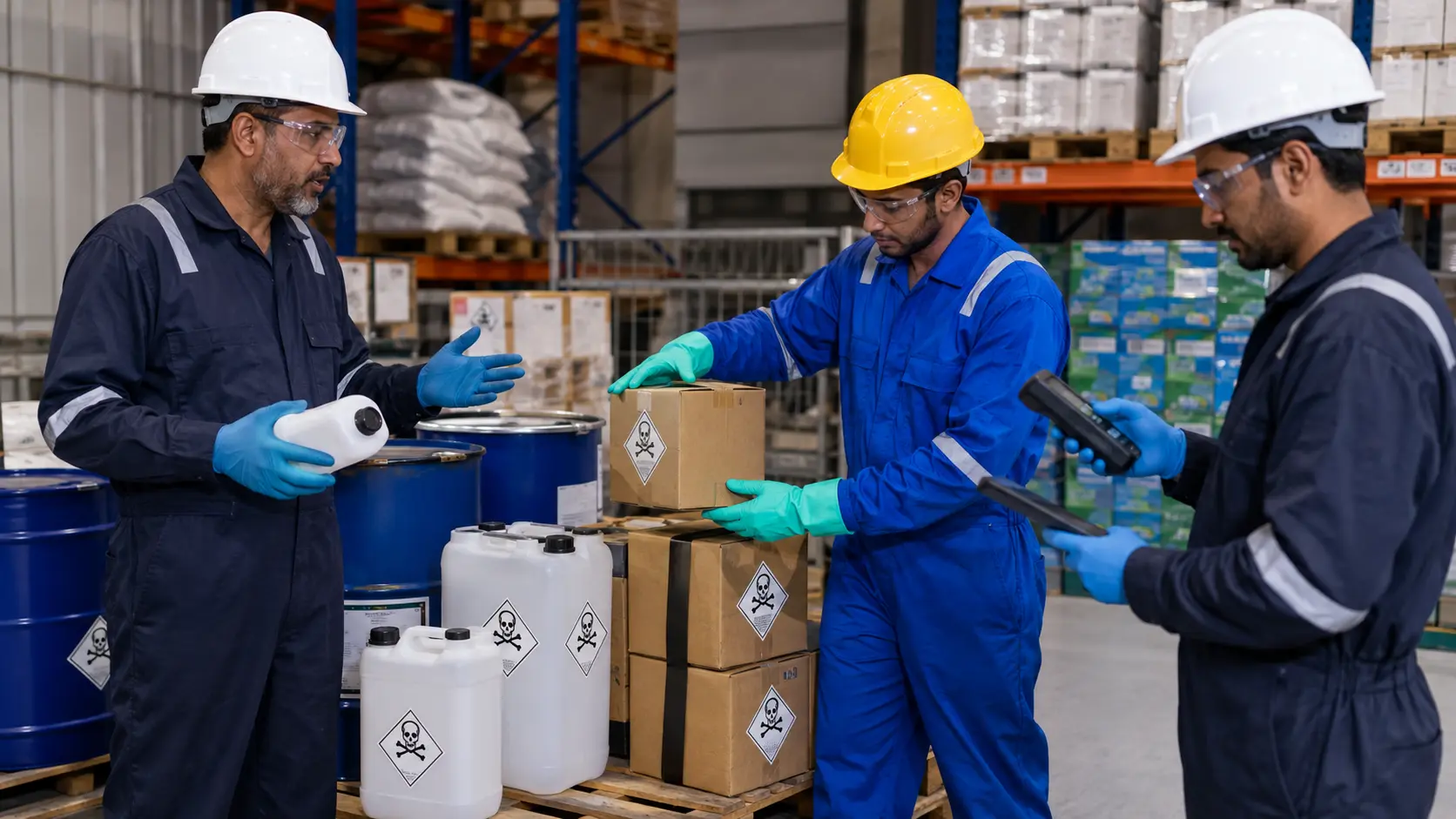
Class 6.1 dangerous goods are toxic substances that can cause serious injury or death if swallowed, inhaled or absorbed through the skin. Because they are common in pesticides and industrial chemicals across the Kingdom, Class 6.1 handling and segregation is covered in detail on this course.
Dangerous Goods Handling and Transportation
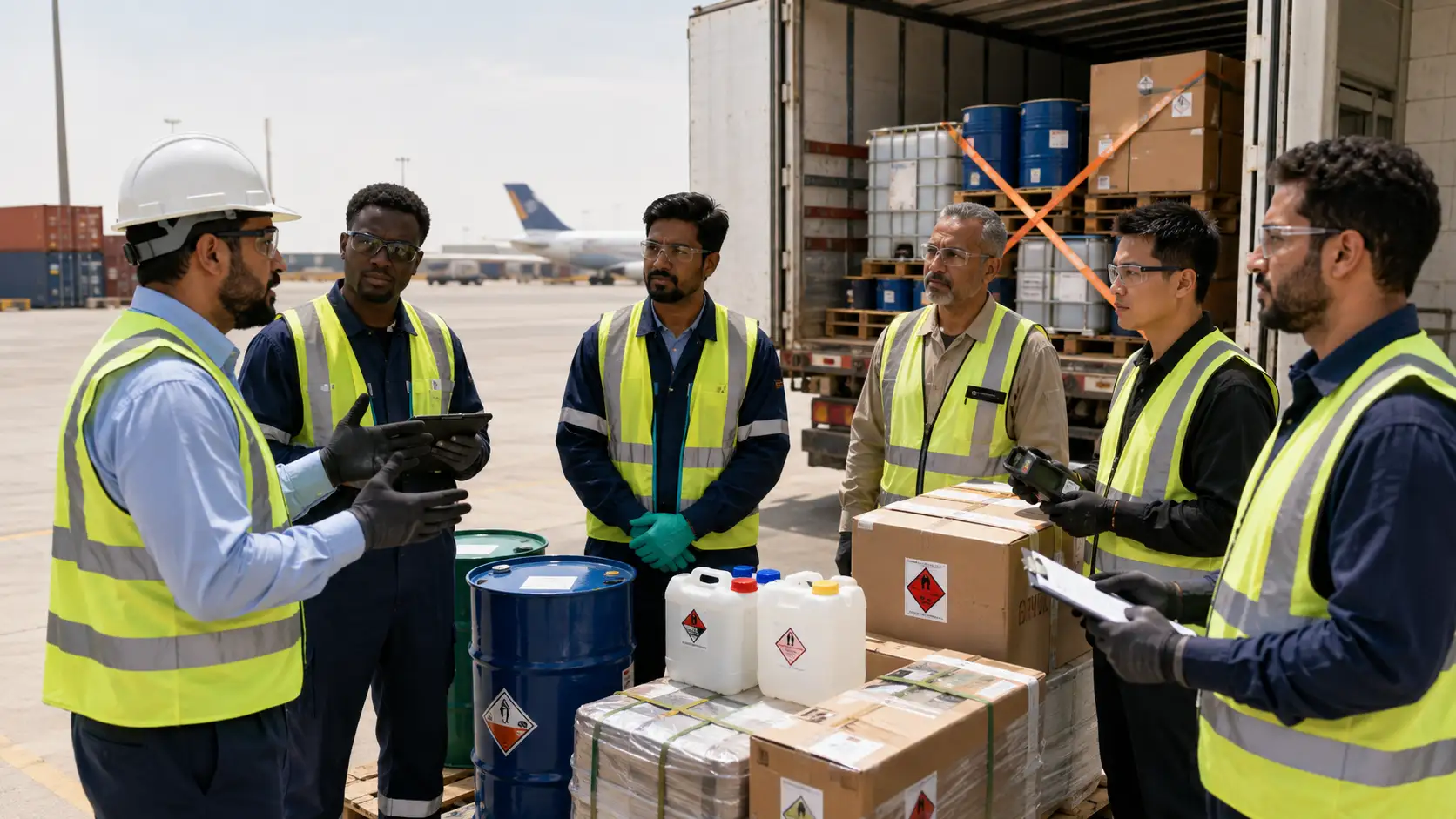
Safe dangerous goods handling starts the moment an item is picked up and continues until it reaches its destination. Your team learns how to lift, store, and stack hazardous packages, how to keep incompatible materials apart, and how to load a vehicle so nothing shifts or leaks. For the transportation of dangerous goods, the course covers the rules for air (IATA), sea (IMDG), and road (ADR), plus the documents a driver or shipper must carry. This keeps every shipment legal and safe across Saudi Arabia and beyond.
Class 6.1 Dangerous Goods: Toxic Substances
Class 6.1 covers toxic substances that can cause serious harm or death if swallowed, breathed in, or absorbed through the skin. Common class 6.1 dangerous goods include pesticides, cyanide compounds, arsenic, and many industrial chemicals. The course shows your team how to spot these materials, pack them apart from food and other goods, and use the correct toxic hazard label so handlers know the risk at a glance.
Dangerous Goods Course Content
This course combines classroom theory with practical exercises. The syllabus covers:
The nine UN classes and how to classify a material
Proper shipping names and UN identification numbers
Packaging selection and packing groups
Marking, hazard labels, and placards
Shipping papers and transport documents
Segregation and safe loading rules
Handling, storage, and transport by air, sea, and road
Emergency response and incident reporting
Dangerous Goods Packaging and Packing Groups
Correct dangerous goods packaging keeps a hazardous item contained during transport. Packaging is chosen by the material’s class and its packing group, which shows how dangerous it is. The course teaches your team to match the right packaging to each packing group:
Packing group | Danger level | What it means |
|---|---|---|
PG I | High danger | Strongest, tested packaging required |
PG II | Medium danger | Standard performance packaging |
PG III | Low danger | Basic approved packaging |
You also learn how to read UN packaging marks, check that packaging is certified, and avoid combining materials that react with each other.
Who Should Attend and Training Requirements
This course suits shippers, warehouse and receiving staff, drivers, freight forwarders, packing personnel, and safety officers across oil and gas, aviation, shipping, and manufacturing. It also helps employers meet their dangerous goods training requirements under Saudi Ministry of Human Resources (MHRSD) rules and client standards such as Aramco. For teams that only need to recognise hazards rather than ship them, we also offer dangerous goods awareness training as a shorter option. There are no formal entry requirements to join.
Dangerous Goods Certificate & Delivery Options
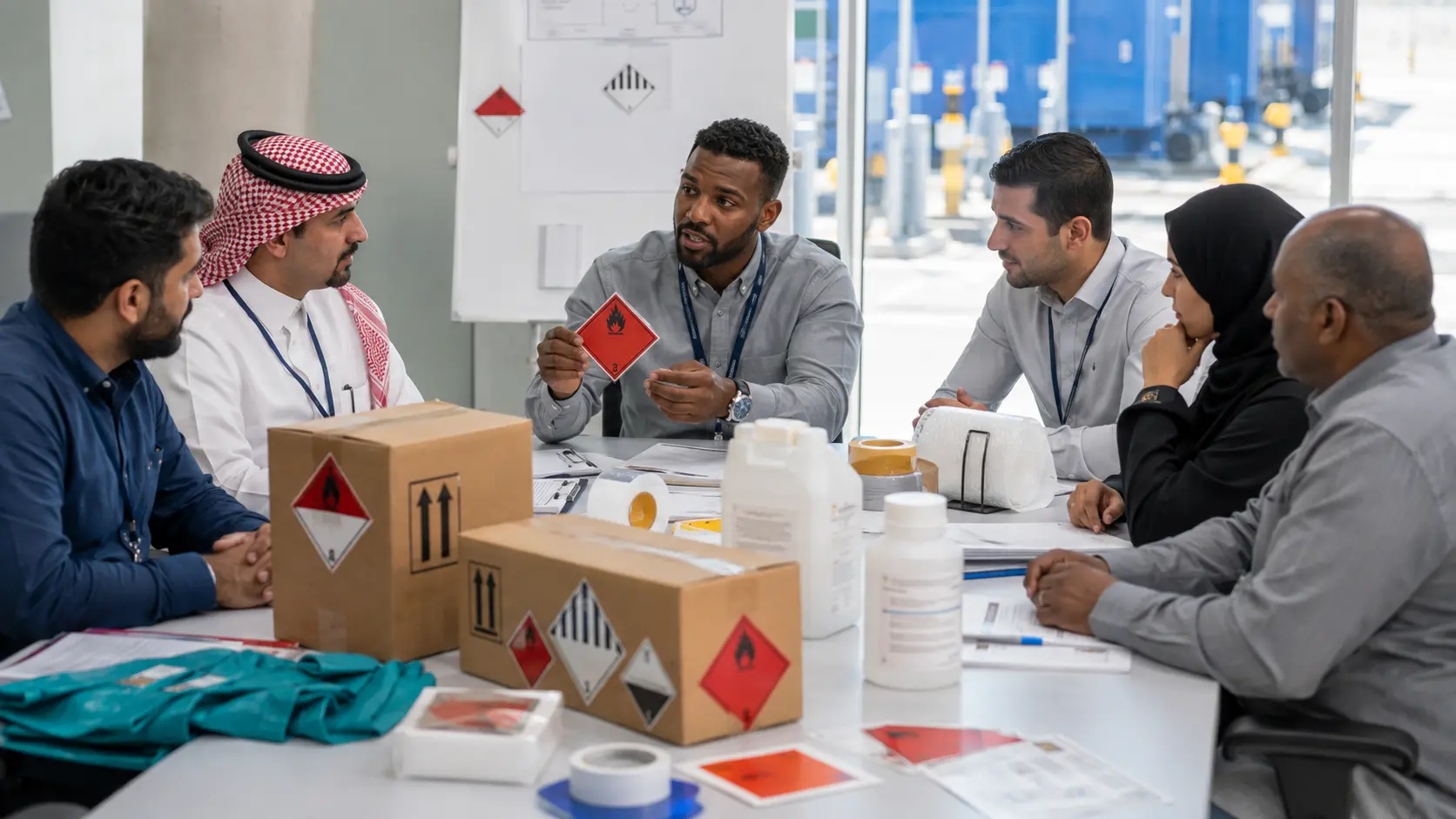
The standard course runs for one day, with theory plus practical classification, packing, and labelling exercises. You can train
at our Al Khobar center, or at your own site when we bring the trainers to you. If your team cannot reach a classroom, our
online dangerous goods training lets staff study the theory first, then complete the assessment at our center or on site. This
blended option suits busy logistics and warehouse teams.

Face-to-Face
Attend the course at our Al Khobar training center, with hands-on scenario-based exercises.

On-Site
We deliver the course at your site, tailored to your workforce and operations.

Blended & Online
Online dangerous goods training for teams spread across the Kingdom and the Gulf.
How Much Does Dangerous Goods Training Cost in Saudi Arabia?
The fee depends on group size, whether you train at our center or your site, and the number of participants. Group training at your site costs less per person as the numbers grow. Because the course includes real classification, packing, and labelling practice, it gives your team skills they can use the same week. For a current price, call or message us on WhatsApp.
How Often Must You Renew Your Certificate?
A dangerous goods certificate is usually valid for two years. Before it runs out, a short refresher course renews the certificate and updates your team on any rule changes. Air transport rules (IATA) change often, so staff who ship by air should refresh their training on time to stay compliant.
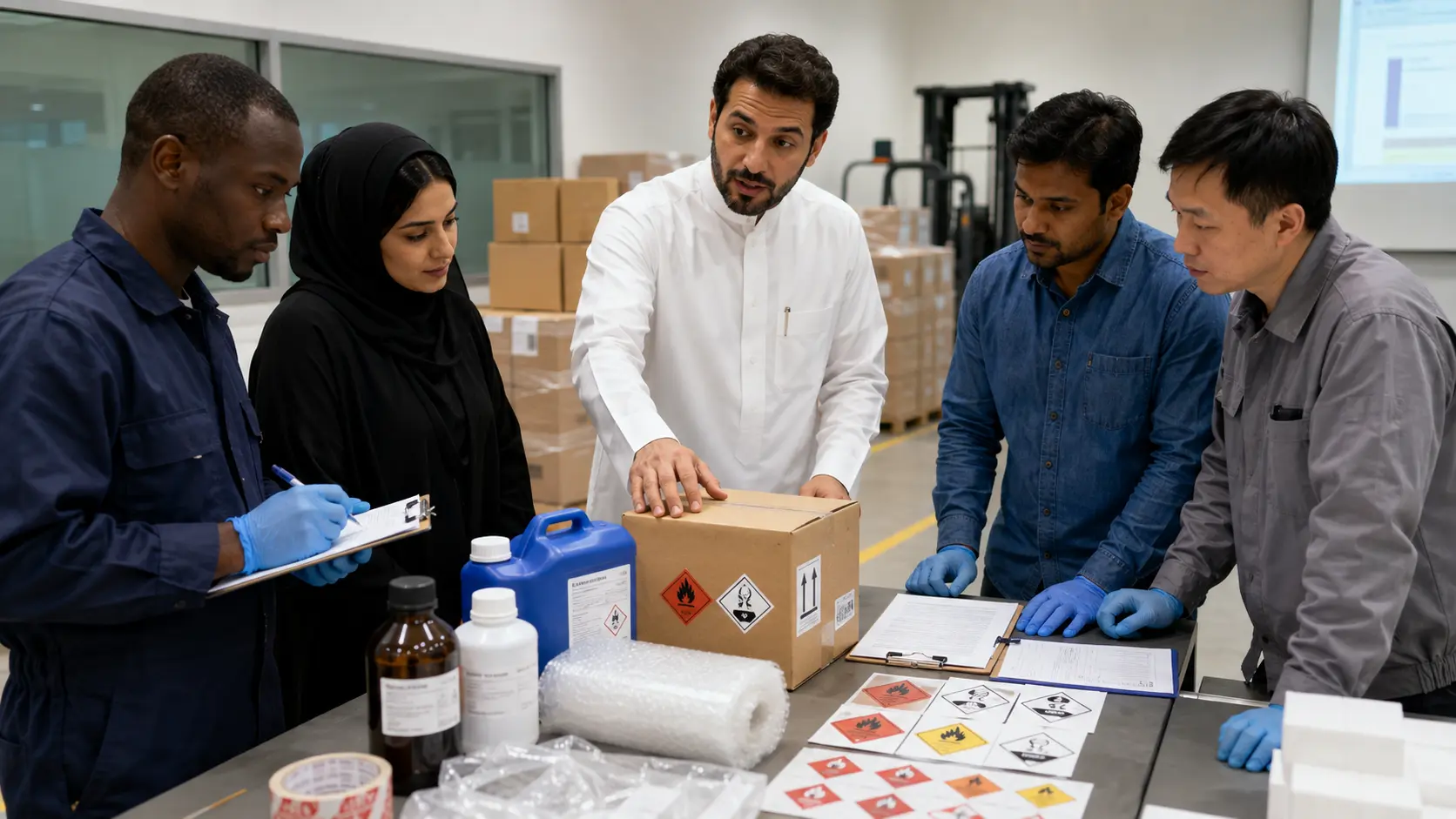
Why Train With Future Institute for Advanced Professional Training?
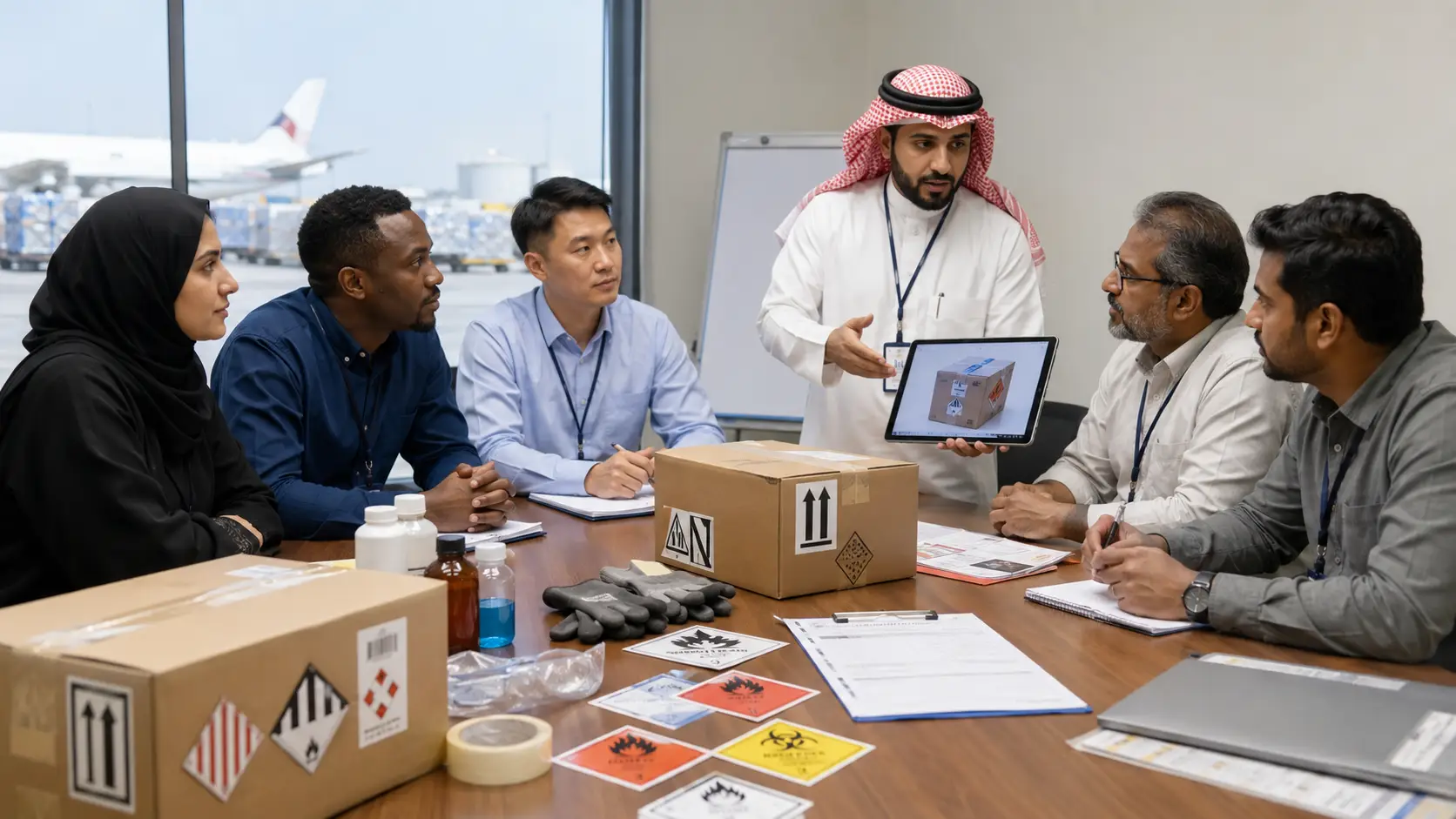
Future Institute is a safety training center based in Al Khobar, serving learners and companies across Saudi Arabia. Our training gives you:
Dangerous Goods Training at Your Location
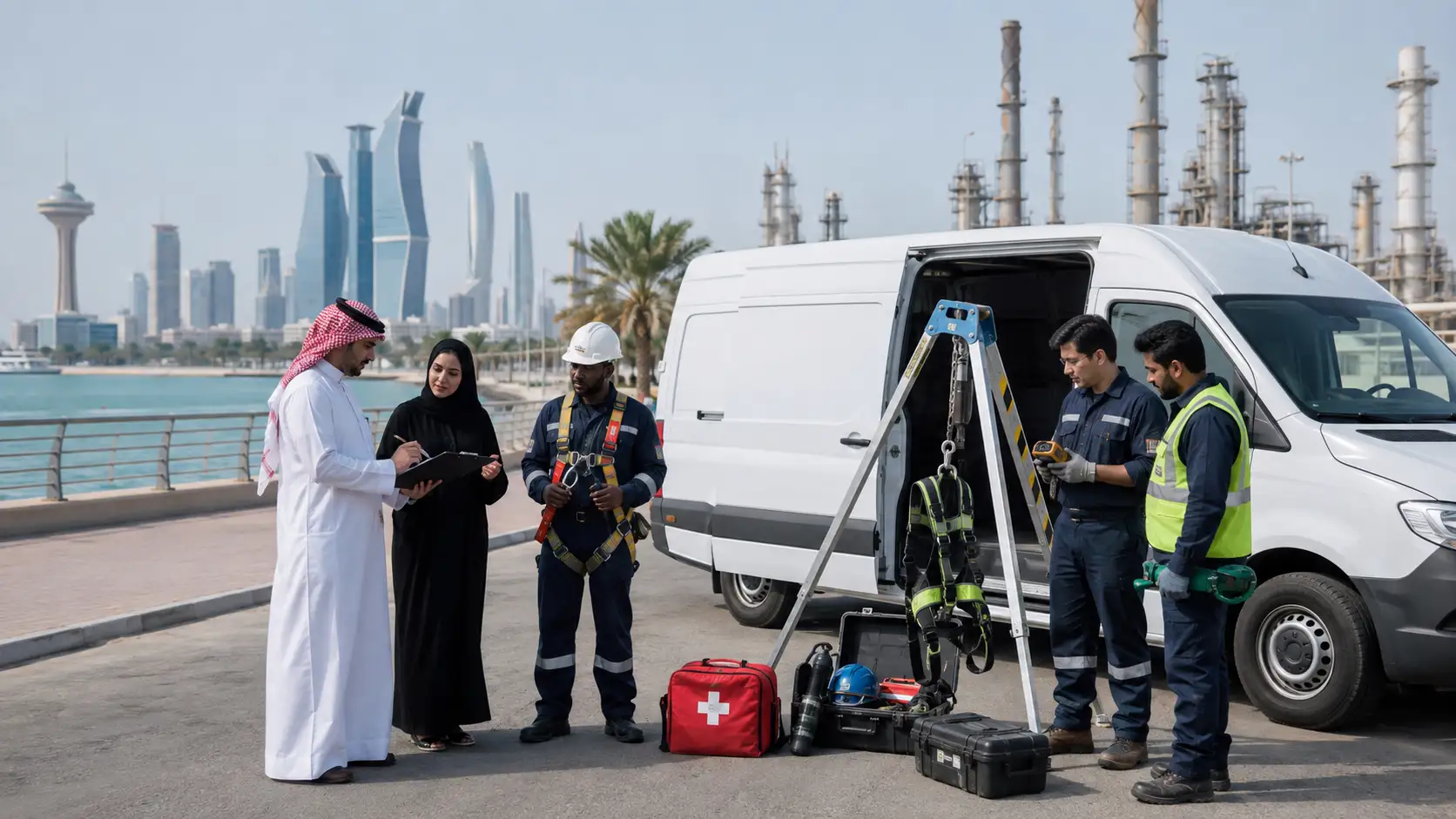
Our base is in Al Khobar, close to the Corniche and King Fahd Road. From here, our trainers cover the Eastern Province and the wider Kingdom. We deliver at our center, or at your site, in Al Khobar, Dammam, Dhahran, Jubail, Riyadh, Jeddah, and other cities on request. Whether your team works in a warehouse near King Fahd Causeway or a plant inside Jubail Industrial City, we bring the training to your door.
Frequently Asked Questions
Book Your Dangerous Goods Course
Reserve your place with Future Institute, Al Khobar’s safety training center.
Our advisors will confirm the next available batch and can deliver the course
at your site in Arabic, English, Hindi, or Urdu.