
Online Confined Space Entry Training
in Saudi Arabia
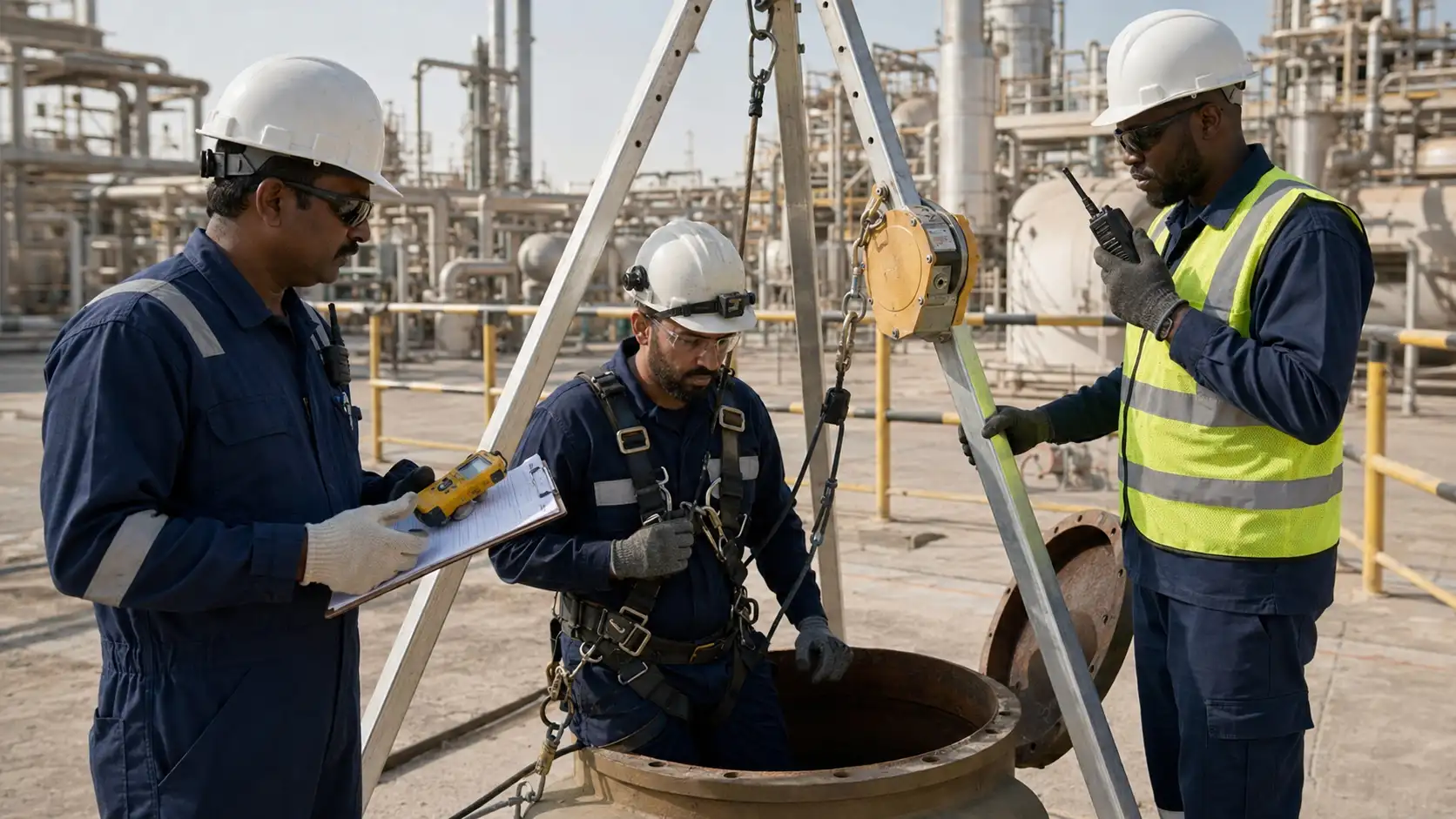
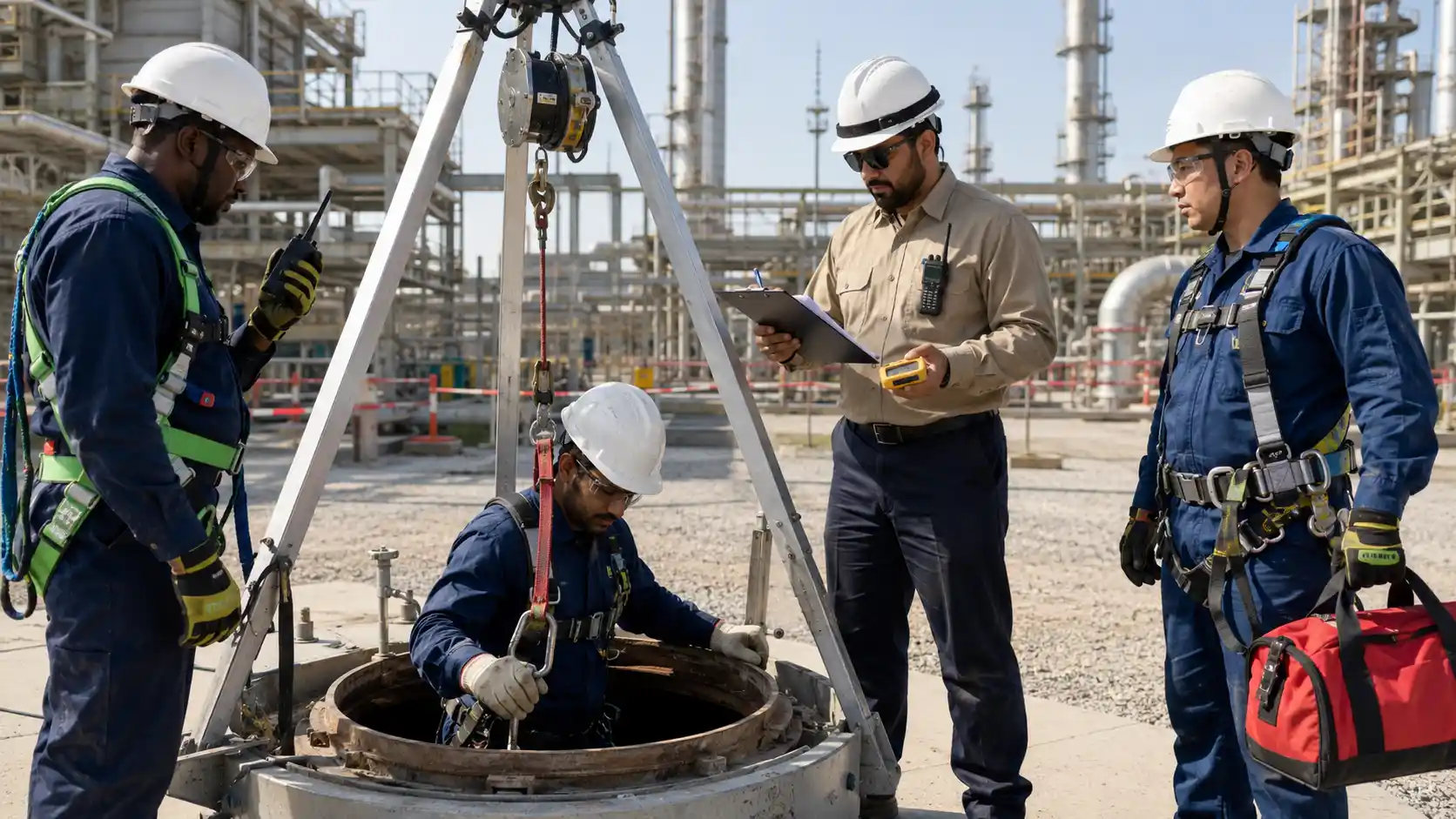
Our confined space entry training teaches workers how to go into tanks, vessels, pits and pipes safely, and how to get out again. In one day with our safety training center, you learn gas testing, the entry permit, breathing equipment and rescue with a tripod and winch.
The course is approved by TVTC and suits oil, gas, construction and plant work across Saudi Arabia. We teach it in our Al Khobar classroom, at your site anywhere in the Kingdom, or fully online. Companies can book a group for their employees, and individuals can join a class on their own.
What Is Confined Space Training and Who Needs It?
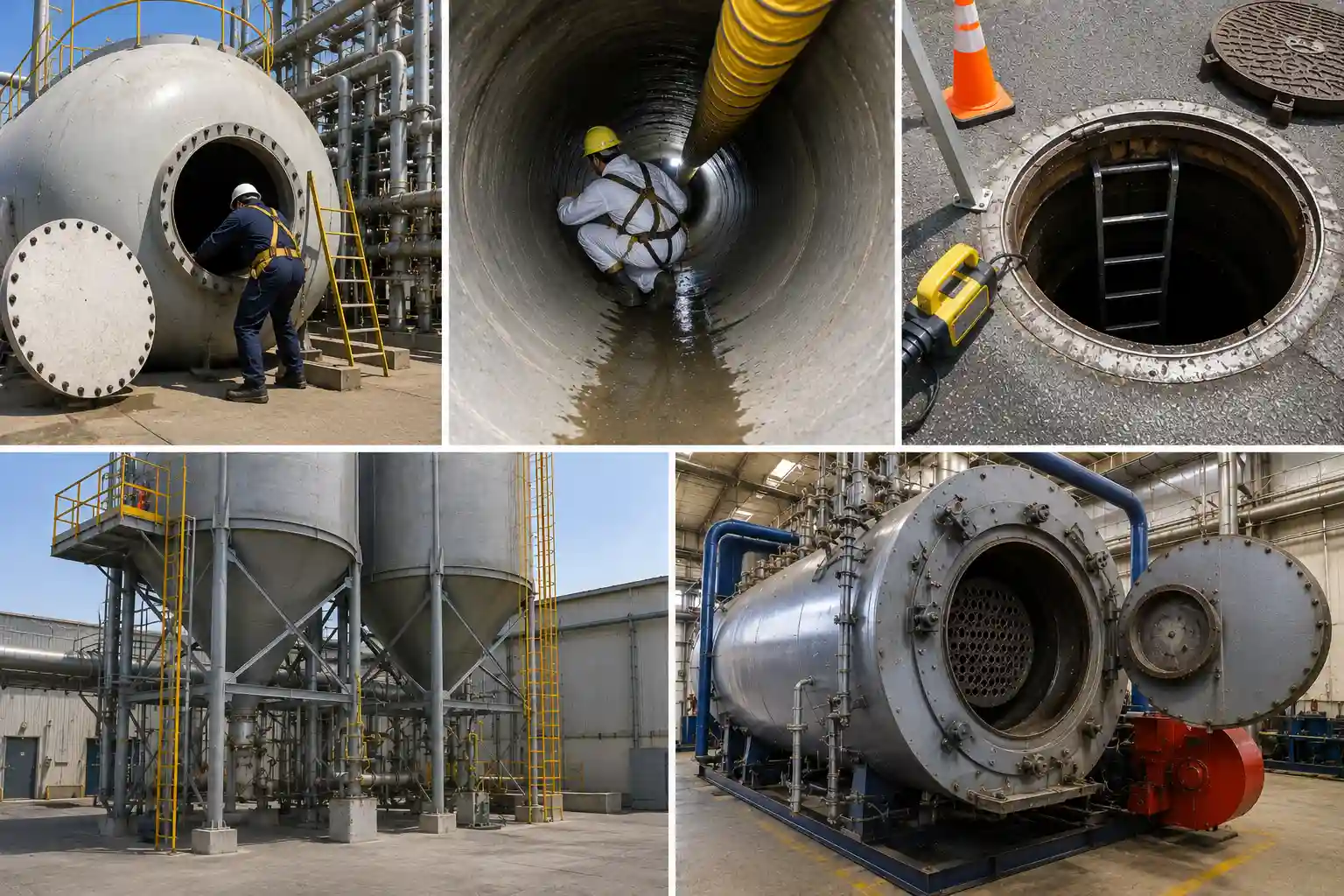
Confined space training is for anyone who works in or near a space that is hard to get in and out of and not made for people to stay in, such as tanks, silos, sewers, pits and large pipes. Confined space entry training is the next step for people who actually go inside.
These spaces can fill with toxic gas or lose oxygen without warning. Saudi Labour Law makes employers protect workers from the risks of their work, and on Saudi Aramco sites no one may enter without a confined space entry permit.
Confined Space Safety Training: The Dangers You Learn to Control
Good confined space safety training starts with the dangers, because most cannot be seen or smelled. Every confined space entry training class begins with the limits below.
Danger | What it means | Safe limit to check |
|---|---|---|
Low oxygen | Rust, bacteria or other gases use up the oxygen | Not below 19.5% oxygen |
Flammable gas | Gas or vapour that can explode with a spark | Below 10% of the lower flammable limit (LFL) |
Toxic gas | Hydrogen sulfide (H2S) and carbon monoxide can kill quickly | Below the site exposure limit; test before and during work |
Heat | Saudi summer heat inside a steel tank can cause heatstroke | Plan rest breaks, cooling and water |
What You Learn on Our Confined Space Entry Course
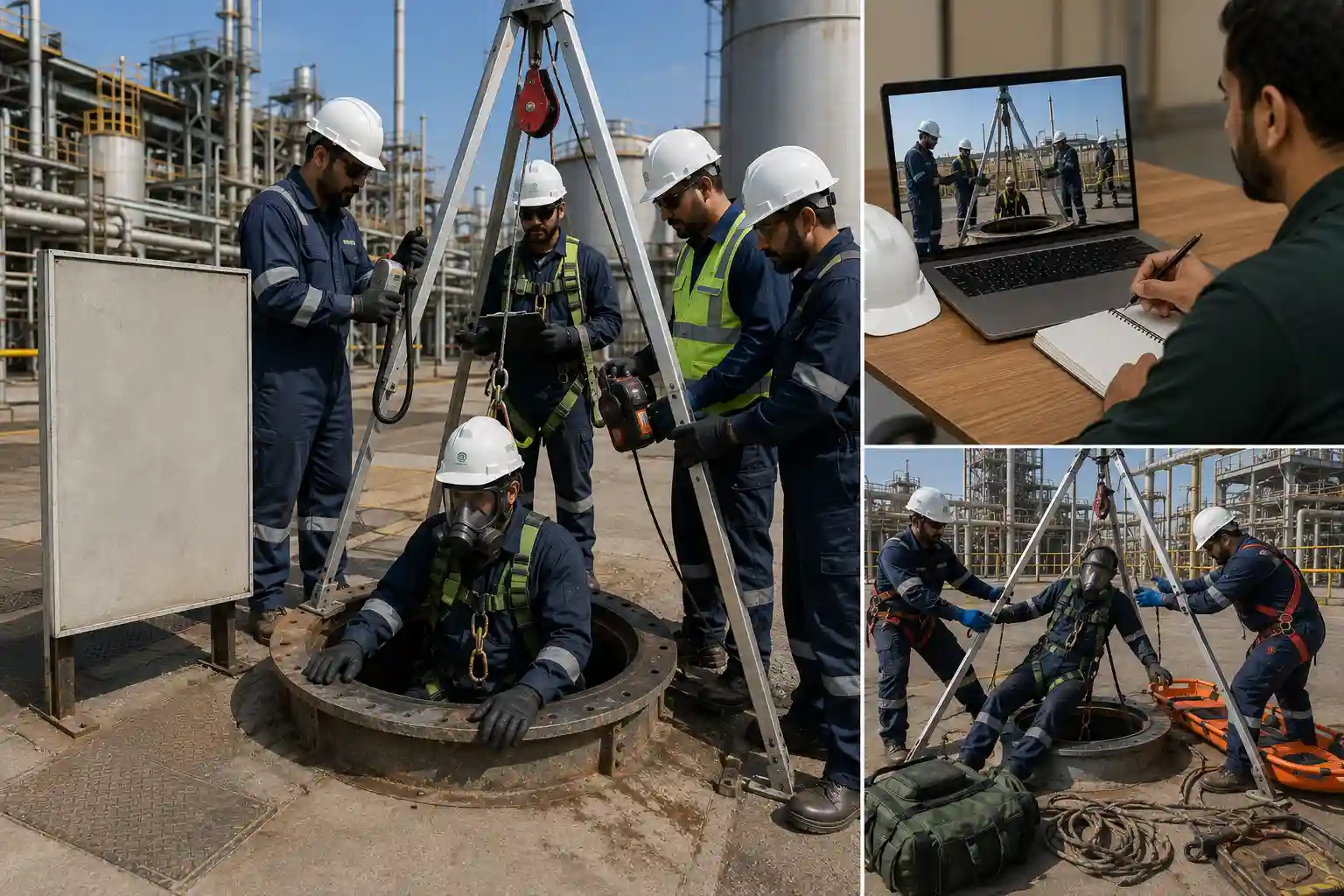
Our confined space entry course uses short lessons and real examples from Saudi sites. In class you handle the equipment, and online the trainer shows it on camera
By the end of our confined space entry training, you will be able to plan a safe entry and know when to stop work. These are the eight topics we cover:.
Confined space identification and classification
Hazard recognition and risk assessment
Atmospheric testing and correct use of a gas detector
The confined space entry permit and the permit to work system
The safe system of work and the step by step entry procedure
Selection and use of PPE, SCBA, and breathing apparatus
Roles and duties of the entrant, attendant, and entry supervisor
Confined space rescue and emergency response
Confined Space Entry Supervisor Training: Who Does What
Every entry needs a team with clear jobs. Confined space entry supervisor training focuses on the person in charge, but everyone learns all three roles.
Knowing every role helps the team spot mistakes early. It also lets anyone step in if needed.
Confined Space Entry and Rescue Training
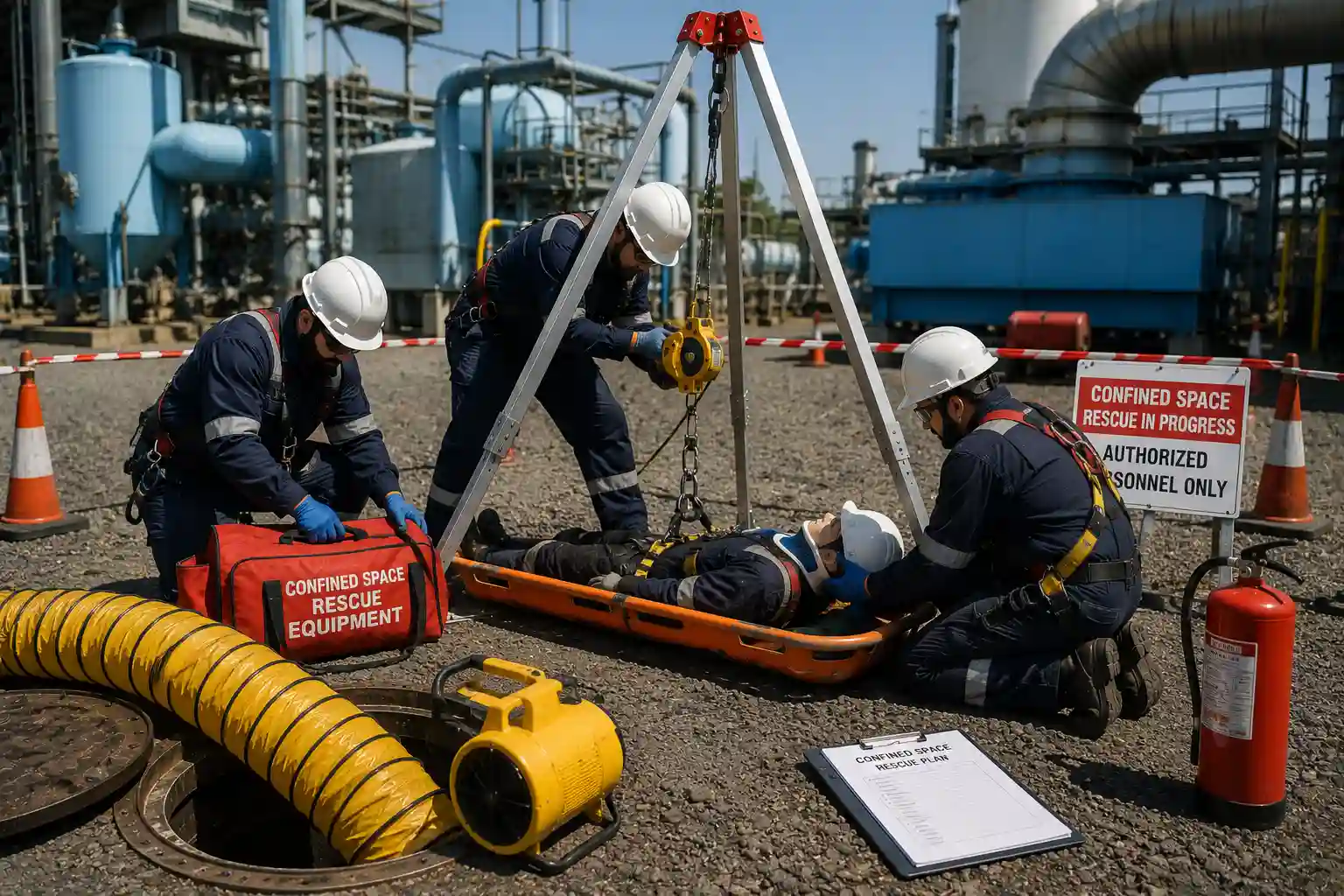
Many people who die in confined spaces are would-be rescuers who rushed in without breathing equipment. So our confined space entry and rescue training teaches one rule: never go in unless you are trained and equipped.
During confined space entry training, trainees learn non-entry rescue, which means pulling a worker out from outside the space. Only a trained rescue team wearing breathing sets should ever go inside.
Rescue skills fade without practice. The OSHA standard asks rescue teams to practise a confined space rescue at least once every 12 months, which is a good rule for any site.
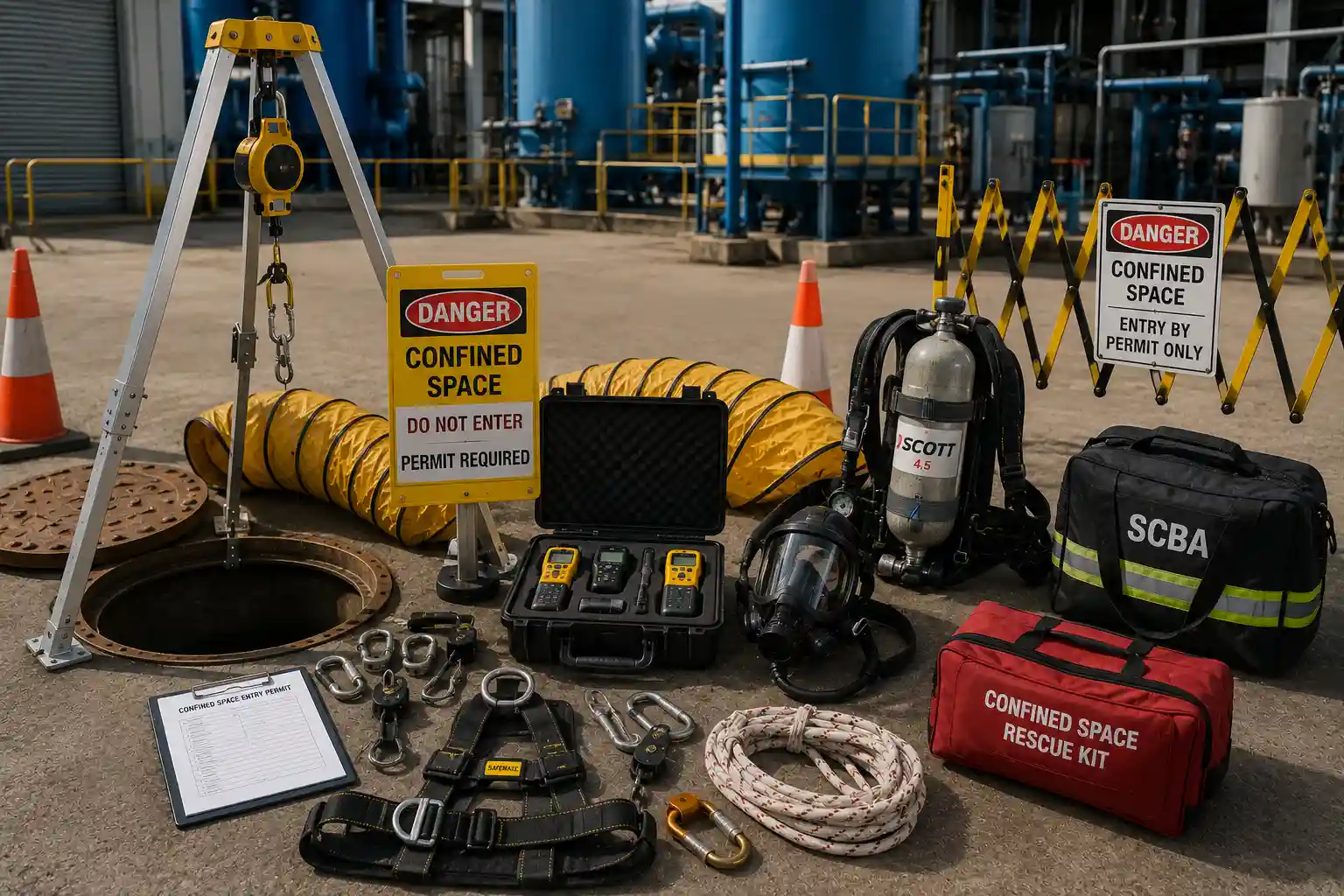
Confined Space Entry on Saudi Aramco Sites
Saudi Aramco has its own confined space rules. Entry needs the green Confined Space Entry Permit (Form 9873-4), under General Instruction (GI) 2.100.
Confined Space Entry is also one of the three courses contractors must pass before the Aramco work permit receiver certification. It takes one day, alongside Hazard Recognition and Lockout/Tagout.
Advanced Confined Space Training for Teams and Trainers
The one-day course covers what most workers need. Rescue teams and supervisors may need more.
For them, we offer advanced confined space training with longer rescue drills and supervisor practice. We can also train your staff to teach it through our confined space train the trainer course.
Confined Space Signs and Signage
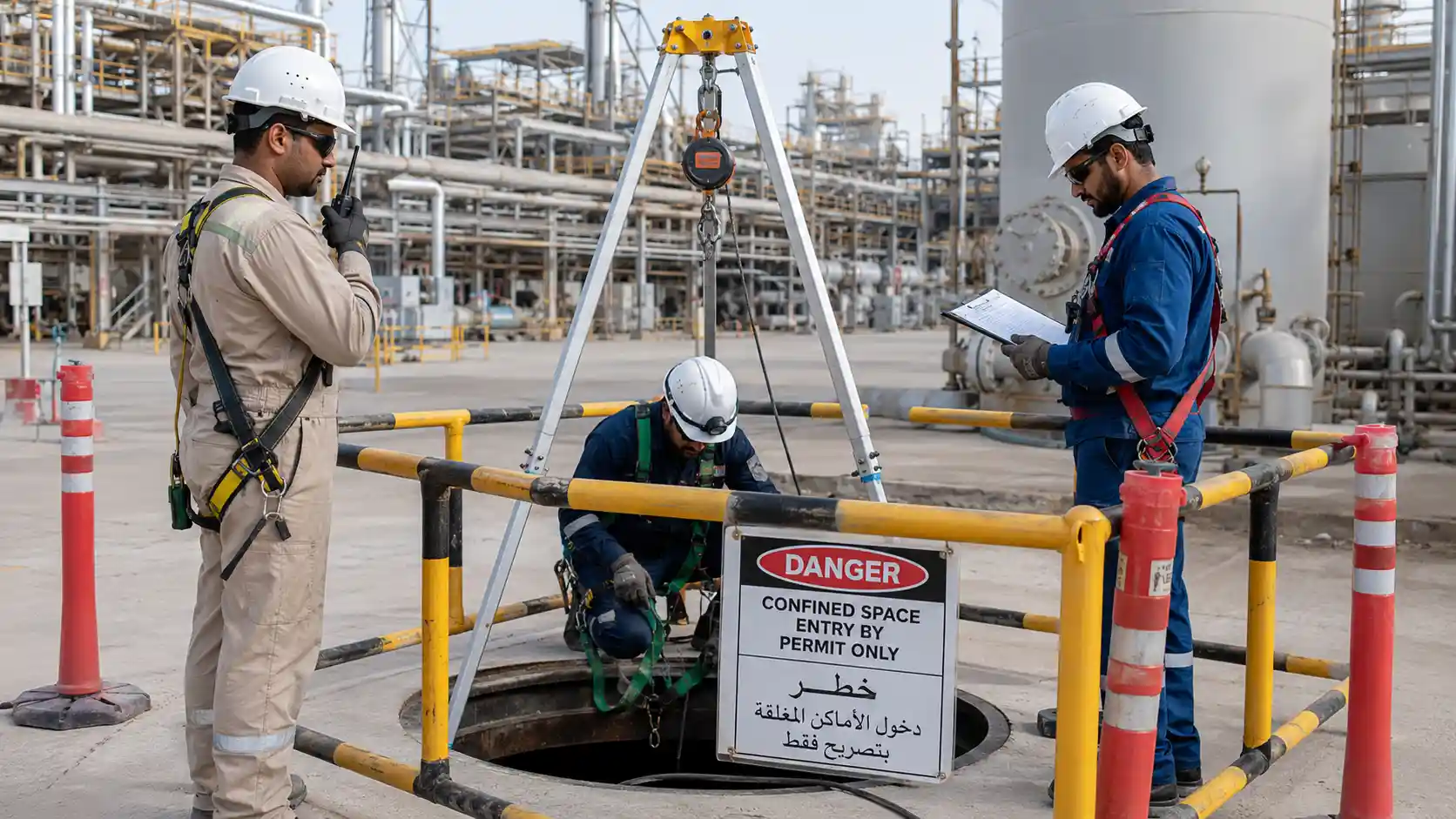
Clear signage keeps unauthorised people out of an active space. A confined space entry sign warns of the hazard, states the permit rule, and marks the area as restricted. Correct confined space entry signages are posted at every access point before work begins, so no one enters without authorisation. Our training shows your team where and how to place this signage as part of the permit system.
Confined Space Training Online: Learn From Anywhere in Saudi Arabia
Confined space training online suits remote sites and busy workers, with no travel needed. It covers the same eight modules as our classroom confined space entry training.
The trainer explains each step and shows the gas detector, harness and rescue tripod on camera. Trainees who pass the final test get the same certificate as classroom trainees.
Hands-on option: if your employer wants practice too, we can add a session
Your Confined Space Entry Certificate
Trainees who pass the final test of our confined space entry training get a TVTC-approved confined space entry certificate. It shows your name, the course, the training date and the expiry date.
Future Institute for Advanced Professional Training is also a Saudi Aramco approved vendor (E-Ref 0015955) and an ISO 9001:2015 certified company. Both show that you trained with a recognised provider.
Certification & Accreditation
On completion, you receive an accredited confined space entry certificate from Future Institute, a TVTC approved and ISO 9001:2015 certified training center in Al Khobar. Our safety training is delivered to IADC standards, so the certificate is recognised by drilling, oil, and gas contractors across the Kingdom.
Every certificate and ID card is QR code verifiable for instant, fraud proof checking, and is accepted by Aramco contractors.

TVTC Approved
Officially recognised training provider in Saudi Arabia.

ISO 9001:2015 Certified
Officially recognised training provider in Saudi Arabia.

QR-Verified Certificates
Officially recognised training provider in Saudi Arabia.
Aramco-Contractor Ready
Delivered safety programmes for Aramco contractors in KSA.
Who Should Take Our Confined Space Entry Course?
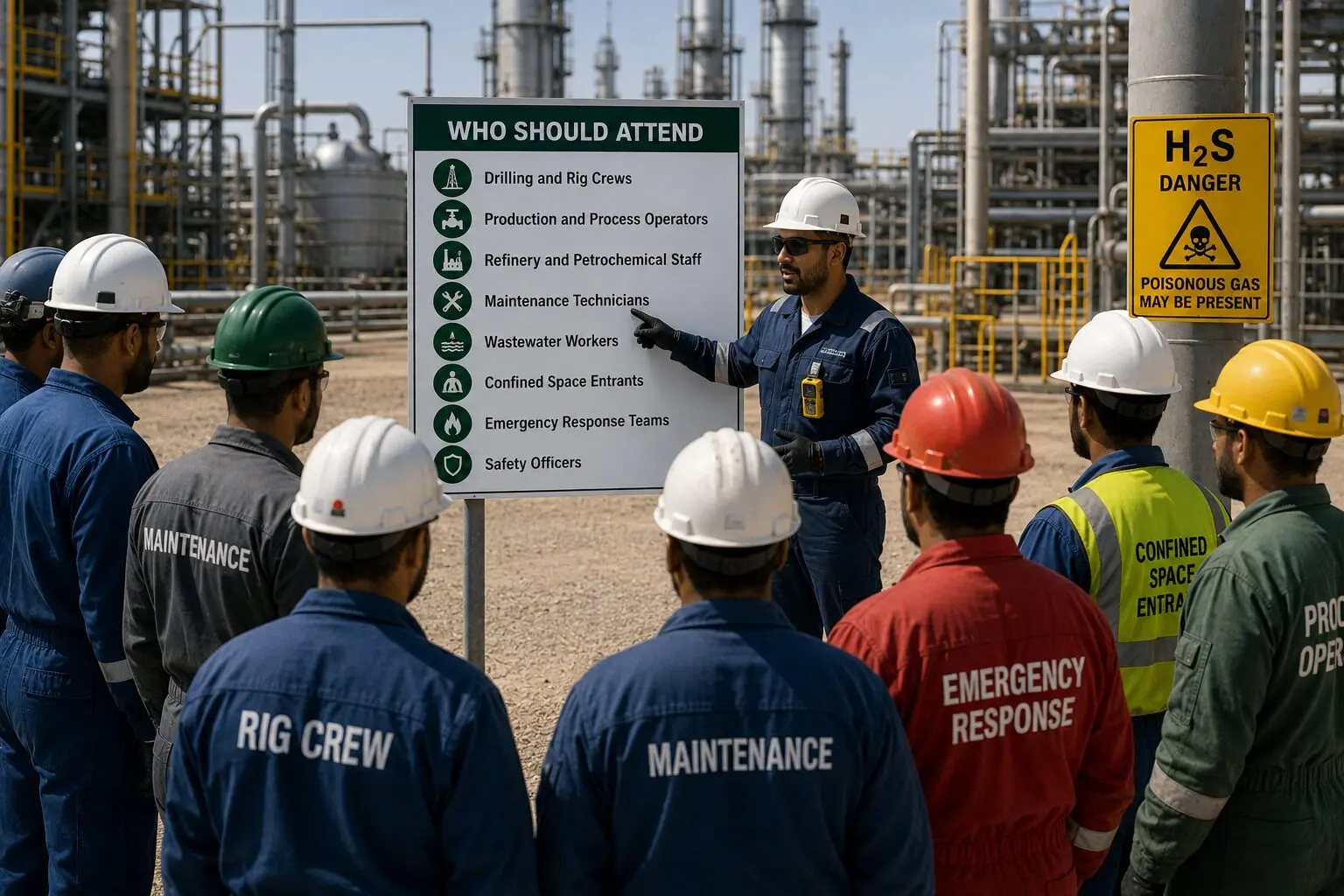
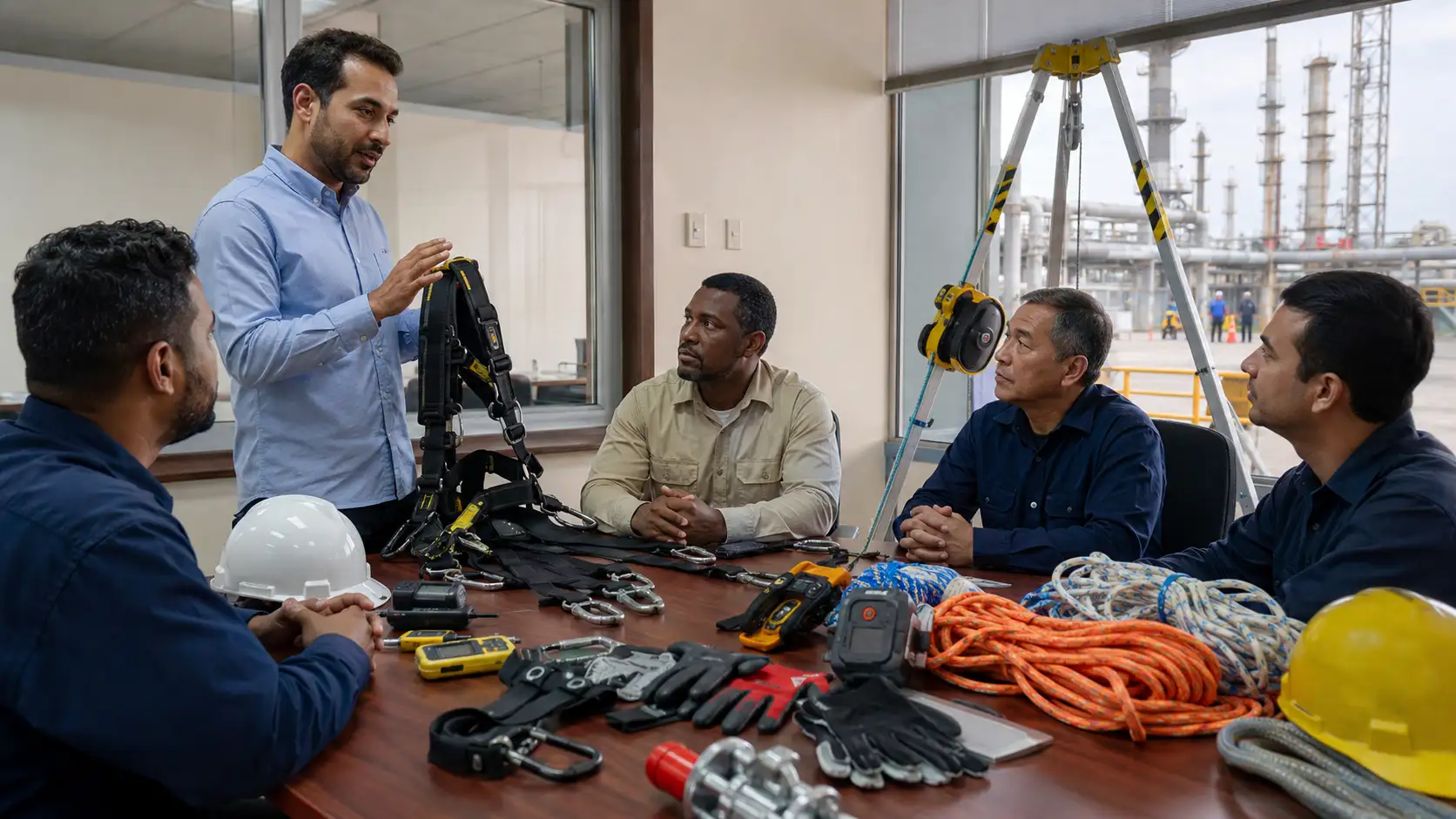
Anyone who enters, watches or controls work in a confined space should take confined space entry training. No earlier training is needed, but trainees must be fit to wear breathing equipment.
That includes welders, fitters, tank cleaners, supervisors and rescue teams. We train both company groups and individuals building their own careers.
For Companies: Train Your Employees
Send a whole crew so every shift has a trained entrant, attendant and supervisor. We train at your site or online, plan dates around your shifts, and give group prices and certificate records you can check at any time.
For Individuals: Get Certified for Your Next Job
Many oil, gas and plant sites in Saudi Arabia ask workers for a confined space certificate before they start. Join an open class at our Al Khobar center or study online, and add a TVTC-approved certificate to your CV.
Why Train With Future Institute for Advanced Professional Training?
Future Institute is a safety training center based in Al Khobar, serving learners and companies across Saudi Arabia. Our training gives you:

Where We Deliver Confined Space Entry Training Across Saudi Arabia
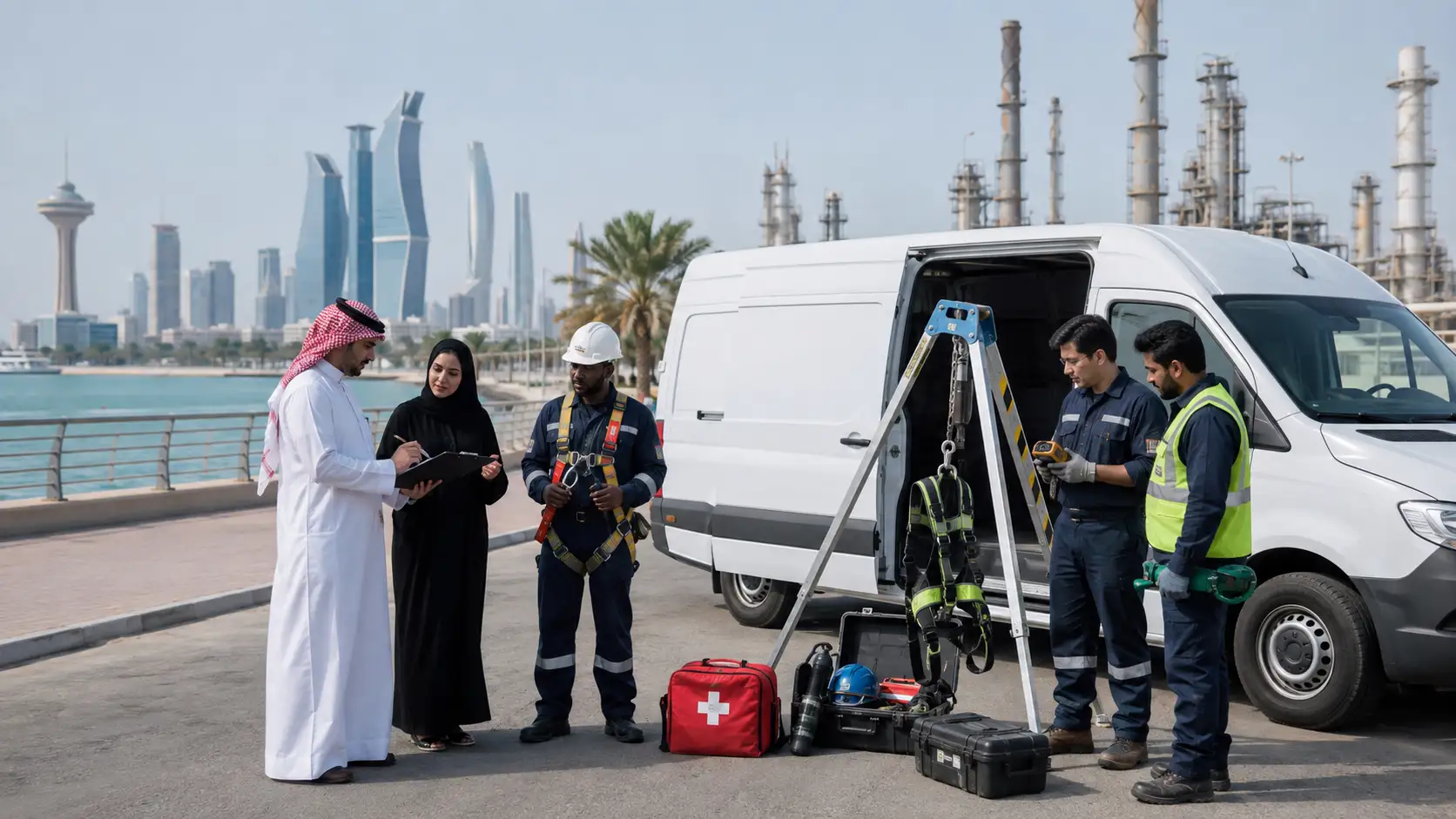
Our base is in Al Khobar, close to the Corniche and King Fahd Road. From here, our trainers cover the Eastern Province and the wider Kingdom. We deliver at our center, or at your site, in Al Khobar, Dammam, Dhahran, Jubail, Riyadh, Jeddah, and other cities on request. Whether your crew works inside a plant in Jubail Industrial City or a refinery near Ras Tanura, we bring certified training to your door.
Related Safety Courses
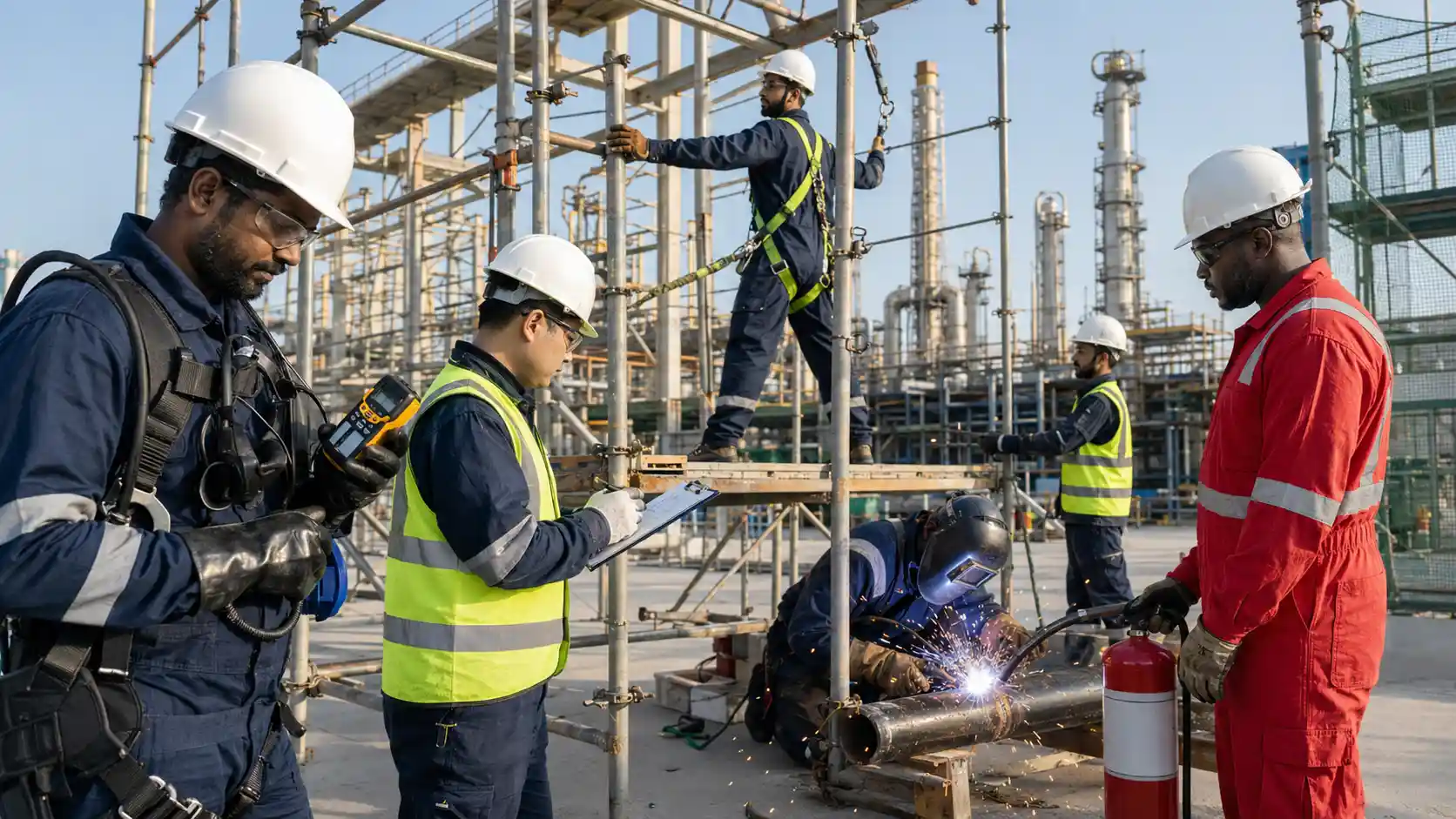
Building a fully certified crew? Pair this course with our H2S training, Working at Height training, Fire Watch training, and Scaffolding Inspector training. Together they cover the main permit to work risks on Saudi oil, gas, and construction sites.
Frequently Asked Questions
Book Your Confined Space Entry Training
Reserve your place with Future Institute, Al Khobar’s TVTC approved safety training center. Our advisors will confirm the next available batch and can deliver the course at your site.