
Working at Heights Training in Saudi Arabia:
Classroom, On Site, or Online
Working at height is one of the highest risk jobs on any Saudi site, but nearly every fall is preventable.
With the right training, your team learns to spot the danger, use fall protection the right way, and get the
job done safely, every time.
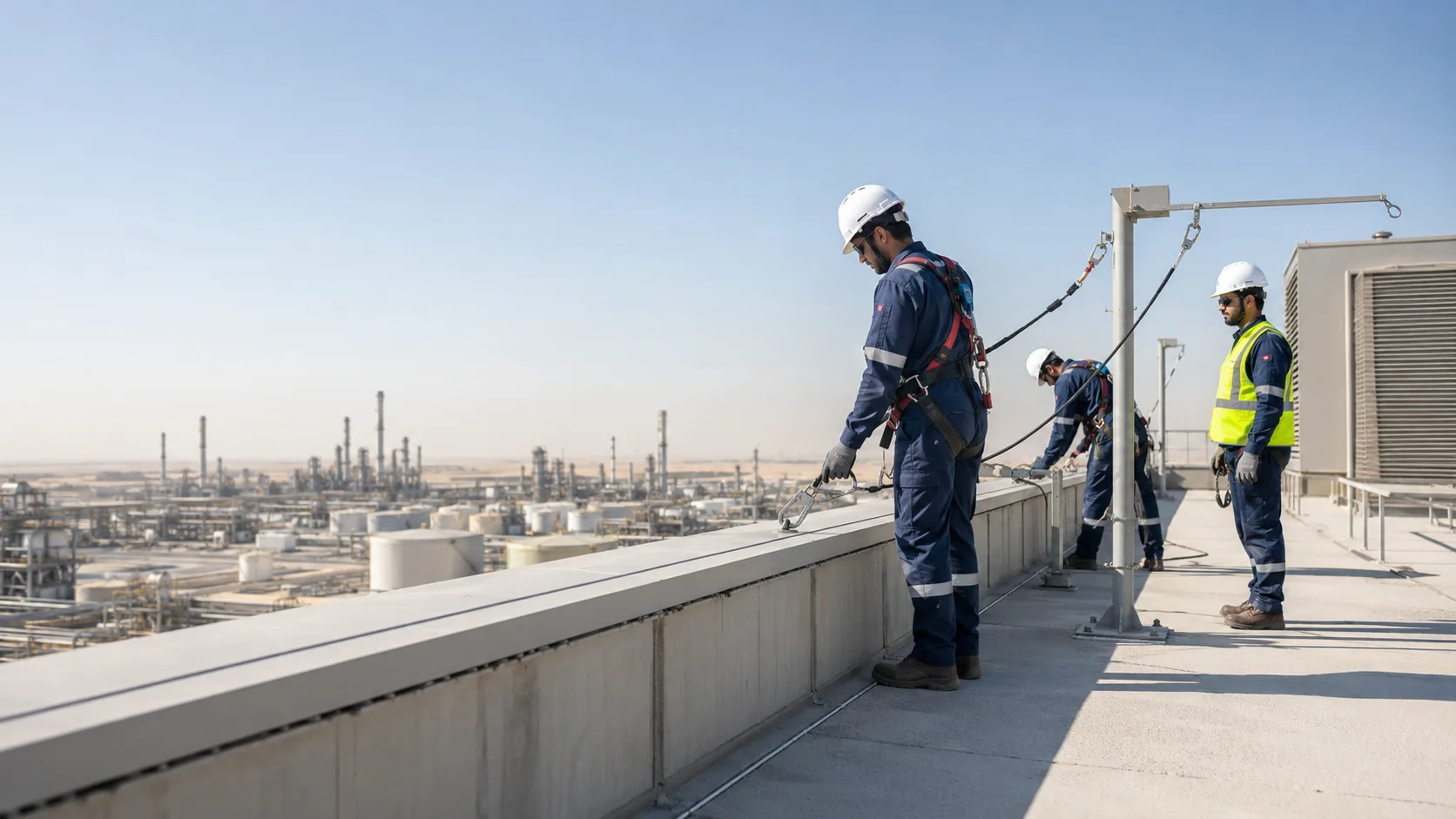
Every year, falls remain a leading cause of serious injury on construction and industrial sites across Saudi Arabia. The danger is rarely the height alone; it is a missed hazard, a worn harness, or a job started without a plan. Working at heights training closes those gaps, giving workers the know how to take on elevated tasks with control instead of risk.
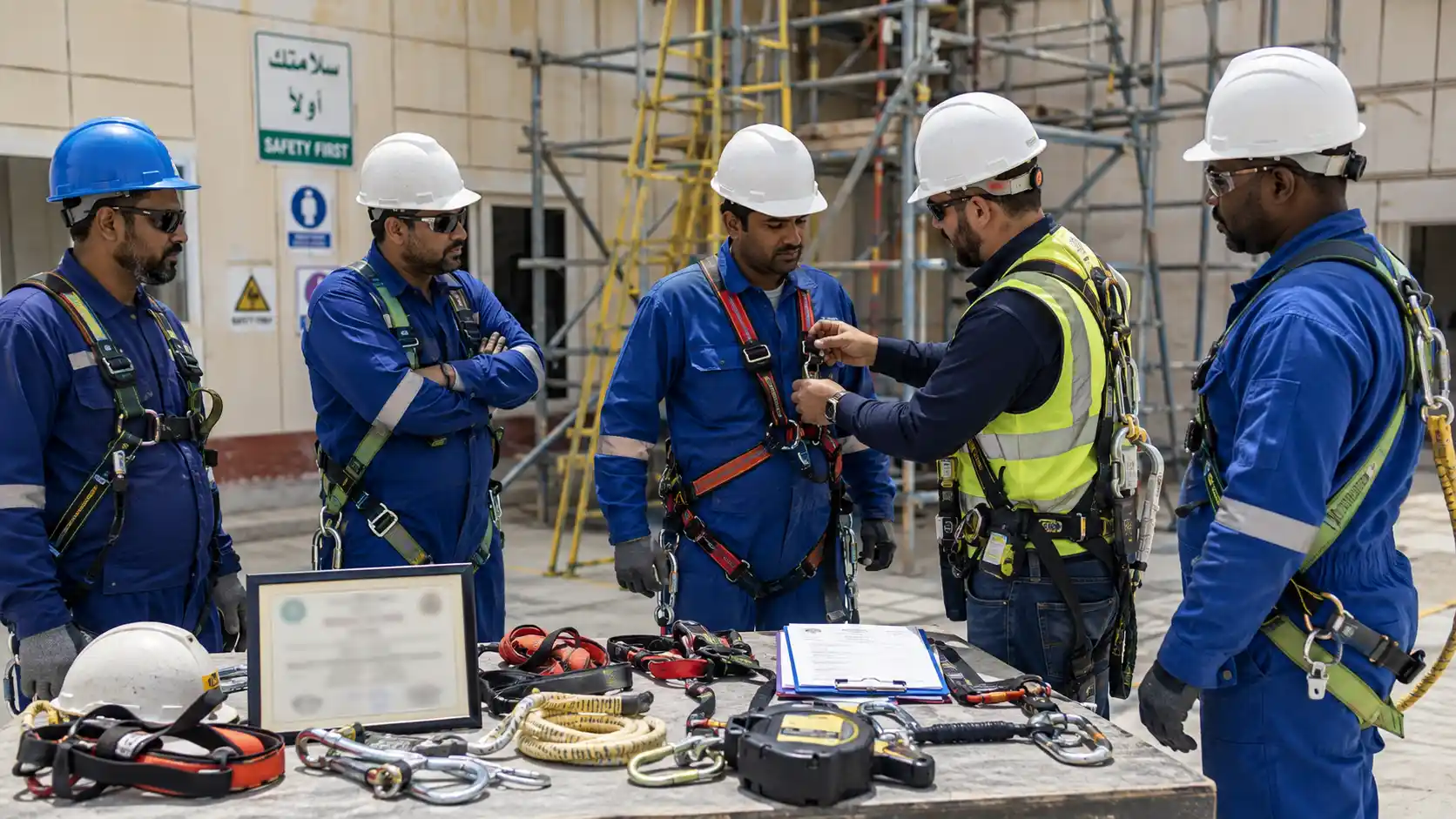
On this course, your team learns to assess a job before starting, inspect and fit a full body harness, use ladders, scaffolds, and platforms safely, set up anchor points, and carry out a quick rescue if a fall happens. Delivered by our TVTC approved center, the training suits construction crews, maintenance and roofing teams, riggers, telecom and utility workers, and the supervisors who plan and check their work.
As a trusted safety training provider serving companies across the Kingdom, Future Institute has prepared height workers for construction sites, plants, and towers alike. Beyond the standard course, we offer awareness sessions for ground crews and refresher training to keep certified workers current. Every session runs with experienced instructors, real harnesses and anchor equipment, and hands on rescue drills, so your team leaves ready to work safely, not just to pass a test.
What Is Work at Height?
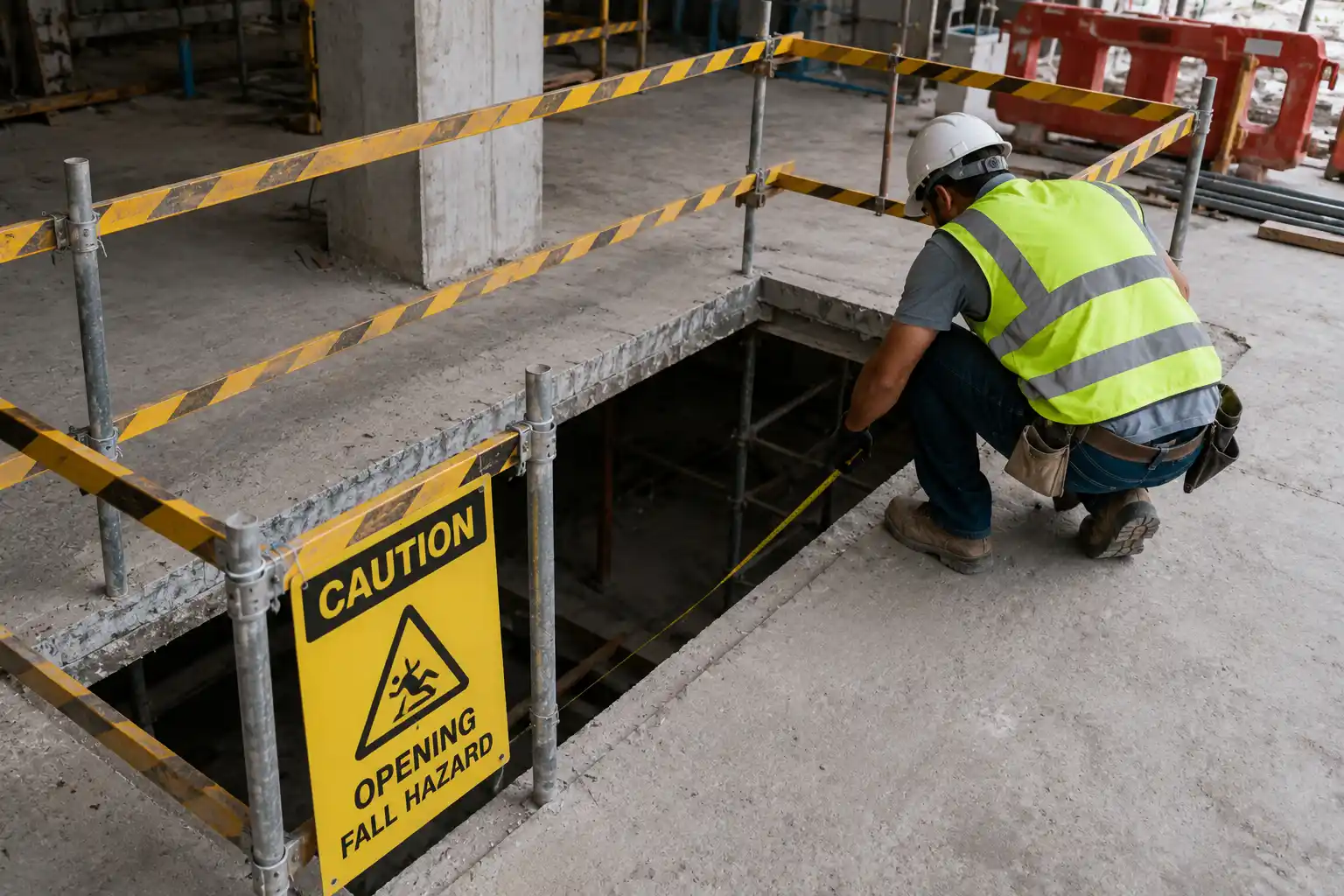
Work at height is any task where a person could fall a distance that causes injury, whether from a roof, a ladder, a scaffold, or even a floor opening. It is not only about tall buildings. A fall from two metres can be just as deadly as one from twenty. If a worker can fall and get hurt, it counts as work at height, and it needs the right training and controls.
What Are the Main Working at Height Hazards?
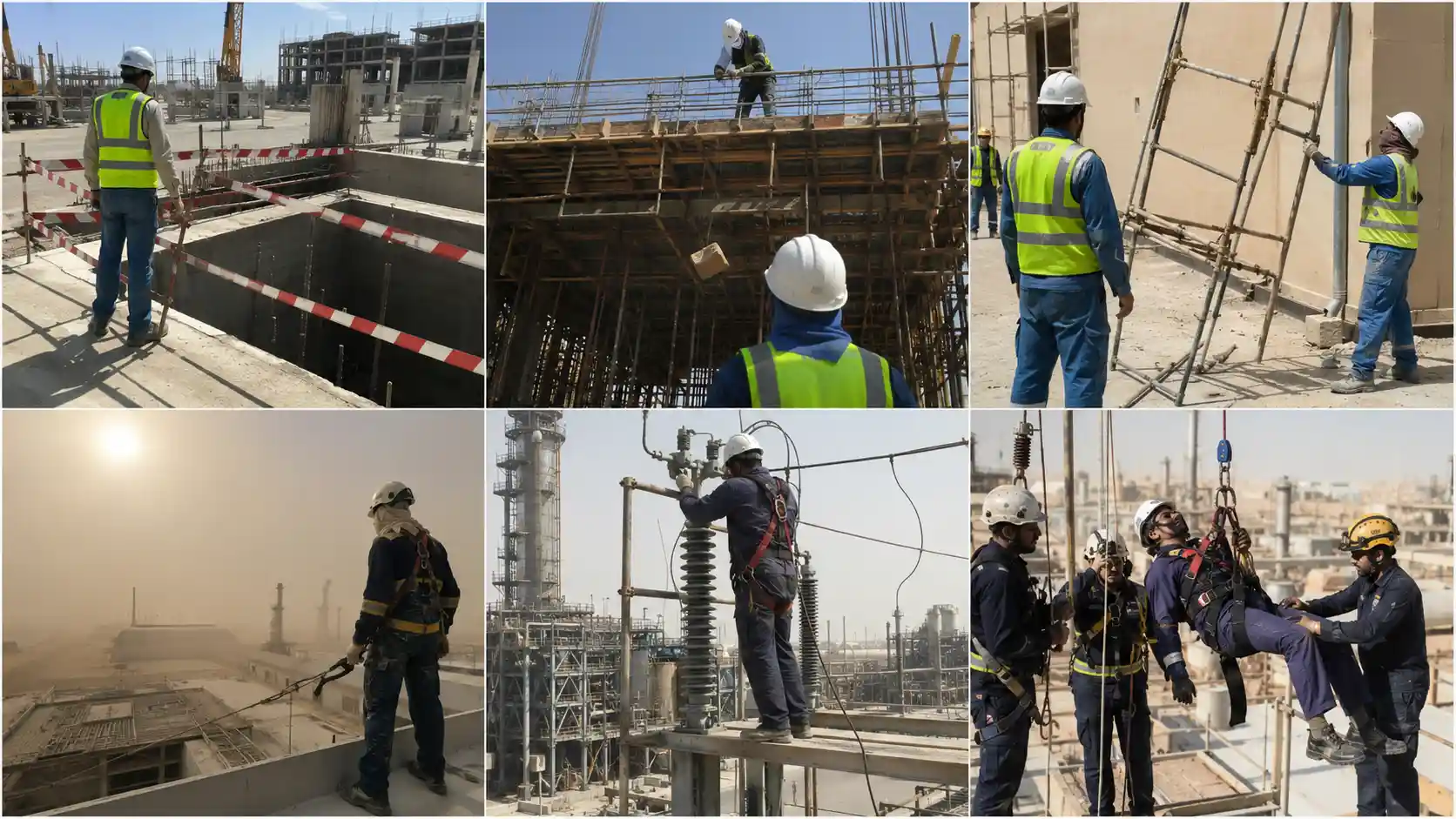
The main working at height hazards are unprotected edges, fragile surfaces, unsafe ladders, bad weather, and falling objects. Most falls come from this small set of dangers, which a trained worker learns to spot early:
| Hazard | Common example |
|---|---|
| Unprotected edges | Open roofs, floor openings, platform edges |
| Fragile surfaces | Old roof sheets, skylights, weak decking |
| Ladders and steps | Overreaching, wrong angle, worn feet |
| Weather | High wind, extreme heat, sandstorms |
| Falling objects | Tools or materials dropped on people below |
Working at Heights Training Course Content
This working at heights course mixes classroom theory with hands on practice. It covers:
Planning a job and picking the right access equipment
Inspecting harnesses, lanyards, and anchor points before use
Fitting a full body harness correctly
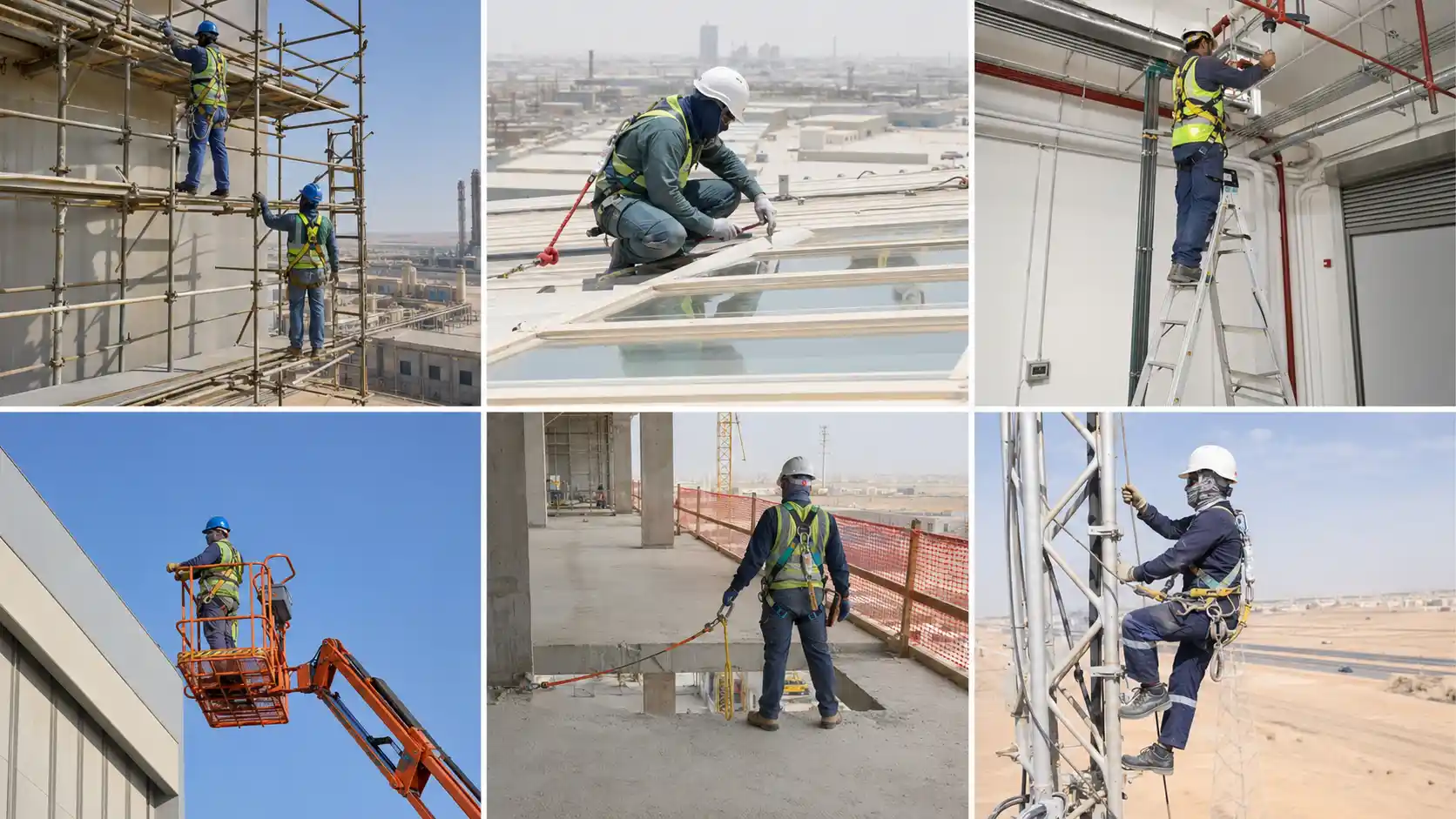
Safe use of ladders, scaffolds, and elevated platforms
Rescue planning and getting a fallen worker down quickly
Keeping tools and materials secure so nothing drops
Fall Protection Equipment: The ABC
When a fall cannot be prevented, a personal fall arrest system saves the worker. Every system has three parts, easy to remember as ABC:
| Part | What it is | Its job |
|---|---|---|
| A – Anchorage | A strong fixed point | Holds the whole system to the structure |
| B – Body support | A full body harness | Spreads the fall force safely across the body |
| C – Connectors | A lanyard or lifeline | Links the harness to the anchor |
Safe Working at Height Procedures
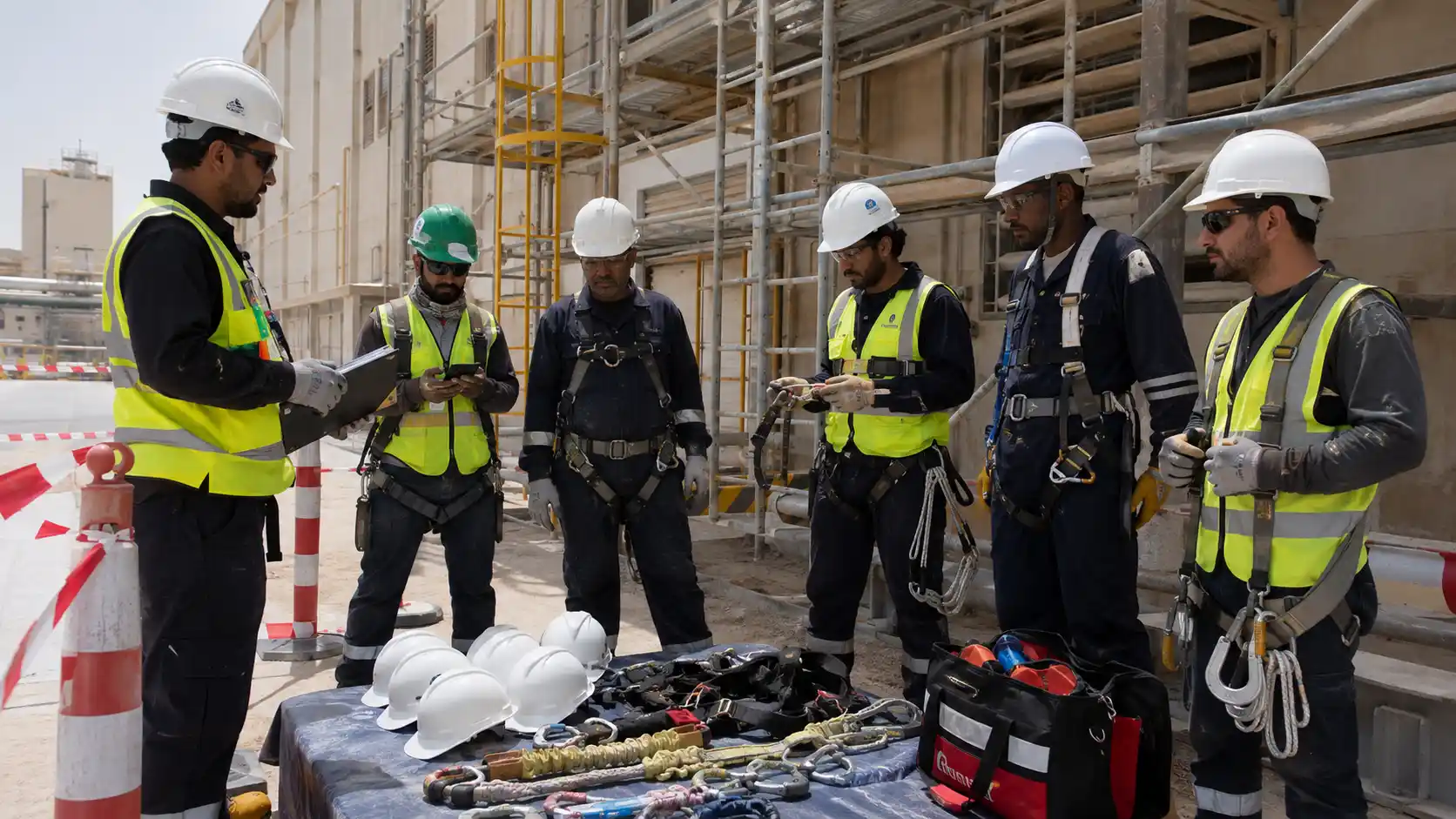
Safe working at height procedures follow a clear order that starts long before anyone climbs: assess the task, choose the safest access method, check the weather, inspect all equipment, set up fall protection, and agree a rescue plan. Following this same sequence every time is what turns a risky job into a controlled one, with nothing left to chance. Your team learns to work through each step in the right order, so no check is skipped and no shortcut is taken.
Work at Height Precautions and Safety Tips
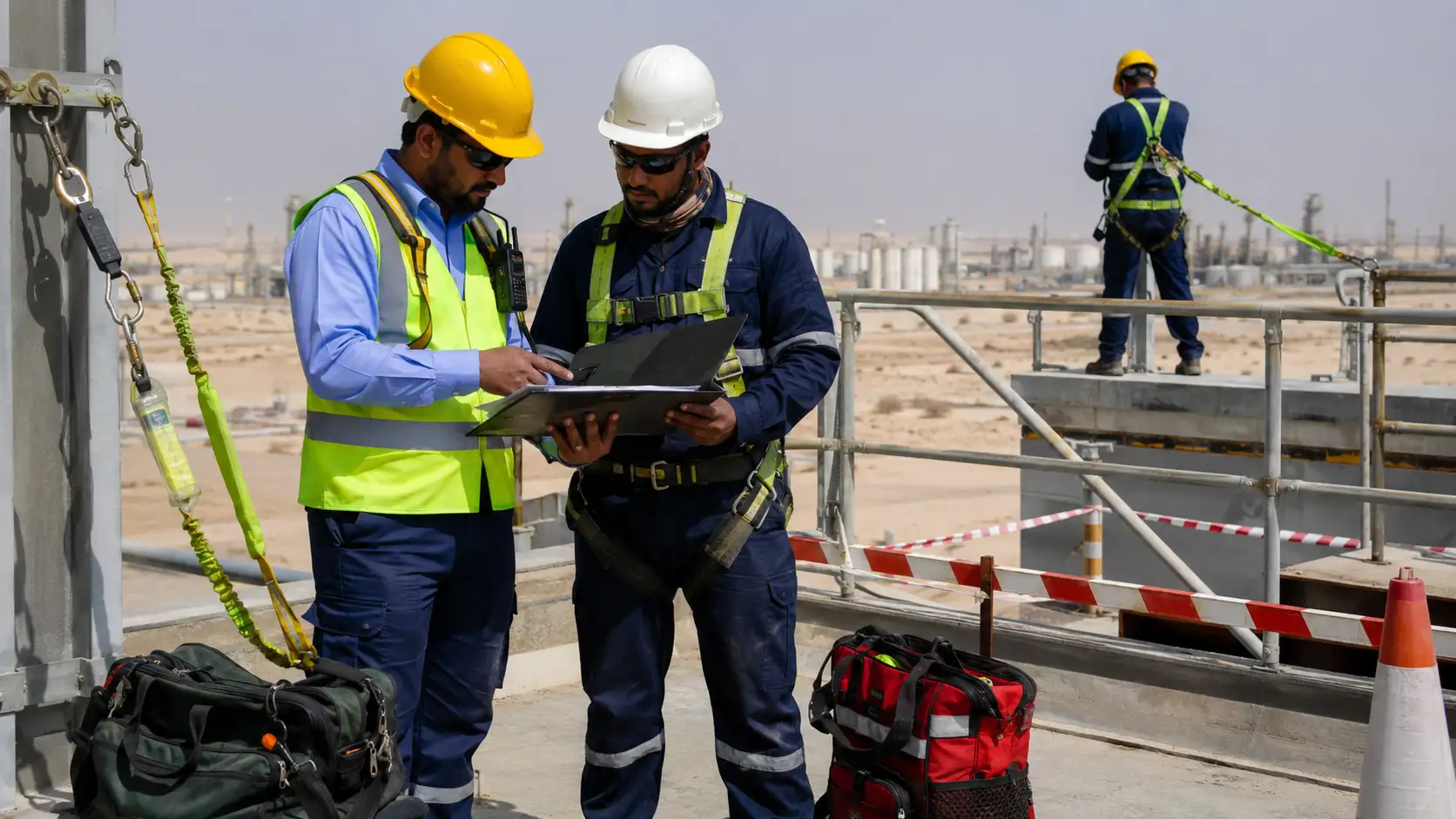
Beyond the plan, it is small daily habits that prevent most incidents on site. Simple work at height safety tips make the biggest difference: keep three points of contact on a ladder, never overreach or stand on the top rung, and set the ladder at the right angle on firm, level ground. Tether your tools so nothing can drop on the people below, wear your harness even for quick jobs, and clip on before you lean out, not after.
Weather matters too. Stop work in high wind, heavy rain, or poor light, and take extra care in the midday heat when tiredness sets in. Check every harness, lanyard, and anchor before use, and take any damaged kit out of service at once.
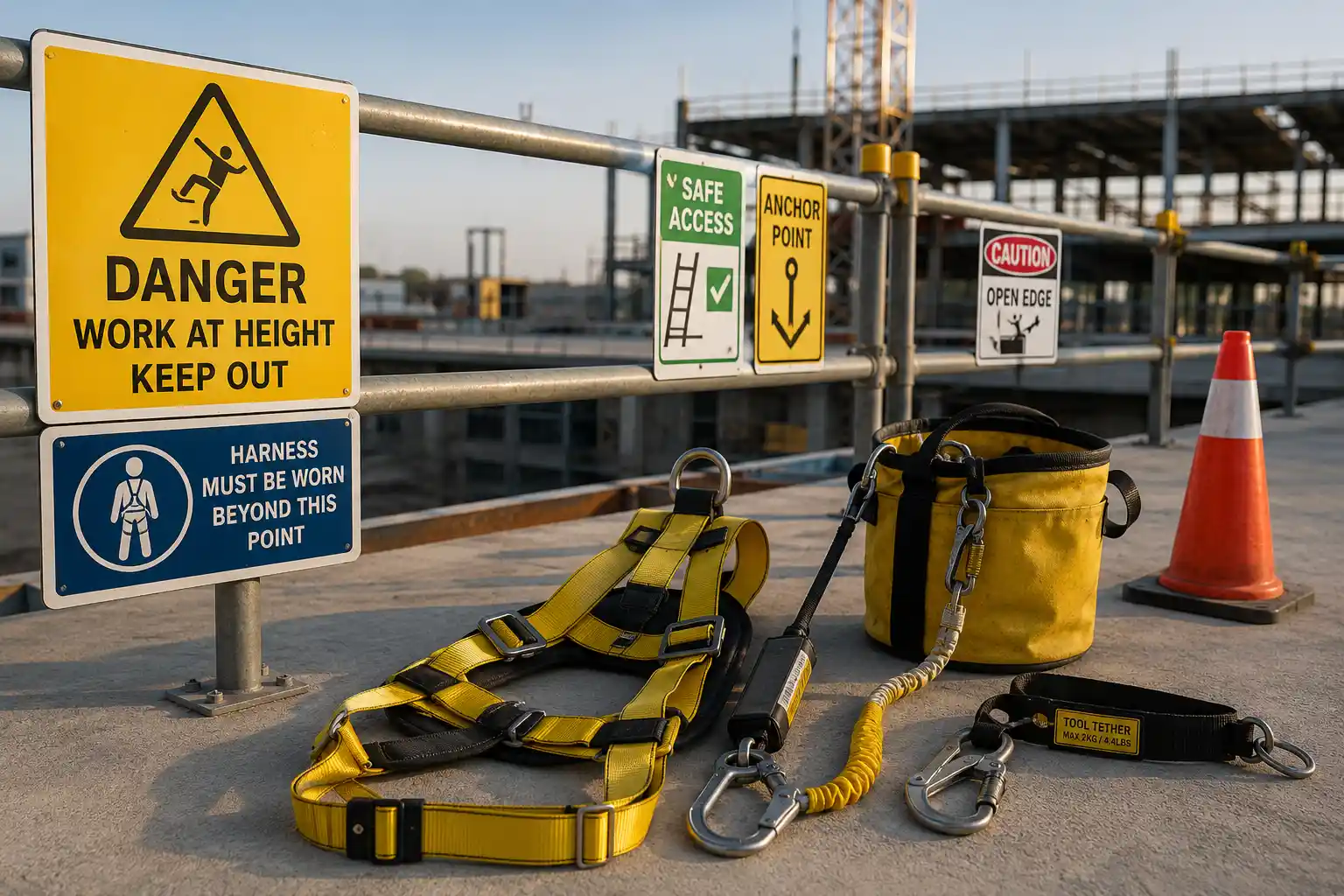
Clear safety signage at work at height zones keeps everyone else safe as well. Signs warn people to keep clear of the area below, mark fragile roofs and skylights, and point out anchor points and open edges. Good signage turns a hazard that one worker knows about into a hazard the whole site can see. The course drills these precautions until they become second nature.
Work at Height Toolbox Talk
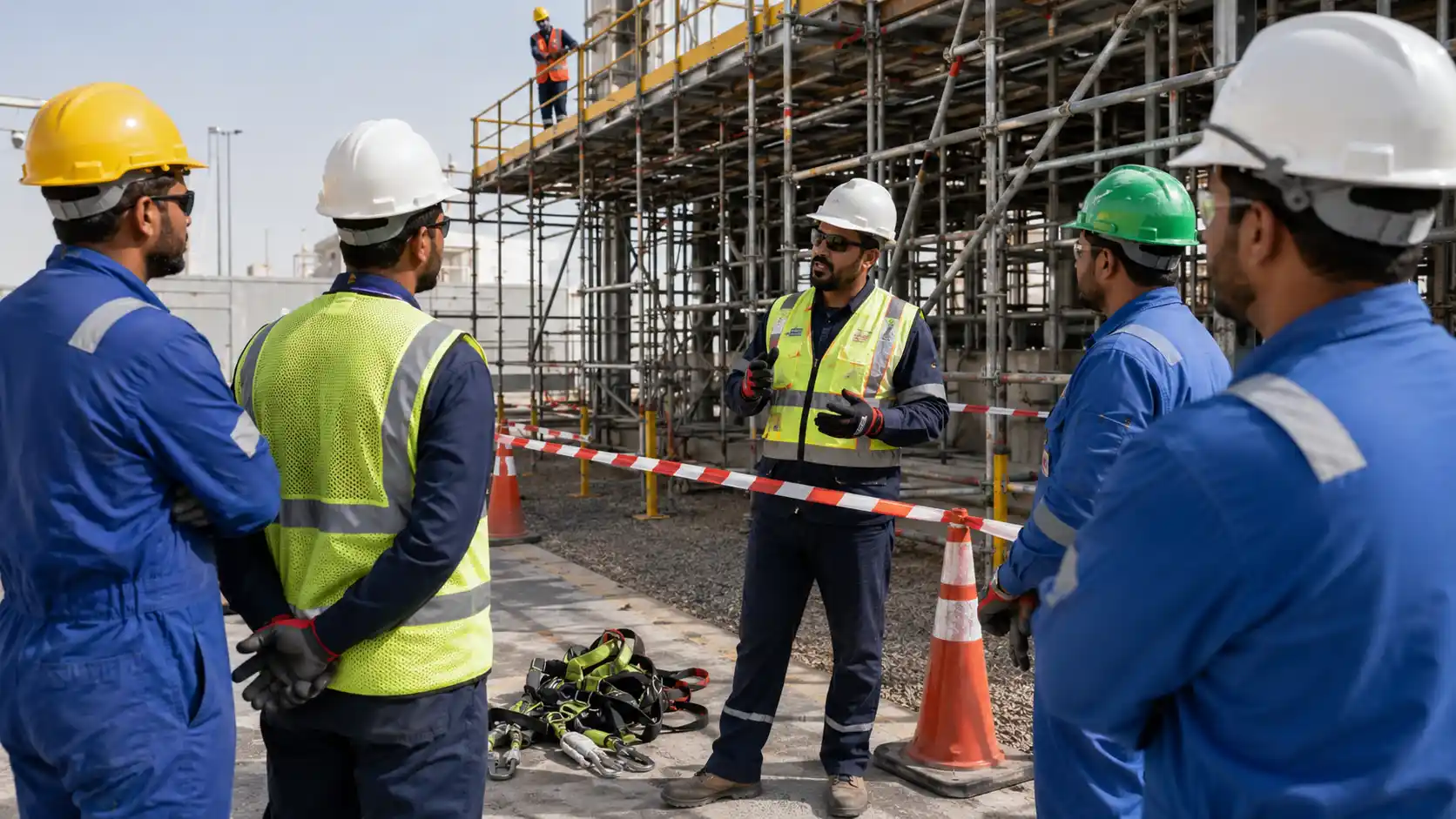
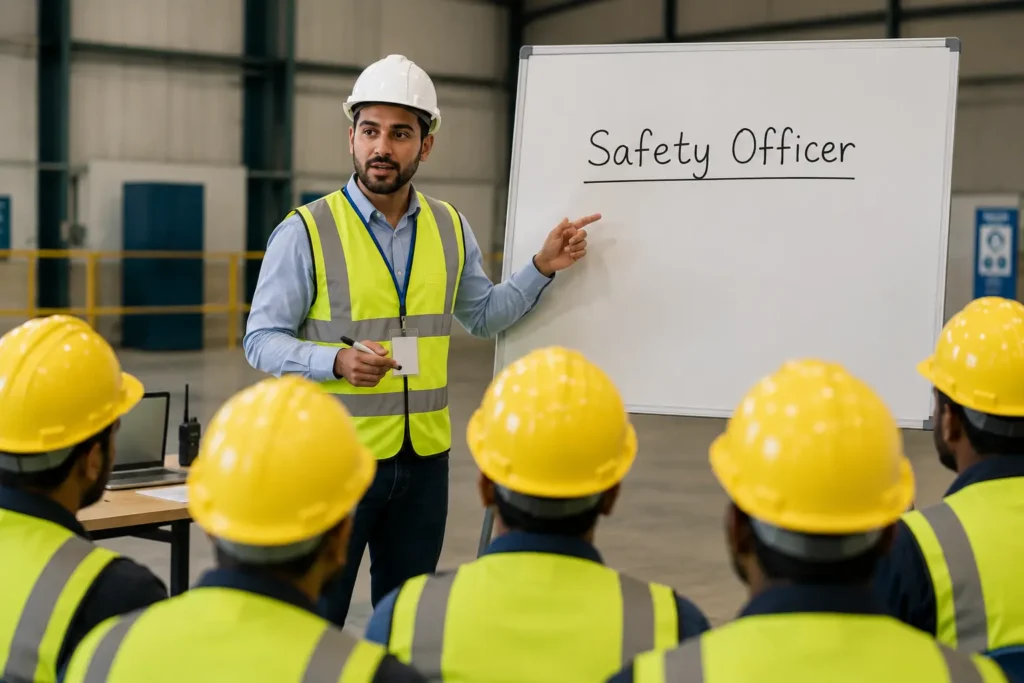
A toolbox talk is a short, five minute safety briefing given at the start of a shift, right where the work will happen. Standing beside the actual roof or scaffold makes the message stick far better than a classroom. Our work at height toolbox talk guidance shows supervisors how to run one well: remind the crew of the day’s hazards, confirm harnesses and anchors are checked, and cover the rescue plan before anyone climbs. Done every shift, these talks keep safety fresh and catch issues early.
Working at Height Requirements in Saudi Arabia
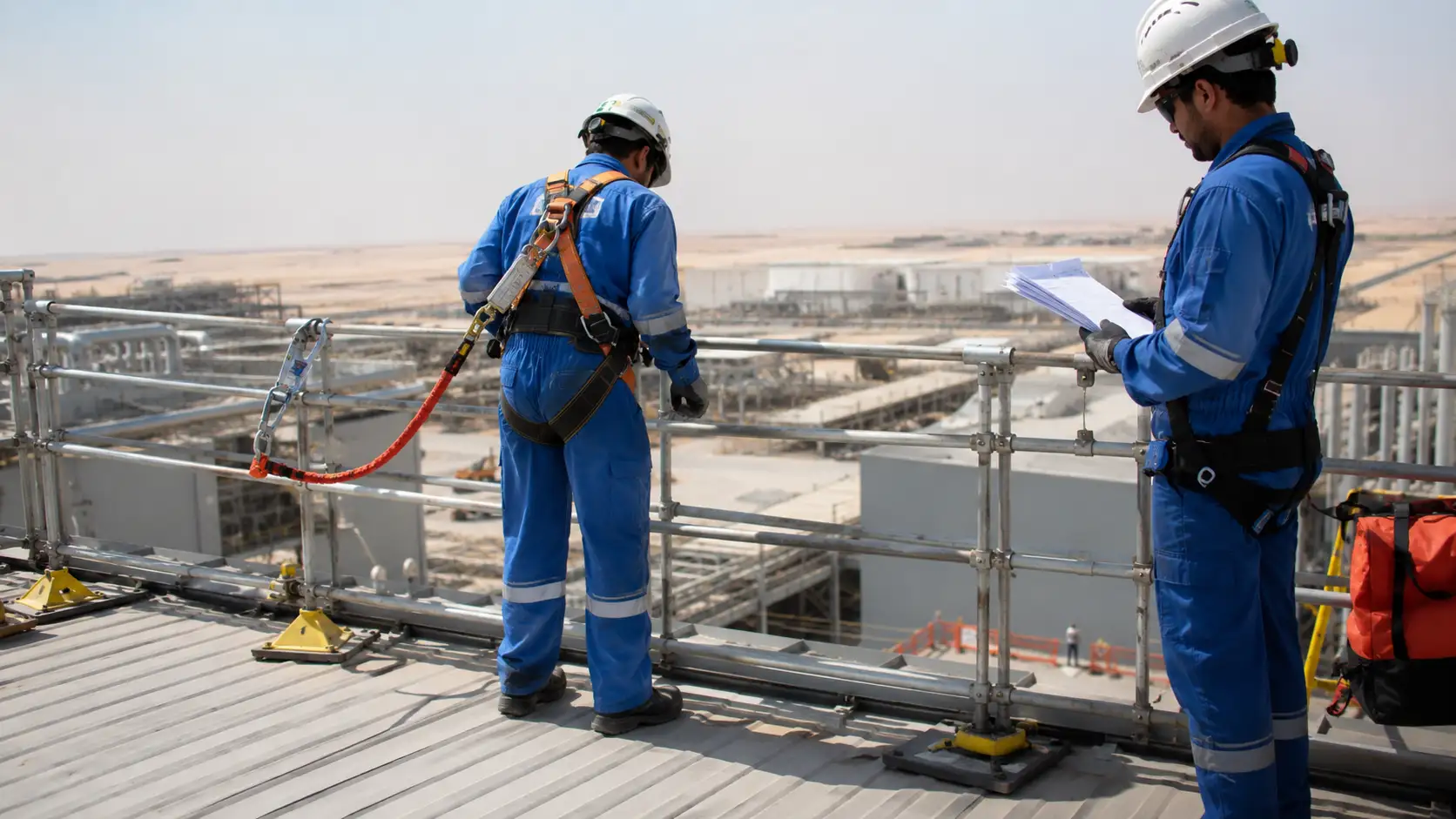
Under Saudi Civil Defence and MHRSD rules, anyone who works at height must be trained and competent, and employers must provide the right equipment and supervision. Meeting the recognised work at height standard means your team is assessed on both knowledge and practical skill, not just given a slip of paper. Aramco and GCC sites often ask to see this competency before a worker sets foot on a scaffold.
Working at Height Awareness Training
Not every worker climbs, but many work near height hazards. Our working at height awareness training gives ground crews and supervisors the basics: spotting the dangers, respecting barriers, and knowing why the rules exist. It is a short session that builds a safer site culture around your trained height workers.
Renewing Your Working at Height Training
A working at height certificate is valid for two years, so your team needs to renew before it runs out. Our working at heights refresher training brings certified workers back up to speed in a shorter session, updating them on any new methods or equipment and checking their practical skills are still sharp. Many Saudi sites also ask for a refresher after a serious incident or a long break from height work, so a worker never climbs with rusty skills or an expired card.
Why Train With Our Safety Training Institute
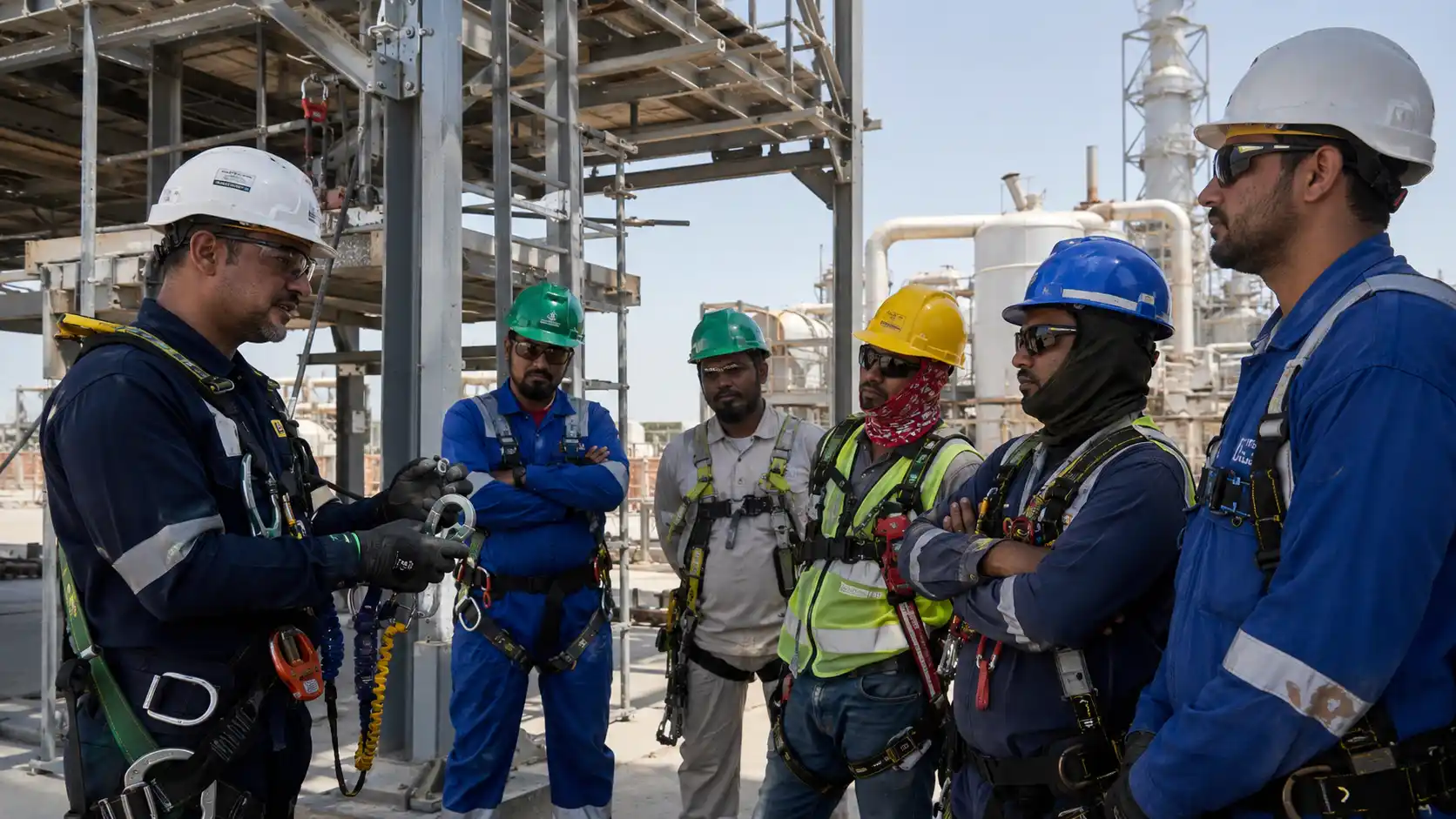
As a trusted safety training center serving companies across the Kingdom, we turn height work from a top risk into a controlled task. There are many reasons to choose this course: our trainers bring real site experience, our drills use actual harnesses and anchor points instead of slides, and we teach in Arabic, English, Hindi, and Urdu so nothing is lost in translation. We have delivered working at heights training for construction crews, plants, and Saudi Aramco contractors across the Kingdom, and we can come to your site, often on short notice.
Related Posts



Frequently Asked Questions
Book Your Working at Heights Training
Reserve your place with Future Institute, Al Khobar’s safety training center. Our advisors will confirm the next available batch and can deliver the course at your site in Arabic, English, Hindi, or Urdu.