
Online Confined Space Entry Training
in Saudi Arabia
We prepare workers and rescue teams to handle confined space entry safely,
from atmospheric testing and permits to emergency rescue. Practical confined
space entry training built for real Saudi worksites.
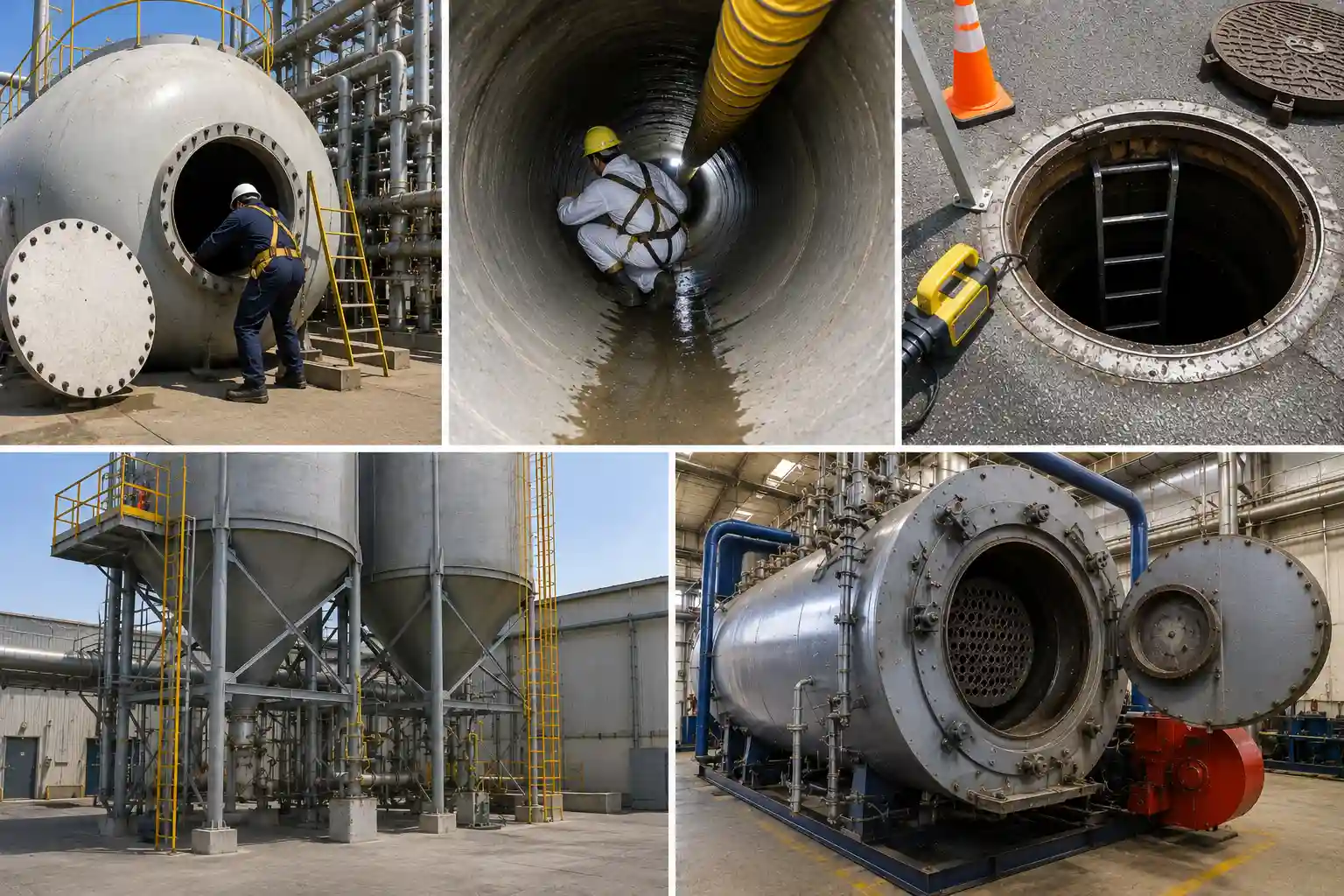
A confined space is any enclosed or partly enclosed area with limited ways in and out that is not built for people to work in for long. Workers enter these spaces to perform tasks like cleaning, inspection, welding, repair, and maintenance. The danger is that toxic gas, low oxygen, or flammable vapour can build up fast, and getting out in an emergency is hard. Common confined spaces include storage tanks, pressure vessels, pipelines, sewers, manholes, silos, and boilers. Not every small room counts as one: a space is only “confined” when entry, movement, or exit is restricted and it is not made for continuous occupancy, so a normal office, workshop, or store room is not a confined space.
Because the risk is so high, no one should enter a confined space without atmospheric testing, a valid permit, the right PPE, and a rescue plan in place. Our confined space entry course teaches your team to recognise these spaces, judge the hazards, and work in them safely.
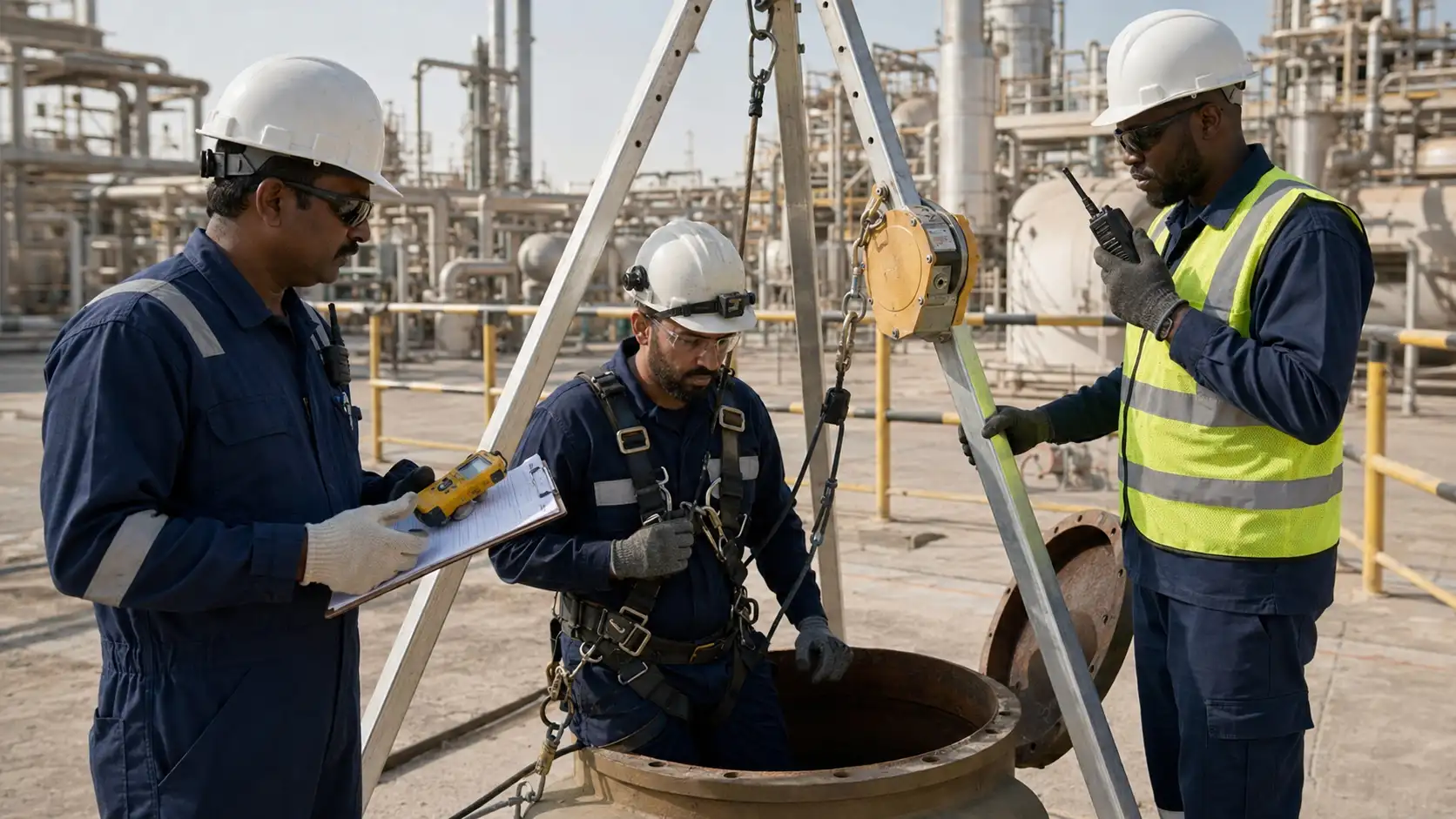
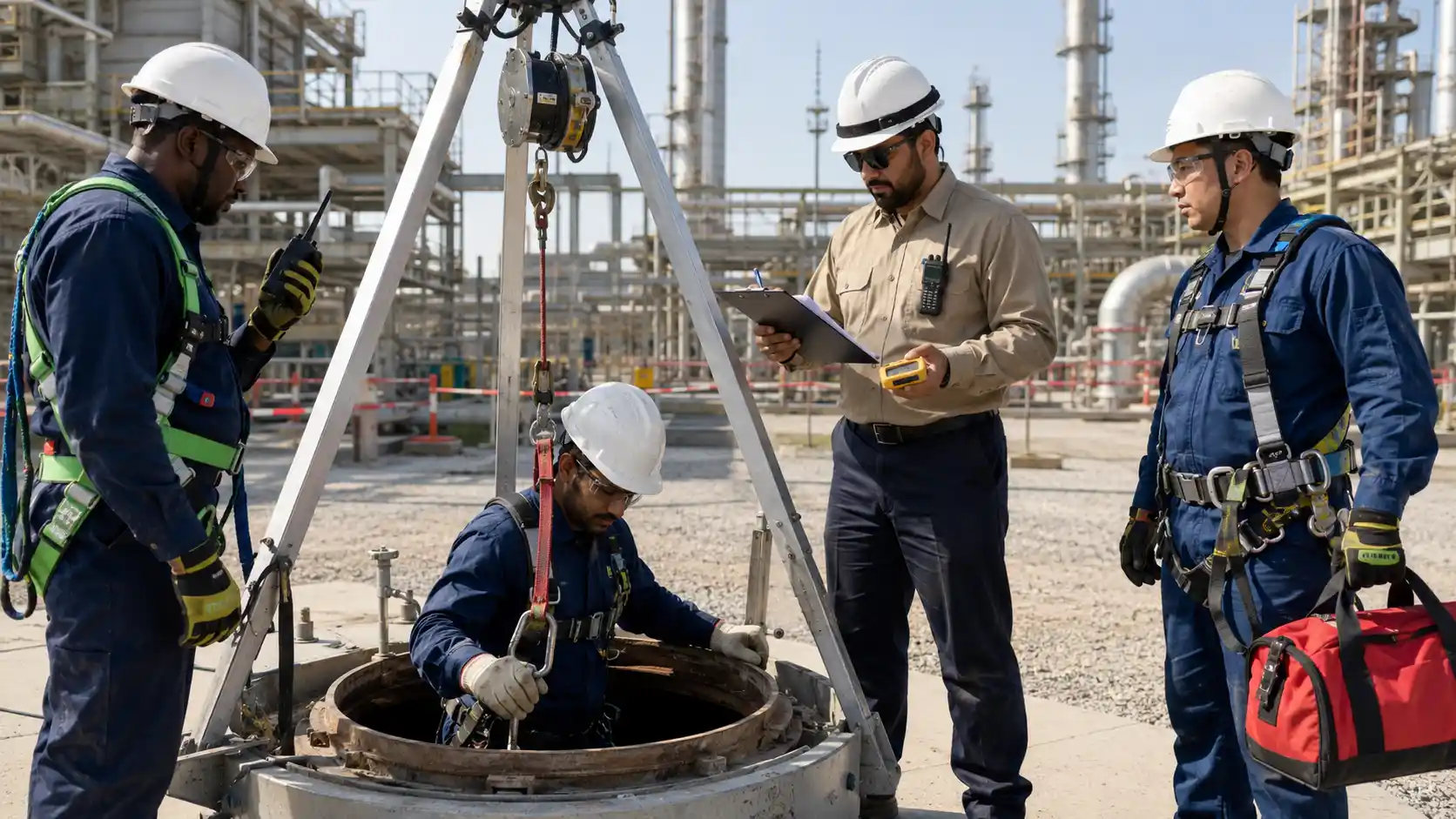
What Is Confined Space Training and Who Needs It?
Confined space entry training teaches workers how to enter, work in, and leave enclosed spaces safely, where toxic gas, low oxygen, or explosion may be present. The course covers hazard recognition, atmospheric testing, the confined space entry permit, correct PPE, and rescue, so your team can follow a safe confined space entry procedure from start to finish.
This training is needed by anyone who works in or around confined spaces on oil, gas, petrochemical, construction, and maintenance sites. That includes entrants who go inside the space, attendants (standby men) who watch from outside, entry supervisors who approve the work, and rescue team members. Employers also need it to meet their confined space entry requirements under Saudi Ministry of Human Resources (MHRSD) rules and Aramco and GCC worksite standards. In short, if your job puts you near a tank, vessel, pipeline, or manhole, this course keeps you safe and site ready.
Confined Space Hazards
Most confined space accidents happen because a hazard was missed before entry. The main hazards are:
Hazard | Why it is dangerous |
|---|---|
Oxygen deficiency or enrichment | Causes unconsciousness, or raises the risk of fire |
Toxic gases (H2S, carbon monoxide, ammonia) | Poison the body, often with no warning smell |
Flammable atmosphere | Risk of fire or explosion from vapours and gases |
Engulfment | Liquids or loose solids can bury and suffocate a worker |
Physical hazards | Heat, moving parts, and poor visibility cause injury |
Confined Space Entry Training Course Content
This course combines classroom theory with hands on practice. The course covers:
Confined space identification and classification
Hazard recognition and risk assessment
Atmospheric testing and correct use of a gas detector
The confined space entry permit and the permit to work system
The safe system of work and the step by step entry procedure
Selection and use of PPE, SCBA, and breathing apparatus
Roles and duties of the entrant, attendant, and entry supervisor
Confined space rescue and emergency response
Confined Space Entry Procedure and Permit System
Every safe entry follows a written confined space entry procedure backed by a confined space entry permit. Before work starts, the team prepares a plan that lists the hazards, sets the gas testing limits, assigns roles, and confirms the rescue arrangements. This confined space entry preparation is what keeps workers alive. On Aramco sites, entry follows the Saudi Aramco Work Permit System, set out in General Instruction. It requires a signed Confined Space Entry Permit, atmospheric testing, and full isolation before entry. The permit is approved only once the air is tested safe, isolation is complete, and the right equipment is in place.
Confined Space Rescue
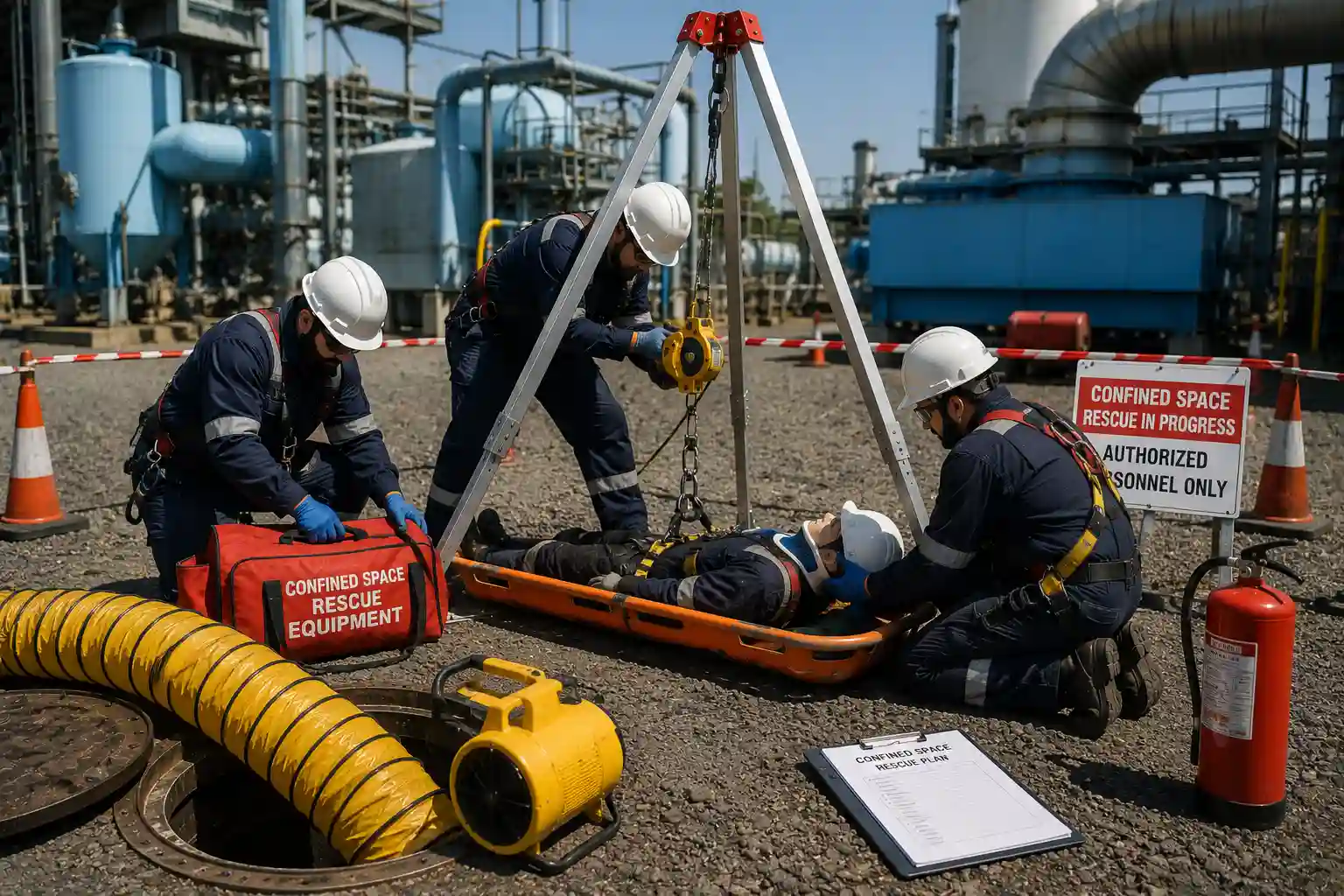
A confined space rescue should only be done by trained people following a planned procedure. Many confined space deaths are would be rescuers who rushed in without a plan. Our confined space entry and rescue training covers non entry (retrieval) rescue, entry rescue, and emergency response, so your attendants and supervisors know how to act without becoming casualties. A tested rescue plan and the right retrieval gear must be ready before anyone enters.
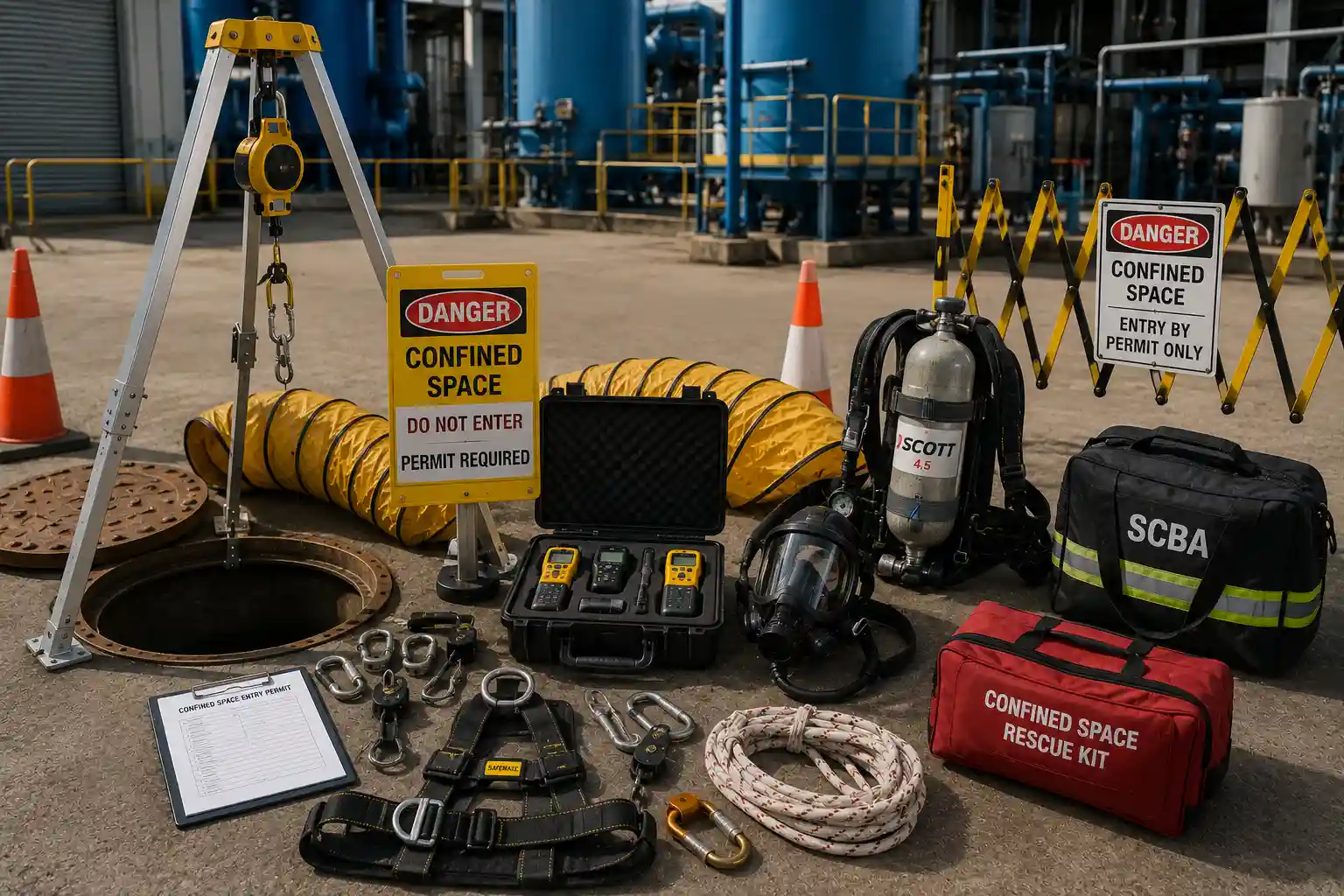
Confined Space Entry Equipment & Kit
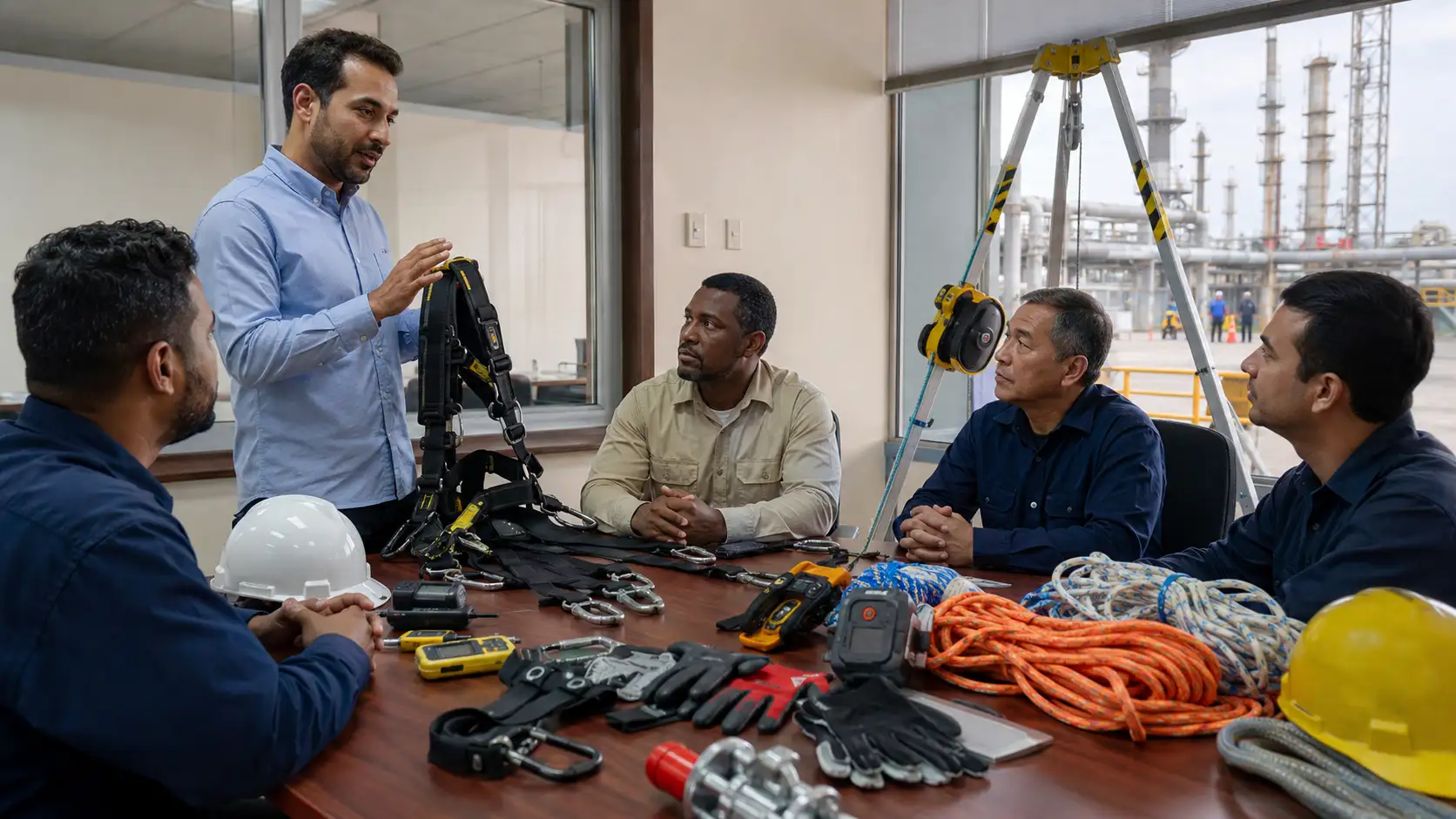
Safe entry depends on the right confined space entry equipment, and this course shows your team how to use each item correctly, not just name it. You get hands on practice checking, setting up, and operating the full kit:
By the end, your team can inspect, set up, and use every piece of equipment with confidence on a live worksite.
Confined Space Signs and Signage
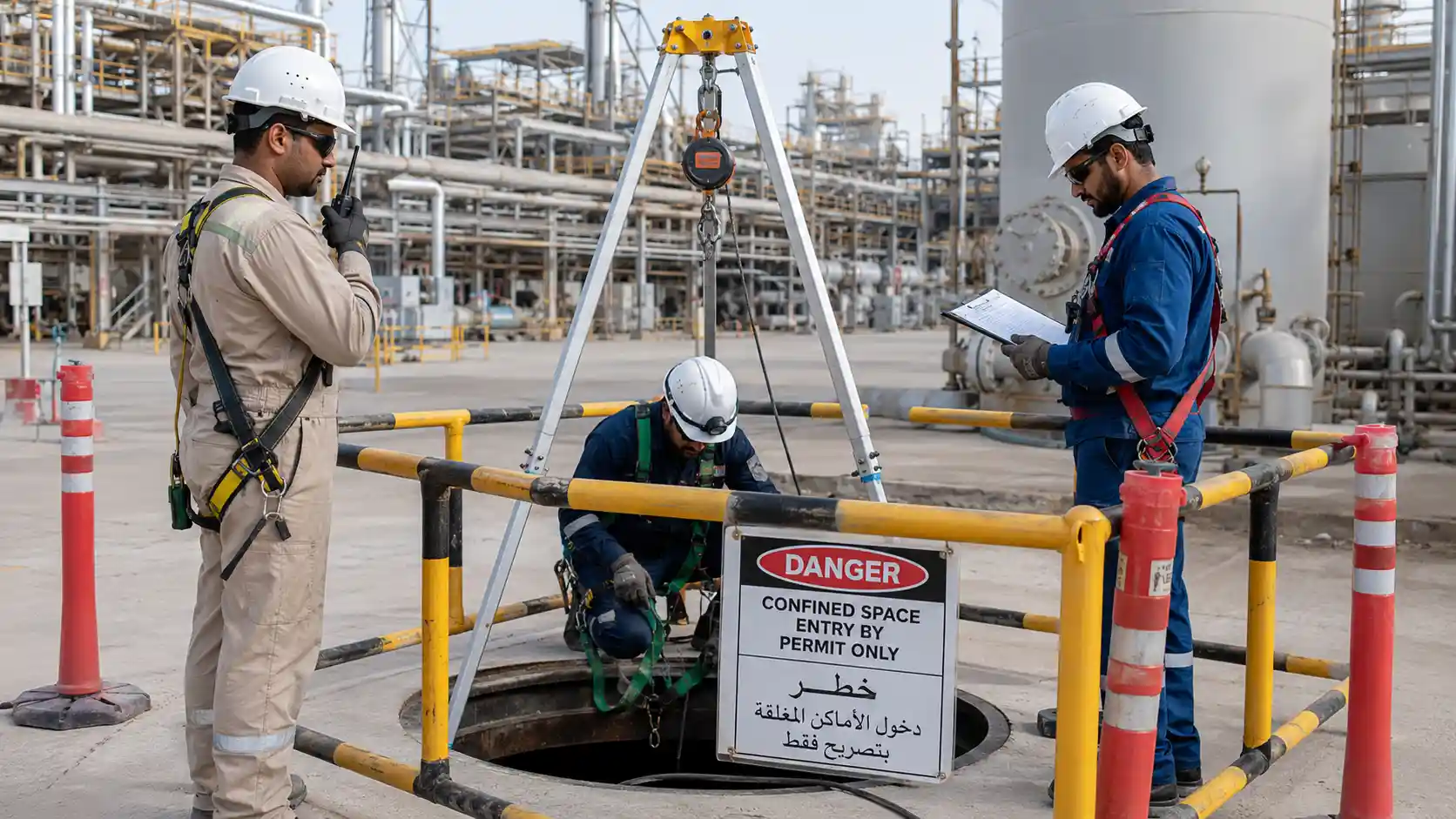
Clear signage keeps unauthorised people out of an active space. A confined space entry sign warns of the hazard, states the permit rule, and marks the area as restricted. Correct confined space entry signages are posted at every access point before work begins, so no one enters without authorisation. Our training shows your team where and how to place this signage as part of the permit system.
Who Should Attend and Entry Requirements
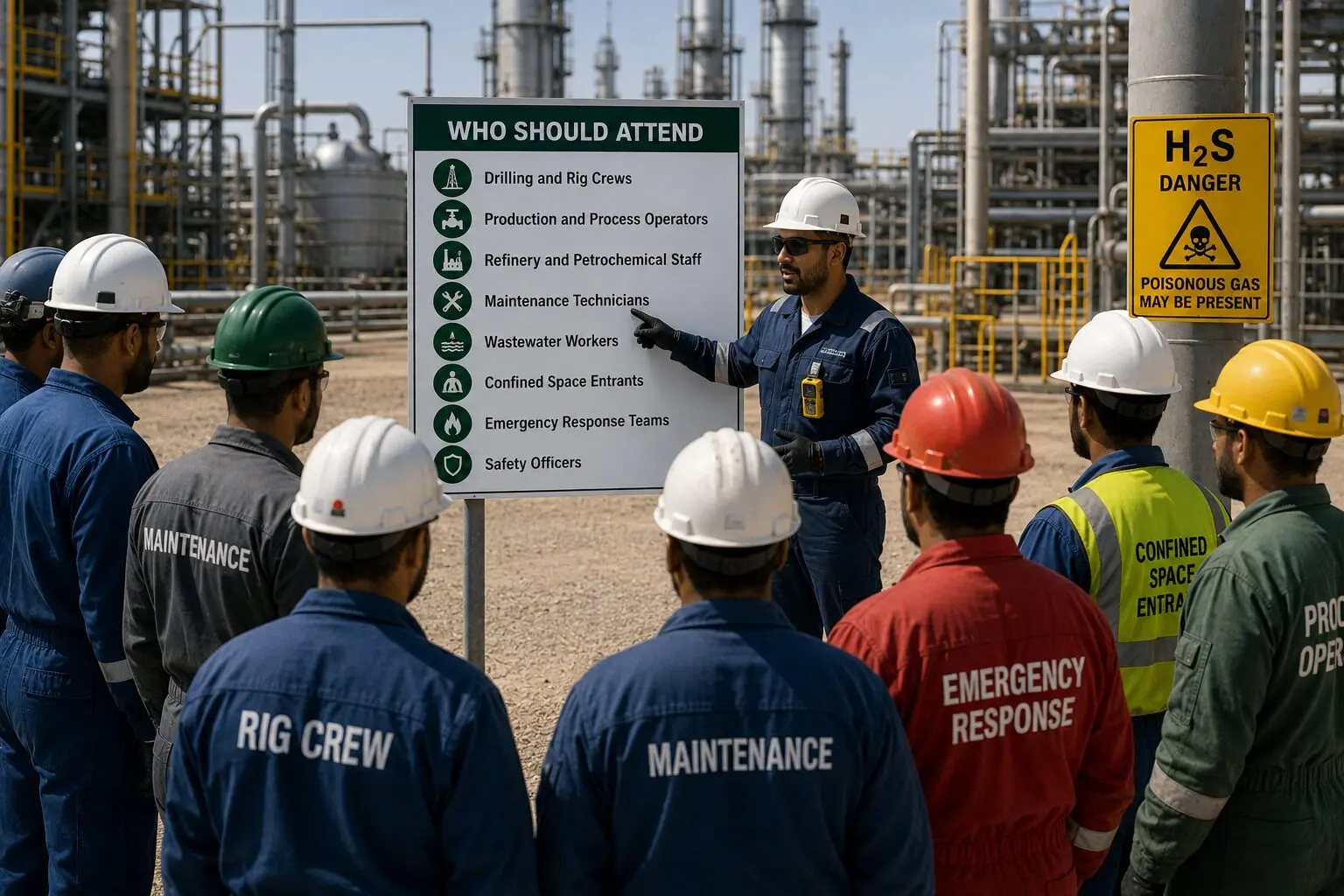
This course is built for entrants, attendants (standby men), entry supervisors, safety officers, and rescue team members in oil and gas, petrochemical, construction, and maintenance across Saudi Arabia. It also helps employers meet their confined space entry requirements under Saudi Ministry of Human Resources (MHRSD) rules and Aramco and GCC worksite standards. There are no formal entry requirements to join, but learners should be medically fit to wear breathing apparatus. Teams that cannot reach a classroom can start with our Online Confined Space Entry Training and finish the practical assessment at our center or on site.
How Confined Space Entry Training Is Delivered
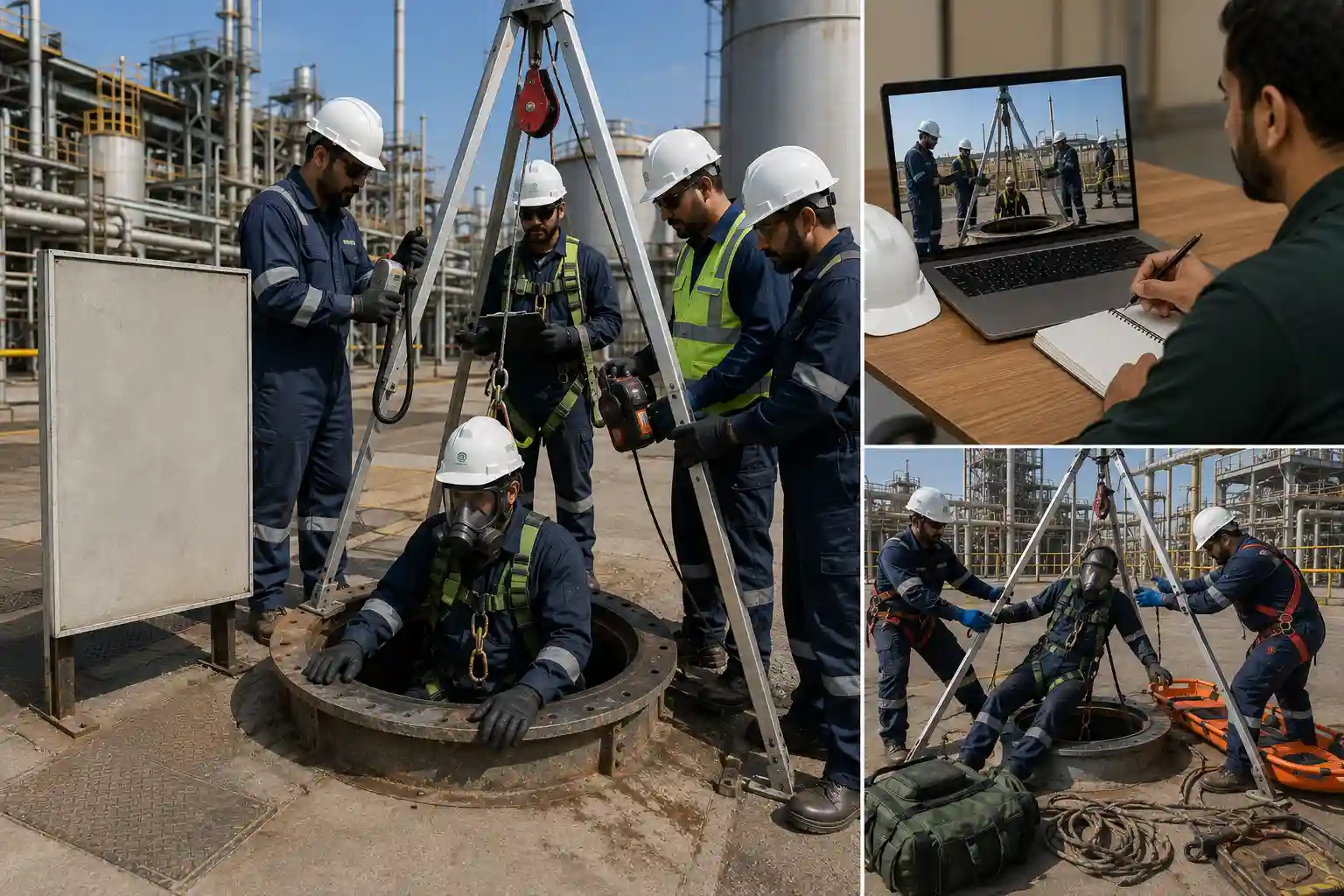
The standard course runs for one day, with theory plus practical gas testing, entry, and rescue drills. You can train at our Al Khobar center with full equipment, or at your own site when we bring the trainers and gear to you. If your team cannot reach a classroom, our online confined space entry training in Saudi Arabia lets staff cover the theory first, then finish the practical assessment at our center or on your site. This blended option suits busy crews and remote or rig locations.
Certification & Accreditation
On completion, you receive an accredited confined space entry certificate from Future Institute, a TVTC approved and ISO 9001:2015 certified training center in Al Khobar. Our safety training is delivered to IADC standards, so the certificate is recognised by drilling, oil, and gas contractors across the Kingdom.
Every certificate and ID card is QR code verifiable for instant, fraud proof checking, and is accepted by Aramco contractors.

TVTC Approved
Officially recognised training provider in Saudi Arabia.

ISO 9001:2015 Certified
Officially recognised training provider in Saudi Arabia.

QR-Verified Certificates
Officially recognised training provider in Saudi Arabia.
Aramco-Contractor Ready
Delivered safety programmes for Aramco contractors in KSA.
How Much Does Confined Space Entry Training Cost in Saudi Arabia?
The fee depends on group size, whether you train at our center or your site, and the number of participants. Group training at your site costs less per person as the numbers grow. Some searchers look for free training, but accredited training with real gas detectors, a tripod, and rescue drills carries a cost, and that hands on practice is exactly what keeps your team safe and audit ready. For a current price, call or message us on WhatsApp.
Why Train With Future Institute for Advanced Professional Training?
Future Institute is a safety training center based in Al Khobar, serving learners and companies across Saudi Arabia. Our training gives you:

Where We Deliver Confined Space Entry Training Across Saudi Arabia
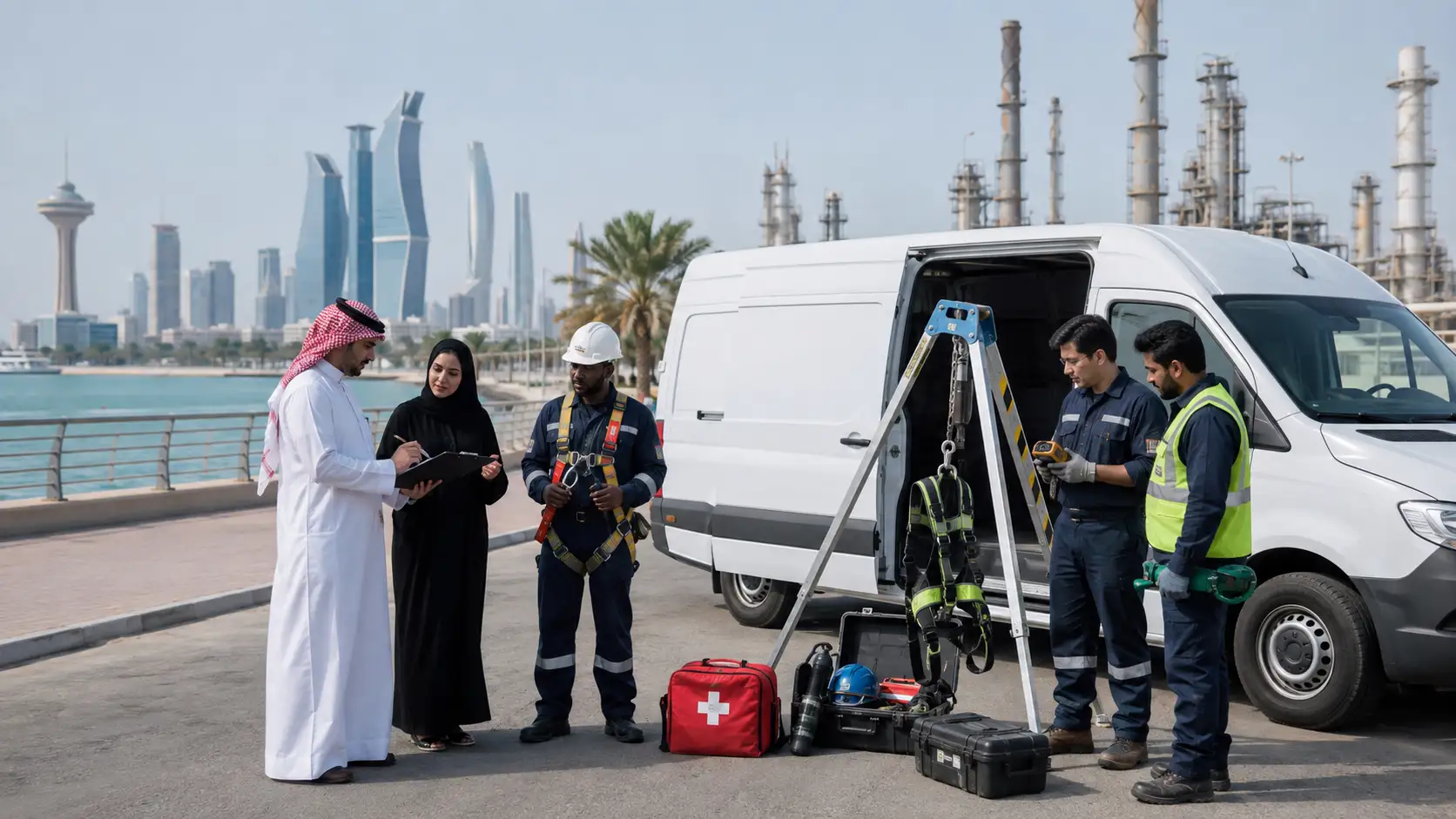
Our base is in Al Khobar, close to the Corniche and King Fahd Road. From here, our trainers cover the Eastern Province and the wider Kingdom. We deliver at our center, or at your site, in Al Khobar, Dammam, Dhahran, Jubail, Riyadh, Jeddah, and other cities on request. Whether your crew works inside a plant in Jubail Industrial City or a refinery near Ras Tanura, we bring certified training to your door.
Related Safety Courses
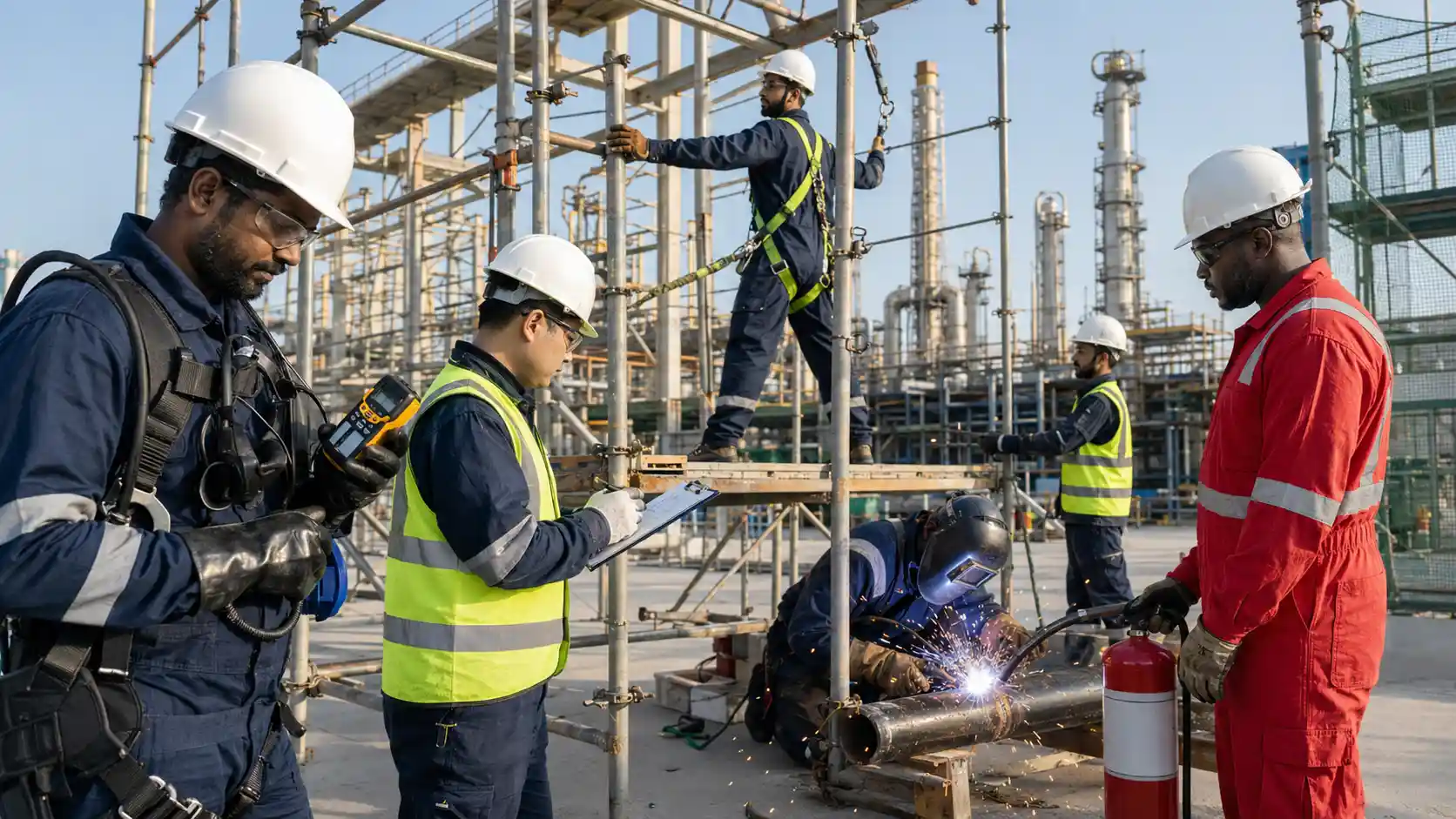
Building a fully certified crew? Pair this course with our H2S training, Working at Height training, Fire Watch training, and Scaffolding Inspector training. Together they cover the main permit to work risks on Saudi oil, gas, and construction sites.
Frequently Asked Questions
Book Your Confined Space Entry Training
Reserve your place with Future Institute, Al Khobar’s TVTC approved safety training center. Our advisors will confirm the next available batch and can deliver the course at your site.