Basic Fire Safety Training in Saudi Arabia

Accredited under IADC DIT and delivered across Saudi Arabia.

ADC DIT Accredited
TVTC Approved
ISO 9001:2015 Certified
Highfield Approved Centre
IOSH Programmes
Aramco Contractor Ready
QR Verified Certificates
Bilingual (Arabic, English, Hindi, Urdu)
10 Full Time Trainers
Six Equipped Training Rooms
ADC DIT Accredited
TVTC Approved
ISO 9001:2015 Certified
Highfield Approved Centre
IOSH Programmes
Aramco Contractor Ready
QR Verified Certificates
Bilingual (Arabic, English, Hindi, Urdu)
10 Full Time Trainers
Six Equipped Training Rooms

Basic Fire Safety Training That Passes Saudi Inspections

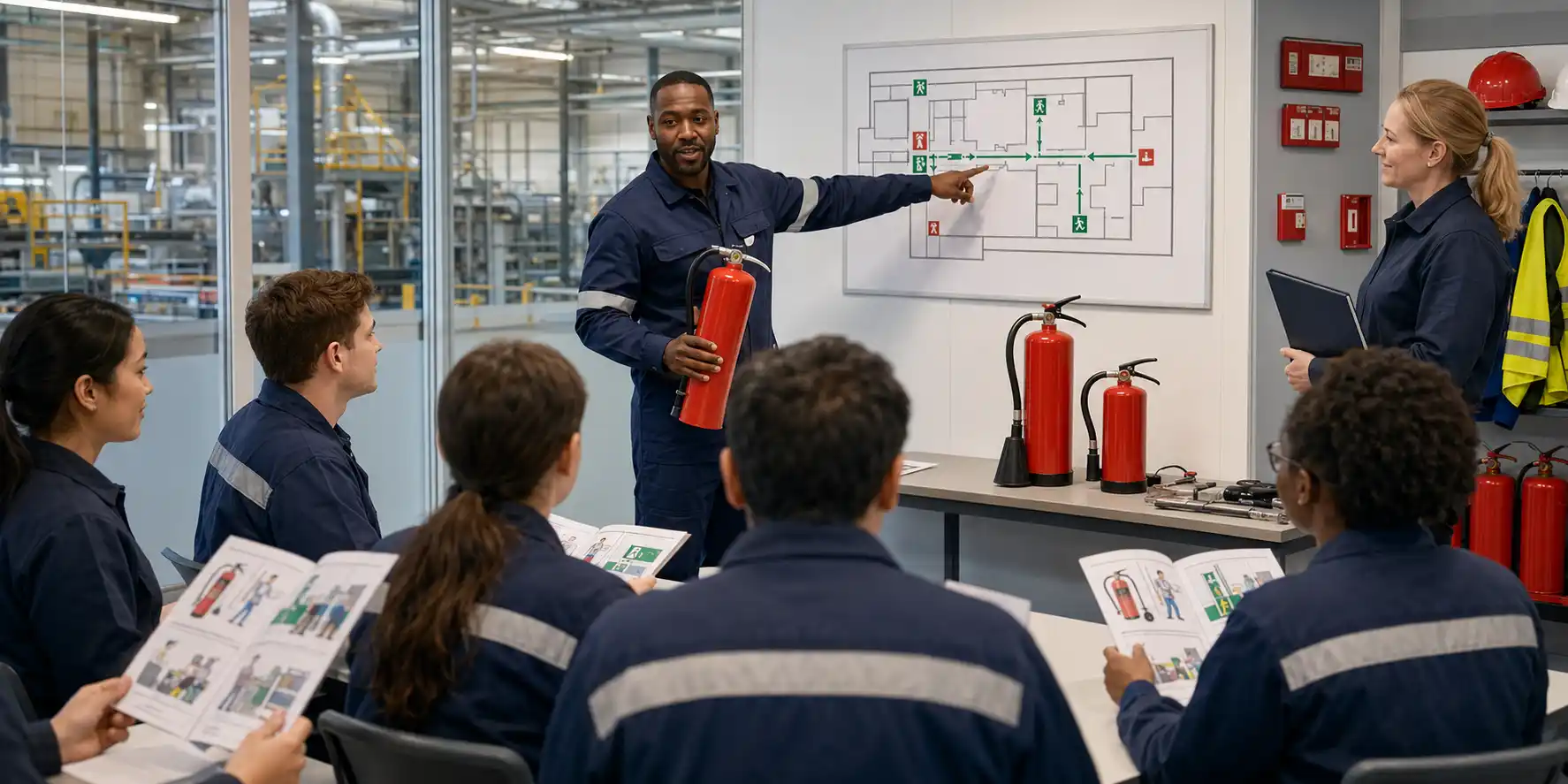
Our basic fire safety training teaches workers how fires start, how to stop them spreading, how to use the right extinguisher, and how to get everyone out safely. It’s for anyone who works on a Saudi site, in an office, warehouse, plant or project, and needs to know what to do in the first few minutes of a fire.

There’s a compliance side too. Saudi Civil Defense inspects workplaces against fire safety requirements, and trained staff are part of what inspectors look for. A site that falls short risks fines, and in serious cases closure, until the gaps are fixed.

You finish the course with a approved fire safety certificate, valid for two years. Employers and auditors can check it online at any time. We run the course at our Al Khobar center, at your site anywhere in the Kingdom.
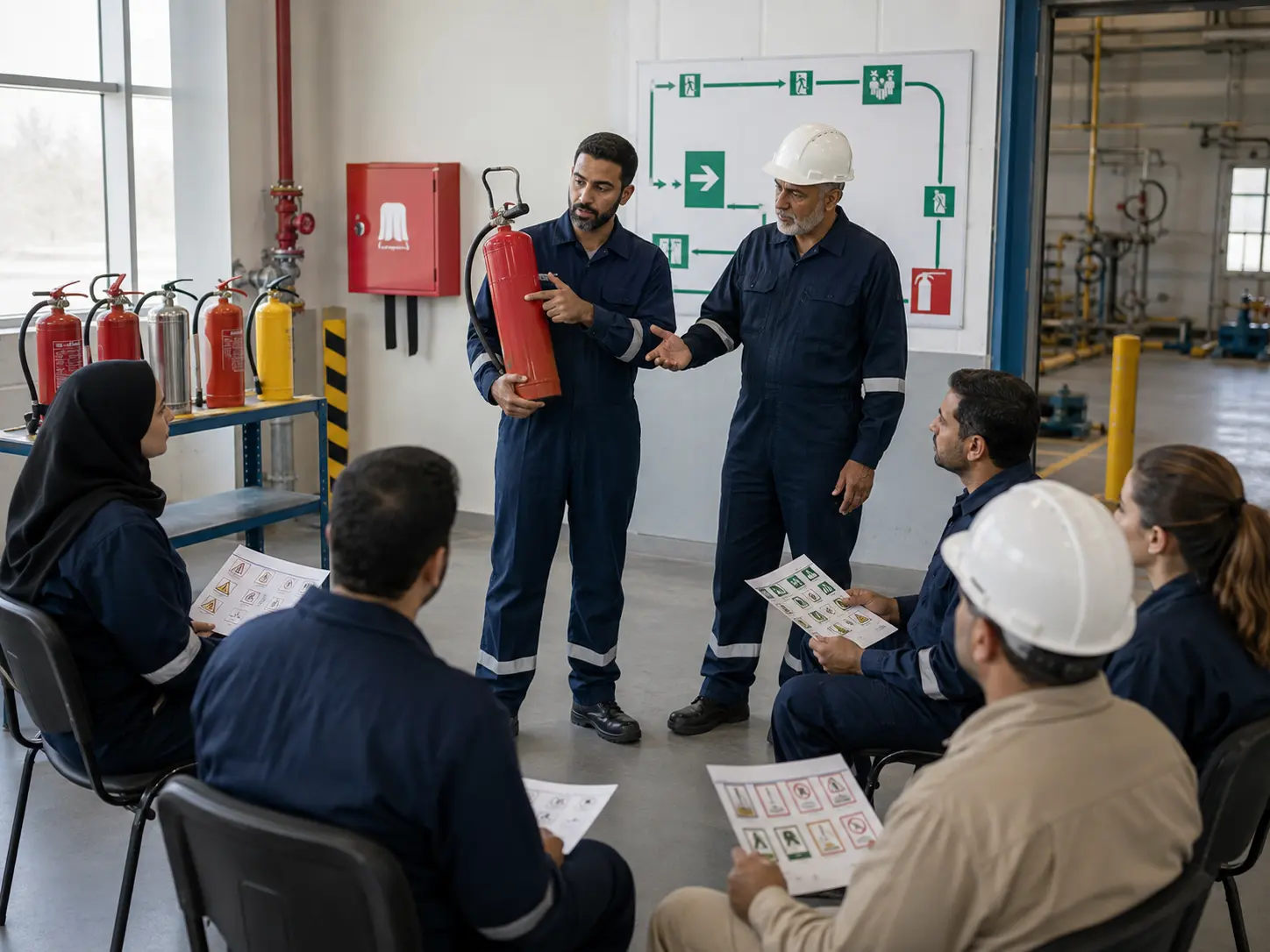
Basic Fire Safety Train The Trainer 2

Who Should Attend

  • Employees in any workplace: the person nearest a fire is usually the one who raises the alarm.
  • New joiners: induction is the right time to learn exits, alarms and extinguisher locations.
  • Supervisors: they lead their team out and account for everyone at the assembly point.
  • Safety officers: a refresher on the basics they enforce every day.
  • Fire wardens: this course is the foundation before the deeper Fire Warden training.
  • Contractors: many clients ask for proof of fire awareness before work starts.
  • Aramco and industrial site workers: hot work, fuels and process areas raise the stakes.
basic fire safety training

Every fire needs heat, fuel and oxygen, known as the fire triangle. The fire tetrahedron adds a fourth side, the chemical chain reaction. Remove any one of them and the fire goes out. You also learn the classes of fire: A for ordinary combustibles, B for flammable liquids and gases, C for live electrical equipment, D for metals, and K for cooking oils and fats.

Most workplace fires can be prevented. This module covers good housekeeping, keeping ignition sources away from fuel, safe storage of flammables, and the precautions needed before and during hot work such as welding and grinding.

How smoke and heat detectors work, how to raise the alarm with a manual call point, and why nobody should silence an alarm or assume it’s a false one.

You learn the main fire extinguisher types (water, foam, CO2, dry powder and wet chemical), how to read their labels and colour bands, and which one suits each class of fire. You practise the PASS method: Pull the pin, Aim at the base, Squeeze the handle, Sweep side to side. The course also covers what never to use: water on electrical fires or burning oil, for example, and CO2 in a small enclosed room.

An awareness-level look at sprinklers, hose reels and automatic suppression systems. You learn what they do, why they must never be blocked, and what to do when one activates.

Exit routes, assembly points and headcounts. You learn why lifts are never used during a fire, why you should stay low under smoke, and why nobody goes back inside for belongings.

What each person does in the first minutes: raising the alarm, following warden instructions, calling Civil Defense on 998, and using stop, drop and roll if clothing catches fire.

How to spot fire hazards on your own site, who could be harmed, and the simple controls that reduce the risk. It’s enough to report a hazard properly, not to run a full assessment.

Employers must provide a safe workplace, equipment and training. Employees must follow procedures, keep exits clear and report hazards. You learn where your own responsibilities begin and end.

What a monthly extinguisher check looks like: the gauge in the green, the pin and seal in place, no damage, and a current service tag. You also learn why a missing or discharged extinguisher has to be reported straight away.

The Saudi Difference: SBC 801 and Civil Defense Compliance

Saudi workplaces answer to the Saudi Civil Defense, and the rules they’re held to come from the Saudi Fire Protection Code, SBC 801. The code covers far more than training: building design, fire systems, alarms and emergency planning. But trained people are part of the picture inspectors check. A building can have every system in place and still fail if staff don’t know how to raise an alarm or use an extinguisher.

We built this course around those inspection expectations. Trainees learn the practical points an inspector is likely to test: where the nearest extinguisher is, which type to use, how to evacuate, and where the assembly point is. The course follows Civil Defense inspection expectations. The certificate is IADC-DIT and recognized by employers across the Kingdom.

IADC DIT Accreditation

This course is delivered under our IADC Drilling Industry Training accreditation, a scheme recognised across the oil and gas industry in Saudi Arabia and beyond. That means your certified trainer holds a qualification that contractors and auditors trust, not just an internal note saying they attended a class. We also offer this course under our own Future Institute accreditation, so you can choose the certification that best fits your company.
IADC DIT 2 1

Duration and Delivery

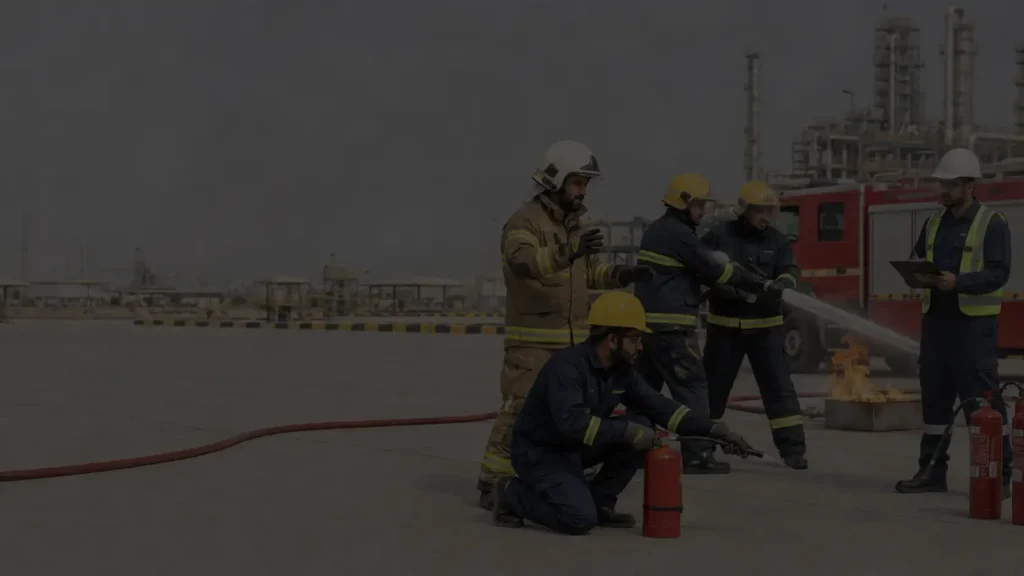
The course runs over three days, combining theory with hands on extinguisher practice and a final teaching assessment. We deliver it in house at our centre, or on site at your workplace, so your trainer can practise on the same equipment and layout they will actually teach with.

Course Details at a Glance

Course Duration3 Days
Delivery MethodClassroom, at our institute or at your workplace
Instructor LanguagesEnglish, Arabic, Urdu and Hindi
Certification ProviderFuture Institute
Certificate Validity2 Years, renewable with a refresher course
Assessment CriteriaPractical and theory test, pass mark 75 %
Certificate of CompletionIADC-DIT approved, verifiable online
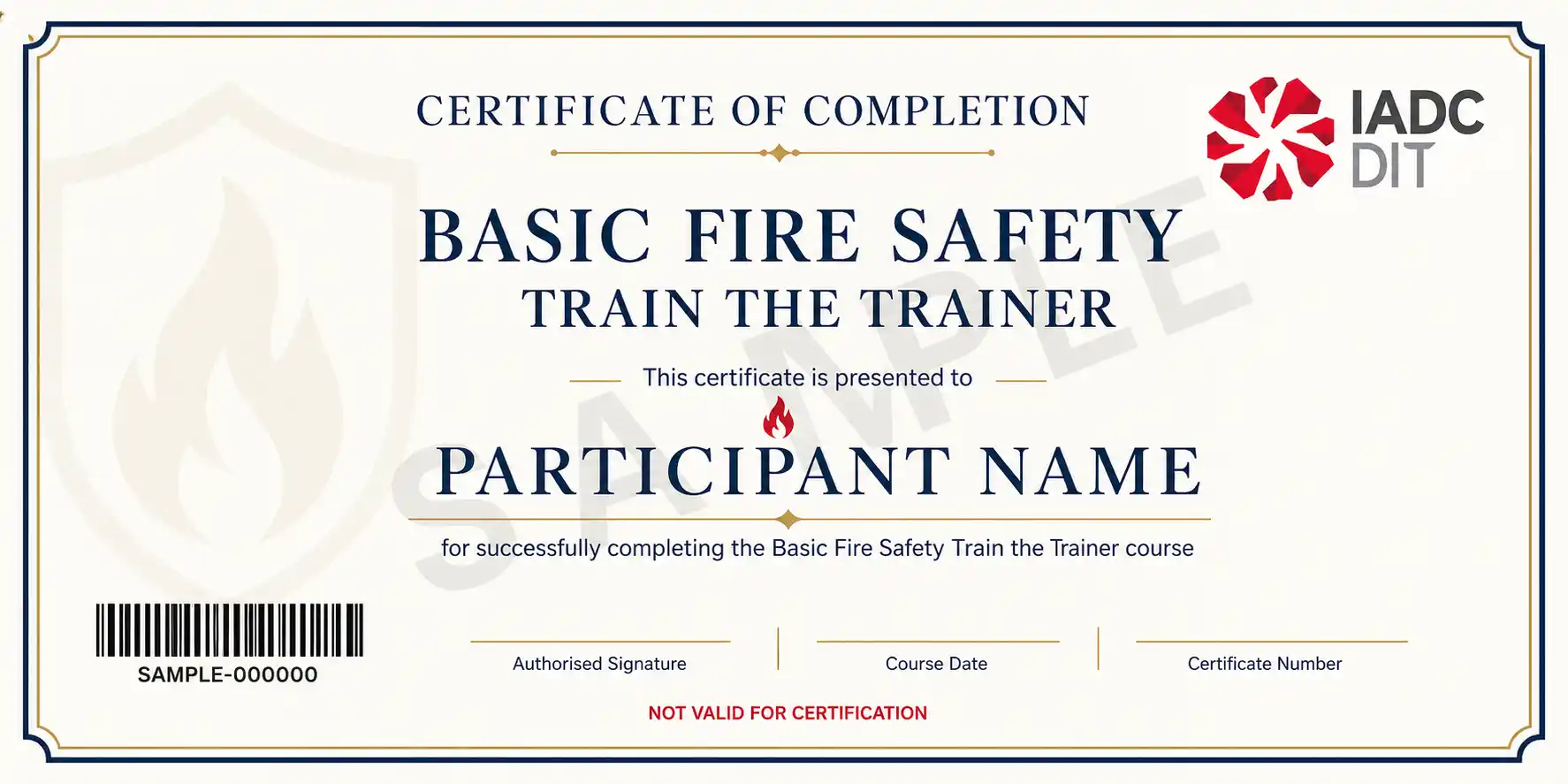
Certificate Of fire safety train the trainer Sample

Certification and Assessment

To qualify, learners are assessed on both their fire safety knowledge and their ability to deliver a training session, through a written test, a practical extinguisher demonstration, and an observed teaching exercise. On passing, you receive an IADC DIT accredited certificate with a QR verifiable card.

icon 2

Great value for individuals and group training.

How Much Does the Course Cost?

The fee depends on the course, the number of Students, and whether you train at our centre or your site

For a current price, call or message us.

Why Train With Future Institute
why choose us

IADC DIT/

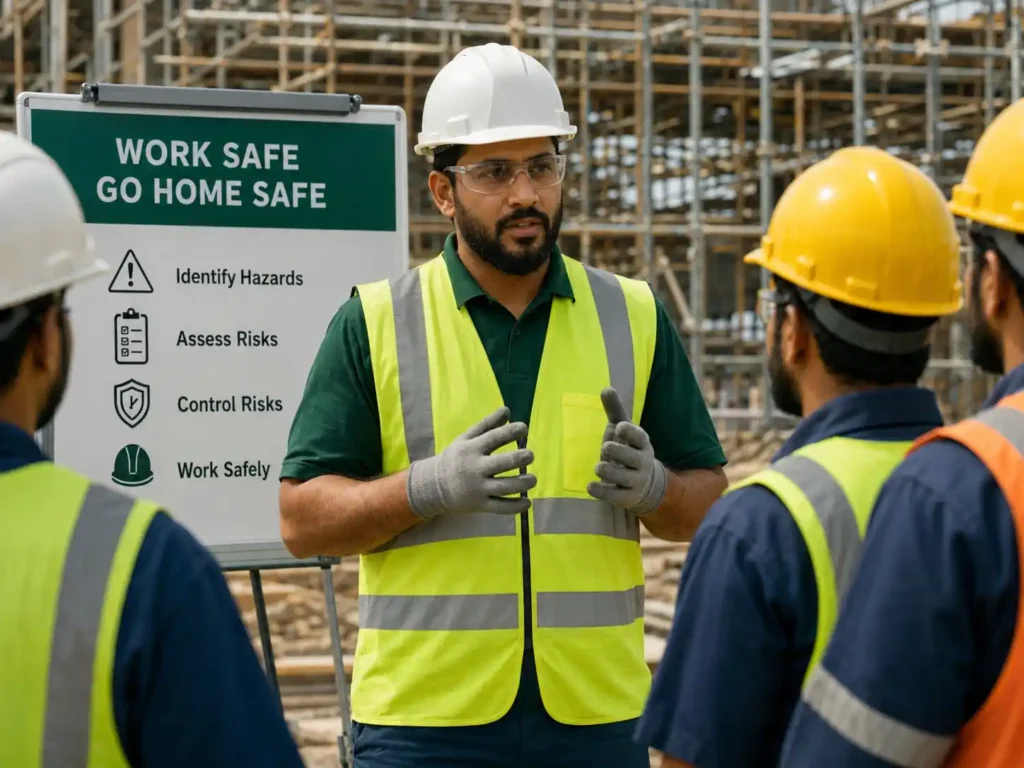
As an IADC member and trusted safety training centre serving companies across the Kingdom, we help you build lasting fire safety capability in house. Our instructors bring real fire response and teaching experience, our sessions balance knowledge with hands on practice, and we deliver in Arabic, English, Hindi, and Urdu. We have certified trainers for construction firms, plants, and Saudi Aramco contractors, at our centre or on your site.

rating

4.9/5.0

Rating

icon 3

100+

Workers

12+ Years

Experience

Frequently Asked Questions

In practice, yes. To get a Civil Defense license and pass inspections, workplaces must meet fire safety requirements, and trained staff are part of those requirements. A site that falls short risks fines, and in serious cases closure, until the problems are fixed. Training your people is one of the simplest ways to show an inspector the site takes fire risk seriously.

There are four steps. Choose the right course for your role. Book a seat as an individual, or book a group through your company. Attend the training and pass both the practical and theory assessments. You then receive your certificate, which you or your employer can verify online whenever needed.

Two years from the date you pass. Before it expires, a refresher brings you up to date on anything that has changed and renews the certificate, so you don’t have to repeat the full course. Some clients ask for a refresher sooner when a site, job or piece of equipment changes.

The course runs for 3days. That’s short enough to fit around most shift patterns, and for company groups we can schedule sessions to match shift changes, so you don’t have to take a whole team off the job at once.

Yes. We teach the course in Arabic, English, Hindi and Urdu. Few Saudi providers offer Hindi and Urdu, so mixed teams can all train in a language they fully understand rather than nodding along in a second language.

Yes. We deliver at client sites anywhere in Saudi Arabia, from offices and warehouses to plants and project camps. On-site training works well for large groups and shift-based teams, because people train where they actually work and learn their own exits and extinguisher locations.

No. This is the worker-level course that everyone on site should have. Fire warden training is a separate, deeper course for people who lead evacuations and run drills. If you want to teach fire safety to others, that’s covered in our separate train-the-trainer course, not on this page.

Book Your Basic Fire Safety Training

Ready to book basic fire safety training for yourself or your team? Tell us the course, the number of trainees and the dates that suit you, and we’ll send a price.